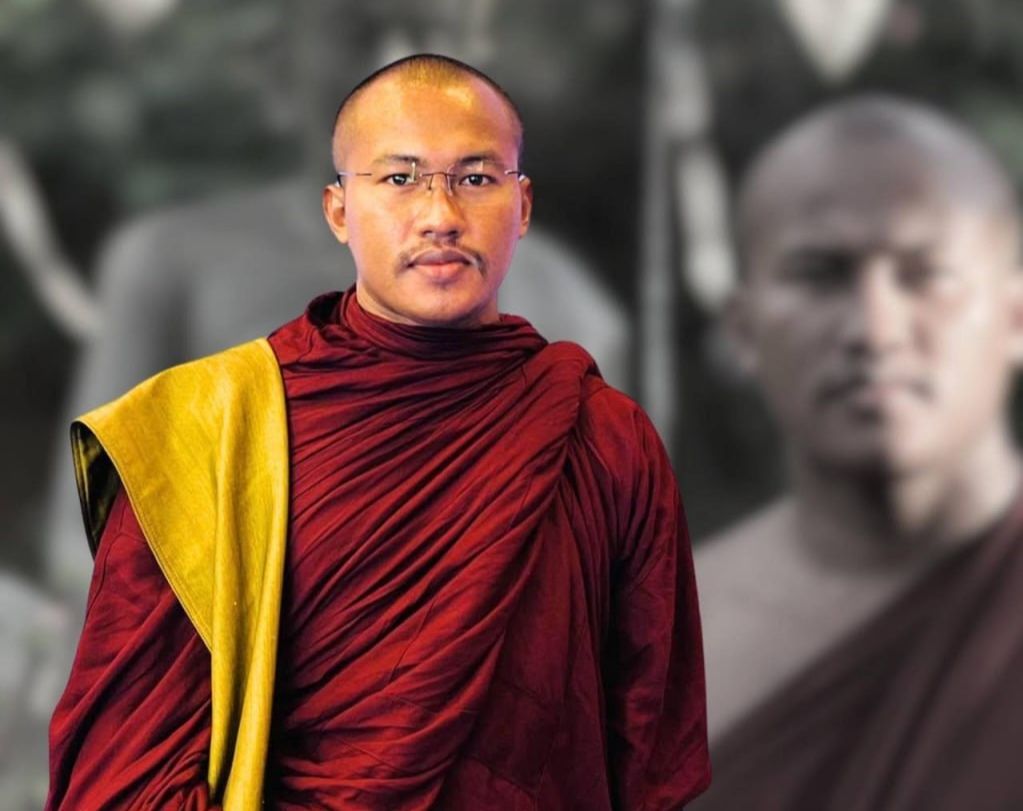
A broad coalition of fifty Cambodian civil society organisations, labour unions and grassroots networks has publicly demanded the immediate release of citizen journalist Chea Vuthy, whose conviction on August 19 for incitement has triggered widespread alarm among rights advocates across Southeast Asia. The 27-year-old former Buddhist monk was sentenced to 18 months in prison and fined two million riel—approximately $500—following comments he made within a private Messenger chat group comprising just twenty members. The severity of the penalty for what amounted to a closed-door discussion has provoked sharp criticism from the Cambodian League for the Promotion and Defense of Human Rights (LICADHO) and dozens of other organisations concerned about the trajectory of free expression protections in Cambodia.
Vuthy's conviction hinges entirely upon a single Messenger comment he made in August 2025 regarding provincial territories in the context of the evolving Cambodia-Thailand border situation, specifically addressing the humanitarian plight of people displaced by the conflict. The courts convicted him under Articles 494 and 495 of the Criminal Code on incitement charges, despite the defendant's explicit acknowledgment that while he authored the remark within the private group, he never published it to a wider audience. This distinction between private communication and public utterance forms the crux of the controversy, as the prosecution presented no evidence beyond the disputed message itself to substantiate its case. The narrowness of the evidentiary foundation has prompted legal observers to question whether the fundamental threshold for criminal liability was genuinely satisfied.
The joint statement released on August 20, coordinated through LICADHO's platform, articulates a comprehensive legal argument rooted in international human rights conventions binding upon Cambodia. The signatory organisations emphasise that a private message circulated among approximately twenty individuals cannot reasonably carry sufficient reach or demonstrable impact to warrant state prosecution, much less an eighteen-month custodial sentence. They contend that such a punishment fundamentally violates principles of necessity and proportionality embedded within Article 19 of the International Covenant on Civil and Political Rights, to which Cambodia is a signatory state. Under this international standard, restrictions on expression must be prescribed by law, advance a legitimate objective, and demonstrate clear necessity relative to the harm they aim to prevent. The coalition argues that Cambodia's courts have failed to satisfy each of these demanding criteria.
Vuthy's detention and prosecution must also be evaluated within Cambodia's own constitutional framework and the commitments undertaken during its most recent Universal Periodic Review before the UN Human Rights Council. The rights groups stress that the verdict contravenes Cambodia's domestic guarantees of freedom of expression while simultaneously undermining the country's stated international human rights commitments. This framing positions the case not as an isolated judicial decision but as evidence of a systemic pattern wherein Cambodia's legal machinery is being deployed to suppress legitimate political discourse and journalistic investigation. Prior to his arrest in April at Wat Por Veal pagoda in Battambang province, Vuthy had actively worked as a citizen journalist, regularly documenting and commenting upon environmental degradation, deforestation, and human rights violations—work that inherently invites scrutiny of official narratives.
The circumstances surrounding Vuthy's detention reveal troubling procedural irregularities that compound concerns about due process. Plainclothes provincial police arrested him at his monastic residence, after which he was forcibly defrocked in an apparent effort to strip him of the social standing and protection traditionally afforded to Buddhist clergy. He languished in pretrial detention whilst awaiting trial, and when his defence lawyer, Em Chantha, filed a bail request in June, the Phnom Penh Appeal Court summarily rejected it. His lawyer has since signalled an intention to appeal the conviction itself, challenging both the sufficiency of evidence and the applicability of incitement law to private group communication. These procedural dimensions underscore what critics characterise as a predetermined trajectory rather than a genuine judicial inquiry.
The Vuthy case emerges within a troubling cascade of similar prosecutions tied to public commentary on the Cambodia-Thailand border dispute. LICADHO has documented multiple individuals convicted or charged with incitement following social media posts addressing the border conflict, creating an unmistakable pattern of legal enforcement designed to suppress discourse on a sensitive geopolitical matter. In May, a chef received an eighteen-month sentence for border-related comments posted online, whilst in June a deputy school director was condemned to two years imprisonment for comparable speech. The uniformity of sentences and the targeting of citizens across different occupations and educational backgrounds suggests coordinated state pressure to silence public discussion of territorial questions rather than application of law according to individual circumstances and evidence quality.
The coalition mobilised around Vuthy's case represents a formidable array of Cambodian rights and media organisations, including the Cambodian Center for Human Rights (CCHR), Cambodian Human Rights and Development Association (ADHOC), Cambodian Center for Independent Media (CCIM), Cambodian Journalists Alliance Association (CamboJA), and the Overseas Press Club of Cambodia (OPCC). Labour organisations such as the Center for Alliance of Labor and Human Rights (CENTRAL) and electoral watchdogs like the Committee for Free and Fair Elections in Cambodia (COMFREL) have similarly affixed their names to the statement, alongside grassroots networks including the Prey Lang Community Network. This breadth of institutional opposition reflects a consensus among Cambodia's civil society that the conviction transgresses fundamental norms, transcending partisan or sectoral boundaries.
Cambodia's Ministry of Information attempted to deflect criticism by asserting that the executive branch maintains strict separation from judicial proceedings and that courts exercise independent authority over their determinations. Spokesperson Tep Asnarith characterised civil society's intervention as potentially unbalanced, urging organisations to assess the legal and factual dimensions of the case with greater accuracy and impartiality. He reiterated that Vuthy retains rights to legal representation and appellate review, as though the mere existence of procedural entitlements negates substantive concerns about their exercise. This response—distinguishing between judicial independence and political pressure, between formal legal rights and their meaningful realisation—sidesteps the core allegation that Cambodia's legal system is being instrumentalised to suppress expression.
For Malaysian and broader Southeast Asian observers, the Vuthy case illuminates persistent vulnerabilities in judicial independence and freedom of expression across the region, notwithstanding formal constitutional protections and international treaty obligations. The prosecution of private online communication raises immediate resonance with concerns about digital freedoms and state surveillance capacity throughout Southeast Asia, where several governments have progressively expanded definitions of incitement and sedition to encompass increasingly diffuse forms of public engagement. The targeting of a former Buddhist monk and citizen journalist engaged in environmental and human rights reportage suggests that authorities perceive even decentralised, non-partisan commentary on sensitive issues as threatening to state prerogatives. The eighteen-month sentence for a private message to twenty people represents an escalation in the proportionality of penalties relative to offence, signalling that authoritarian boundaries are contracting rather than expanding.
The international dimension of Vuthy's case warrants sustained attention from Southeast Asian governments invested in regional stability and credibility. Cambodia's deteriorating record on freedom of expression and judicial independence has already prompted concern within the UN Human Rights Council and among bilateral partners. Continued prosecutions targeting journalists, activists, and ordinary citizens for private or low-reach expression will compound these reputational and institutional costs. The coalition of fifty Cambodian organisations has not merely advocated for one individual but has issued a substantive challenge to the legal and constitutional foundations underpinning such prosecutions. Their statement codifies arguments about Article 19 compliance, proportionality, and necessity that Malaysian and other regional civil society organisations will likely deploy in future disputes over digital expression. Whether Cambodia's government acts upon these demands will signal broader regional trajectories regarding the space available for political speech and journalistic inquiry in contemporary Southeast Asia.
Chea Vuthy's case remains unresolved pending his appellate proceedings, yet the mobilisation of civil society around his conviction has already reframed the dispute beyond a matter of individual justice. The evidence suggests that Cambodia's courts convicted him principally upon the basis of a single private remark, without demonstrating the reach, intent, or capacity to incite imminent lawless action traditionally required to justify restrictions on expression. The proportionality argument—that an eighteen-month sentence for a message within a twenty-person group fails to satisfy international standards—commands serious legal weight. As Cambodia's courts proceed with appellate review, regional observers and international human rights bodies will continue scrutinising whether Cambodia's judiciary can vindicate principles of independent judgment or whether the Vuthy conviction reflects a settled determination to suppress discourse inconvenient to state interests.

