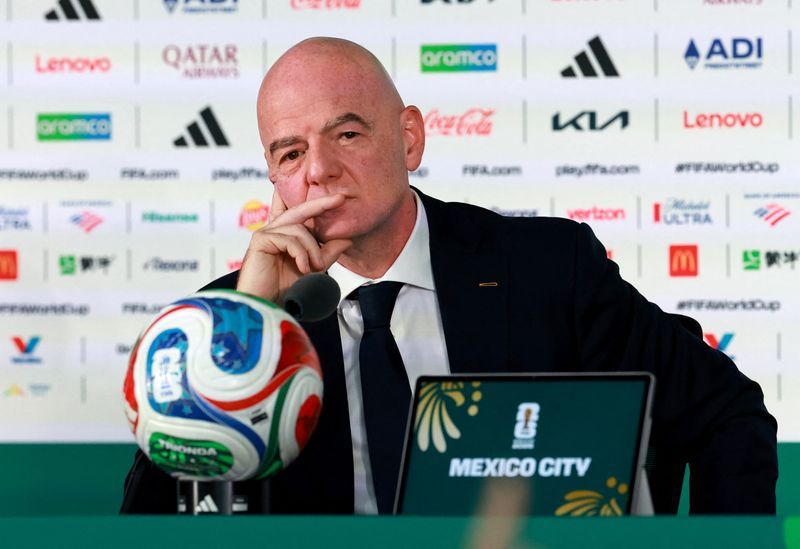
FIFA's leadership appeared to close ranks around Gianni Infantino this week, with the organisation's governing council gathering in Rabat to publicly reaffirm confidence in the president. Yet the show of unity masks a deeper institutional reckoning that is likely to reshape how world soccer's governing body conducts its affairs for years to come. The recent crisis over a now-abandoned proposal to commercialise future World Cup revenues has exposed fundamental fractures in FIFA's decision-making architecture, and regional confederations across Europe, Asia and the Americas are signalling they will demand far greater transparency and consultation before accepting major strategic initiatives in the future.
The immediate flashpoint that triggered the internal revolt centred on FIFA's handling of a commercial rights proposal that would have monetised portions of World Cup tournaments before they occur. National federations across multiple confederations protested vehemently that they had been excluded from meaningful consultation on the scheme, forcing FIFA into an embarrassing retreat. In the aftermath, FIFA issued a formal apology to all 211 member associations, acknowledging that the proposal "should have been handled differently" and conceding that neither the FIFA Council nor affiliated associations should have felt sidelined from the process. This mea culpa represents a significant admission that FIFA's processes fell short of acceptable governance standards, even if the organisation maintains that no formal regulations were technically breached.
What emerged from Wednesday's meeting in Rabat, however, was a more nuanced picture than simple contrition. FIFA announced it would conduct a comprehensive review of how the controversial proposal was developed and communicated, with findings to be presented at the Council's next gathering. The tone struck by FIFA officials was markedly conciliatory compared to the defensive posturing that characterised earlier public exchanges with critics. Secretary General Mattias Grafstrom, who had internally described the episode as a "sad and reproachable series of events," appeared alongside Infantino at a women's Africa Cup of Nations match, the two men photographed smiling and offering thumbs-up gestures to photographers. The symbolism was deliberate: a leadership determined to demonstrate stability and forward momentum.
Yet beneath this choreographed unity lies a more significant governance challenge that extends well beyond the abandoned World Cup commercial scheme. European Leagues, which represent over 1,300 clubs across the continent, has articulated broader complaints about FIFA's consultation practices. The body specifically criticised FIFA's approach to a separate proposal to expand the 2030 World Cup from 48 to 64 teams, characterising the four-week assessment timeline as unrealistically compressed. The criticism reflects a pattern: stakeholders are increasingly being presented with decisions rather than genuinely consulted during formulation. This distinction between token engagement and meaningful deliberation has become central to the governance debate now consuming FIFA's leadership circles.
Infantino's immediate political objective in Rabat was containment ahead of Morocco's March presidential election, where he will seek a fourth term extending through 2031. By securing the public backing of FIFA's management board and senior administration, he achieved that tactical goal. The president reciprocated by praising the work of his administration, and no public dissenting voices emerged from the assembled confederations. From a narrow political perspective focused solely on the approaching election, Infantino has successfully weathered the crisis and positioned himself as the consensus candidate.
However, the political calculus surrounding Infantino's leadership has shifted in ways that may prove consequential well beyond the 2027 election cycle. UEFA, European soccer's governing body, has openly questioned his leadership and approach to decision-making. Significant confederations including CONCACAF, which oversees soccer across North and Central America and the Caribbean, and the Asian Football Confederation have similarly expressed concerns. These are not marginal voices within FIFA's structure; they represent powerful constituencies whose support is essential for implementing major strategic initiatives. The fact that they are prepared to publicly voice criticism suggests the deference traditionally accorded to FIFA's executive has eroded considerably.
Infantino's position remains stronger than the extent of criticism might suggest, partly because he retains robust support among smaller associations, particularly across Africa and Asia. For many of these federations, FIFA development funding remains essential to sustaining national soccer programmes and academy infrastructure. This financial dependence creates a structural asymmetry in FIFA's internal politics that works strongly in Infantino's favour. Nevertheless, no viable challenger has emerged for the presidential election, a vacuum that might reflect the lack of alternative candidates rather than overwhelming enthusiasm for the incumbent. The absence of genuine competitive pressure in the electoral arena may actually increase external pressure on FIFA's governance structures, as dissident confederations seek to constrain presidential prerogatives through institutional reforms rather than electoral competition.
The commercial rights proposal has been abandoned, but the governance questions it exposed are unlikely to dissipate. Any future initiative involving World Cup commercial strategy, tournament expansion, or substantive reform proposals will encounter significantly elevated demands for transparency throughout the development process, extensive consultation with all major stakeholders, and detailed accountability mechanisms. FIFA leadership may attempt to present this as a temporary adjustment prompted by the specific controversy, but the shift in power dynamics is likely more durable. Regional confederations and major national associations have demonstrated they are willing to mobilise collectively when they perceive their interests are threatened, and that collective capacity now constrains FIFA's unilateral decision-making authority.
For Southeast Asian readers and administrators, these governance developments carry particular relevance. The Asian Football Confederation, of which Malaysia is a member, has openly raised concerns about decision-making processes at FIFA. Any expanded World Cup involving 64 teams rather than the traditional 32, or modified tournament structures, would carry direct implications for AFC qualification pathways and the resources available to member associations. The strengthening of confederational voice in FIFA governance could translate into greater protection for Asian interests in future World Cup formats and commercial arrangements. Simultaneously, the emphasis on stakeholder consultation might slow the pace at which FIFA implements major changes, potentially providing AFC members time to evaluate proposals before implementation.
FIFA's warning that it will "no longer tolerate any attacks on its integrity, good governance and due process" appears somewhat ironic given that the governance and due process questions originated with FIFA's own handling of the commercial proposal. The statement reads as a preemptive deflection of future criticism rather than a genuine commitment to enhanced transparency. Nevertheless, the organisation's acknowledgment that process and communication fell short of acceptable standards, even if technical regulations were observed, represents a concession to the principle that governance extends beyond formal compliance with written rules. How FIFA implements the promised review will substantially determine whether this governance reckoning produces meaningful institutional change or merely represents a temporary pause before business-as-usual decision-making resumes.

