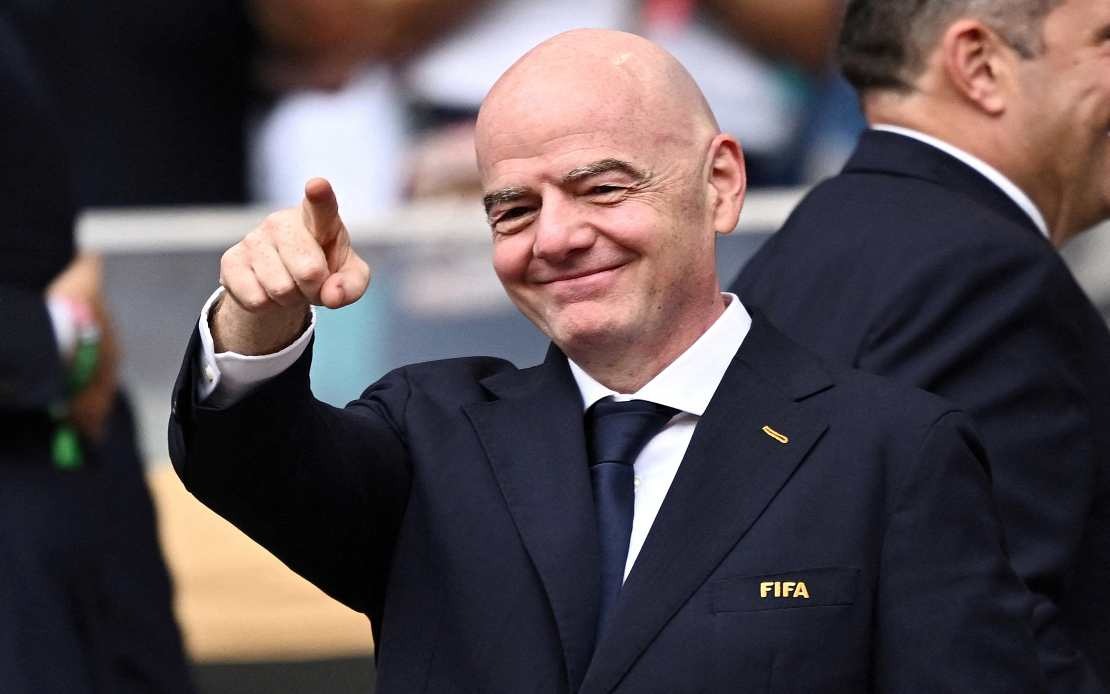
FIFA has sparked fresh governance concerns by distributing pre-written letters that praised Gianni Infantino's tenure as president to football associations worldwide, according to multiple media reports. The correspondence, which contained pre-filled names and signatures of association presidents, was circulated in the lead-up to the World Cup tournament scheduled for the United States, Mexico and Canada. The move underscores the extent to which FIFA has sought to orchestrate institutional support for Infantino's continued leadership, raising questions about the authenticity of grassroots backing for his re-election bid.
The letters themselves focused on highlighting what FIFA characterised as Infantino's principal achievements during his presidency. They emphasised his work in expanding sports infrastructure across member nations and his role in elevating women's football to greater prominence within the international game. However, the pre-written format and automated signature process stripped the correspondence of any genuine deliberation by the associations themselves, effectively reducing what should have been authentic endorsements to pro forma institutional gestures. Not all football associations received these letters, suggesting FIFA's distribution strategy was selective rather than comprehensive.
This disclosure arrives amid a period of considerable turbulence for FIFA's leadership structure and financial arrangements. In July, the global football governing body announced an ambitious fundraising initiative aimed at generating US$4.2 billion through the sale of approximately 20 per cent equity stake in a newly created entity. This entity would assume ownership of FIFA's valuable media and commercial rights portfolios, including all broadcasting rights associated with the World Cup tournament. The financial restructuring represents a significant strategic pivot for the organisation, fundamentally altering how it captures revenue from its premier competitions.
The investment opportunity has attracted interest from major financial players, with reports identifying Joshua Kushner's investment fund as a potential acquirer of the equity stake. Kushner, who is the brother of Jared Kushner—himself a prominent political figure as the son-in-law of United States President Donald Trump—brings substantial capital resources and business acumen to potential negotiations with FIFA. This connection to the Trump family has added a layer of political complexity to what might otherwise have been a straightforward commercial transaction, potentially amplifying international scrutiny of FIFA's governance during this sensitive period.
The proposed financial restructuring has proven deeply controversial within European football circles. UEFA, the governing body for European football, responded by announcing that all of its member associations would institute a comprehensive boycott of FIFA-organised tournaments unless and until the commercial rights proposal was completely abandoned. This represents an extraordinary escalation of internal resistance within world football's power structure, signalling that UEFA nations—which collectively represent some of the sport's wealthiest and most influential federations—view the proposal as fundamentally incompatible with FIFA's institutional integrity and member interests.
The convergence of these developments has created unprecedented pressure on Infantino's position. Reports from multiple sources indicate that football associations spanning the globe have raised formal objections to various aspects of his leadership strategy. The orchestrated letter campaign appears to represent an attempt to counter this growing opposition by demonstrating broad-based support, yet the manufactured nature of the endorsements arguably undermines rather than strengthens Infantino's standing. Many observers view the pre-written letters as symptomatic of a leadership that relies on institutional choreography rather than genuine consensus-building.
The situation reflects deeper structural tensions within FIFA's governance model. The organisation operates as a federation of national associations, each technically holding equivalent voting rights despite vast disparities in resources, infrastructure and global influence. This creates opportunities for central leadership to shape narratives through controlled communication channels, yet contemporary expectations around institutional transparency and participatory governance have increasingly exposed such practices as problematic. Infantino's team evidently calculated that proactively circulating supportive correspondence could neutralise momentum building against his continued leadership, but the strategy backfired once the pre-written nature of the letters became public knowledge.
For Malaysian football and Southeast Asian federations more broadly, these developments carry significant implications. Malaysia's football association operates within an international system that is undergoing profound institutional stress. The question of how FIFA structures its commercial rights and who controls broadcast access affects revenue flows to regional and national associations, potentially influencing resources available for domestic league development and talent cultivation. The broader governance crisis at FIFA also sets precedent regarding what constitutes acceptable behaviour from international sports bodies, with ramifications extending beyond football.
Moreover, the proposed commercial restructuring could reshape how Asian football federations access World Cup and other international competition broadcasting rights. A private equity stake in FIFA's commercial entity might prioritise returns to investors over equitable distribution of revenues to member associations, particularly those from less wealthy regions. This dimension adds weight to UEFA's boycott threat and suggests that governance questions are intimately connected to the material interests of football associations worldwide, not merely abstract principles of institutional integrity.
The immediate trajectory remains uncertain. Media speculation has suggested that Infantino might resign rather than face formal re-election proceedings marked by high-profile opposition and governance scandals. Alternatively, he might persist in attempting to consolidate support through various institutional mechanisms. What appears clear is that FIFA's internal politics have entered a volatile phase where traditional power consolidation tactics are proving increasingly ineffective against coordinated resistance from major footballing jurisdictions and broader international scrutiny of institutional practices.

