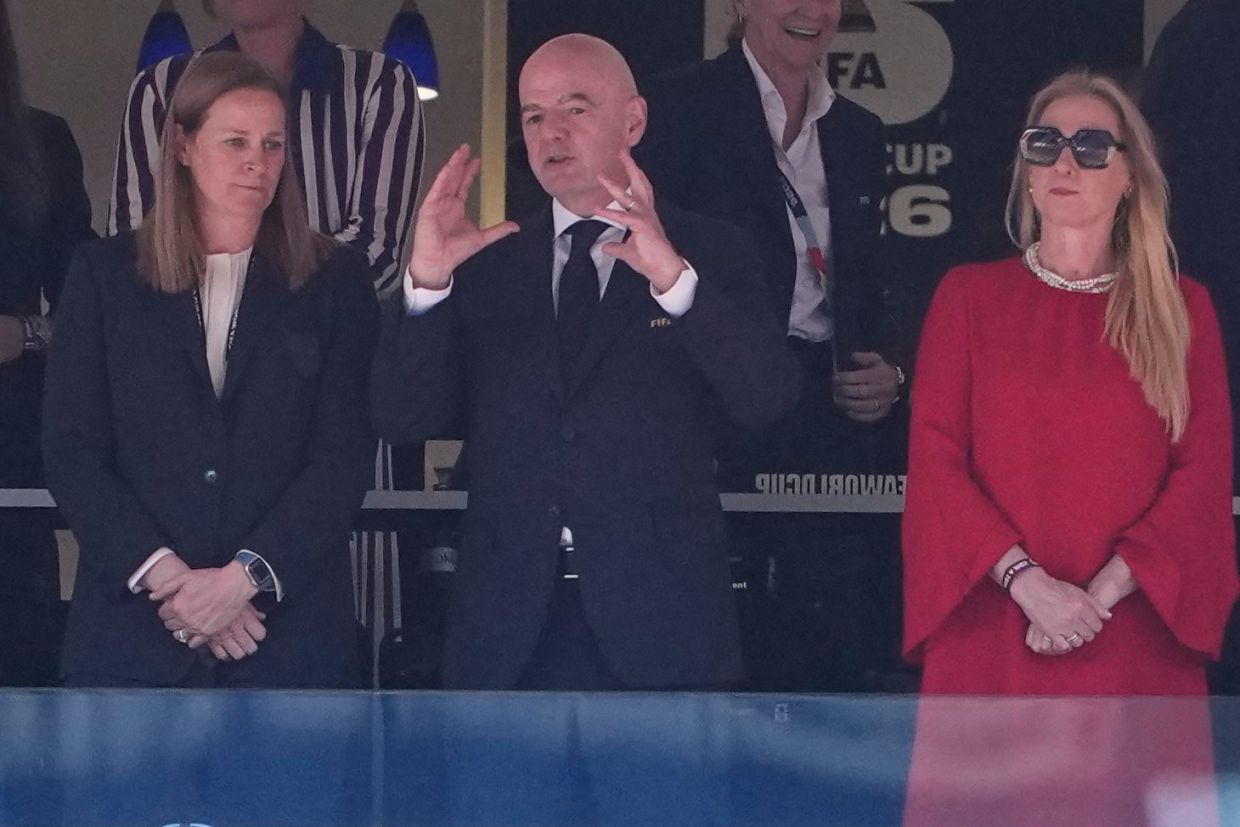
FIFA appears poised to emerge from one of the most contentious World Cup tournaments in recent memory financially triumphant and politically strengthened, despite a cascade of disputes that have exposed rifts between the sport's commercial interests and its foundational principles. Gianni Infantino, the 56-year-old FIFA president, has maintained an unwavering focus on revenue generation even as criticism from players, coaches, politicians and sports lawyers mounted over decisions ranging from ticket pricing to the controversial reinstatement of a suspended United States player. The organisation's ability to weather such storms suggests that for FIFA's leadership, the reputational damage inflicted by each controversy evaporates quickly once the tournament cycle moves forward.
The controversies that have plagued this World Cup iteration reveal a troubling pattern. Accusations that FIFA allowed political pressure from former President Donald Trump to influence a crucial disciplinary decision have prompted calls for Infantino's resignation from officials in the United Kingdom and Belgium. Football figures including renowned former Liverpool manager Jurgen Klopp have questioned whether the sport's integrity remains intact when geopolitical figures can apparently intervene in match officials' decisions. Sports lawyer Nick De Marco articulated a deeper concern: the issue extends beyond the original decision itself to whether FIFA has fundamentally compromised its authority as football's global regulator. These voices represent growing unease among the sport's stakeholders that commercial considerations and political convenience have begun to overshadow the rules that once defined the game.
Yet from FIFA's perspective, these objections matter far less than the financial scorecard. The organisation is projected to generate approximately $9 billion directly from the 2026 World Cup, representing a $2 billion increase compared to Qatar's 2022 edition. This remarkable revenue surge has been engineered through multiple revenue streams that extract value from every participant in the tournament ecosystem. Ticketing policies have drawn particular criticism for their premium pricing, with some fans spending close to $100 per person on matchday concessions, nearly double what attendees typically spend at National Football League games. Yet stadiums have remained full despite these prices, demonstrating either strong demand or the limited alternatives available to supporters.
The expanded tournament format has directly contributed to FIFA's windfall. By increasing the field from 32 to 48 teams, the organisation has created more matches, more broadcasting rights to sell and more commercial opportunities. The prize pool has doubled to a record $871 million, fundamentally altering the economics of international football participation. Every nation that qualifies now receives a minimum guaranteed payment of $12.5 million simply for participating, a sum that transforms national football associations' financial planning in developing regions. Cape Verde, a nation of approximately 600,000 people, earned over $21 million from its historic World Cup run, representing roughly 0.75 per cent of the entire country's GDP. For federations across Africa, Asia and the Caribbean, this FIFA generosity constitutes a vital portion of their annual budgets and provides the foundation for grassroots development programmes.
This financial dependency has created a structural advantage for Infantino as he prepares for re-election in early 2027. The election will occur at the 77th FIFA Congress in Rabat, Morocco, which is itself hosting the next World Cup. Each of FIFA's 211 member associations holds one vote, creating a one-nation-one-vote system that prioritises unity and collective benefit. Infantino is running unopposed, a status that reflects not merely his incumbency but the support he has cultivated across continental confederations. Football associations from Asia, South America and Africa have already publicly endorsed his candidacy. This represents his third consecutive term, following his appointment in 2015 in the aftermath of the corruption scandal that had ravaged FIFA's reputation and led to his predecessor Sepp Blatter's resignation.
The distribution of World Cup revenues has politically insulated Infantino from threats posed by the various controversies. Member federations that might otherwise question FIFA's governance have compelling financial incentives to maintain stability and continuity. The Asian Football Confederation president Sheikh Salman publicly stated that FIFA stands in its strongest position ever, a statement that reflects not merely the current administration's performance but the material benefits flowing to member states. The Royal Moroccan Football Federation similarly praised Infantino's stewardship in developing African and world football. These endorsements come from confederations representing the majority of FIFA's membership, ensuring that whatever criticism emanates from wealthy European nations or individual politicians carries limited weight in the formal governance structure.
The expansion of World Cup revenues has extended beyond FIFA headquarters to the broader commercial ecosystem surrounding the tournament. Stadium concession operators have reaped substantial rewards through mandatory premium pricing. Advertising networks have benefited from innovations such as mandated hydration breaks that effectively restructure the traditional two-half format into an American-style four-quarter game, creating additional commercial opportunities. Credit and debit card spending data compiled by Bank of America for the period of June 10 through June 21 revealed that World Cup host cities experienced year-on-year spending increases of 6.3 per cent, with spending by non-local visitors surging 16.7 per cent. These economic impacts provide host cities and nations with tangible evidence of tournament benefits, reinforcing their support for FIFA's expansion agenda.
Yet beneath these financial success metrics lies a persistent tension in FIFA's dual mandate. The organisation must simultaneously generate revenue and uphold the regulatory standards that ensure competitive fairness. Under Infantino's leadership, this tension has increasingly tilted toward the revenue side. The decision to permit a suspended American player to return to the field following apparent political intervention represents the most stark manifestation of this prioritisation. The fact that the controversy dissipated rapidly following Belgium's 4-1 victory over the United States illustrates how tournament momentum can rapidly overshadow governance concerns in public discourse. Infantino has adopted a posture of steadfast indifference to such criticism, maintaining focus on commercial objectives while opposition voices eventually lose prominence.
The tournament has generated genuine sporting achievements that partially deflect from governance controversies. Attendance figures at stadiums have remained robust despite premium pricing, indicating either strong underlying demand or the quality of matches being contested. Nine African teams reached the knockout stage, a result that reflects both improved continental football standards and FIFA's expansion formula that increases participation opportunities. The individual performances of marquee players have met expectations, with the sport's biggest stars consistently delivering the on-field spectacle that sustains global viewership. Host countries have provided hospitality and fan experiences that rank favourably compared to the previous two World Cups held in Russia and Qatar. These positive elements provide credible material for FIFA's narrative of tournament success and organisational competence.
The political support Infantino has consolidated suggests that whatever reputational damage the controversies have inflicted carries minimal practical consequences. Member federations recognise that Infantino's tenure has expanded their revenue streams and increased participation opportunities. The transparent quid pro quo of tournament expansion and financial generosity in exchange for political support represents a coherent organisational strategy. Whether such an arrangement serves the sport's broader interests remains contested, but for the immediate purposes of maintaining Infantino's political control, the formula has proven remarkably effective. His 2027 re-election appears virtually assured, pending no extraordinary intervention or dramatic reversal of current federation positions.
Looking forward, FIFA faces a fundamental question about the sustainability of mixing commercial maximisation with regulatory authority. The 2026 World Cup has demonstrated that controversies can be weathered provided sufficient financial benefits flow to the constituencies that control FIFA's governance. However, this model depends on continued revenue growth and expansion opportunities. Should market saturation or changing viewer preferences eventually constrain growth, the political coalitions that currently support Infantino may fracture. For now, however, FIFA's leadership has successfully demonstrated that financial success and reputational turbulence can coexist. The organisation's grip on global football remains as firm as ever, and the controversies that dominated headlines during the tournament appear destined to recede from memory once the next commercial cycle commences. In this calculus, problems need not be solved—they merely need to be forgotten.

