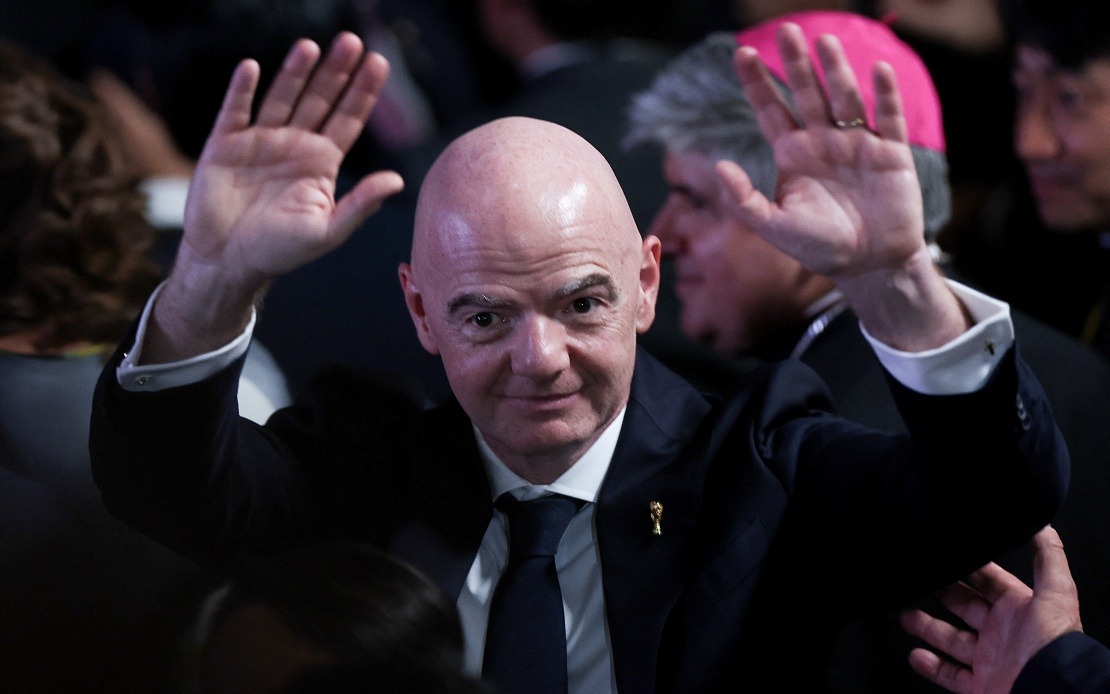
Football's governing body has thrown its weight firmly behind FIFA President Gianni Infantino, issuing a forceful statement on Saturday that dismisses alternative election processes and defends his record amid intensifying tensions within the global football community. The statement, released from Istanbul, marks FIFA's most direct intervention yet in a widening internal debate about Infantino's continued leadership and the legitimacy of his push for a fourth consecutive term at the helm of international football's administrative structure.
The organisation's central message was unambiguous: FIFA will neither support nor permit any presidential election mechanism that deviates from its established constitutional framework and democratic procedures. This rigid stance effectively neutralises any procedural challenges that might emerge from dissenting member associations or confederations, making clear that alternative pathways to the presidency remain closed within FIFA's formal governance architecture. By anchoring its position firmly in statutory compliance, FIFA has essentially preempted debate over how and when the next presidential election should occur.
Infantino's position rests on what FIFA characterises as democratic legitimacy, with the organisation asserting that member associations worldwide have repeatedly endorsed his tenure through formal votes. This claim to mandate-based authority is significant for a sport where the international federation comprises 211 member nations with vastly different political systems, cultural contexts, and football development levels. The breadth of this claimed support suggests that Infantino retains backing across multiple confederations and regions, though the depth of that backing remains contested.
FIFA's statement explicitly references backing from continental powerhouses, notably pointing to endorsements from South America's CONMEBOL and Africa's CAF. Both confederations carry substantial weight within FIFA's structures, representing populous regions with passionate football cultures and significant voting blocs. Their public support for Infantino effectively creates a buffer against challenges from other regions, particularly Europe where some member associations have been more vocally critical of his leadership approach and governance decisions.
Crucially, FIFA has accused unnamed detractors of mounting a coordinated campaign to undermine both the organisation and its president through what it characterises as allegations lacking factual grounding. This framing transforms the debate from a legitimate discussion about leadership direction into something more akin to misinformation warfare. By suggesting that criticism relies on "unsubstantiated assertions" and "demonstrably false claims," FIFA has attempted to delegitimise opposition while avoiding specific engagement with substantive criticisms that may have emerged.
The organisation's broader defence of Infantino focuses on his accumulated experience and track record in expanding football's global reach and commercial opportunities. FIFA argues that over three decades in European and world football administration, Infantino has contributed meaningfully to broadening the game's accessibility, increasing financial resources flowing to member associations, and extending development opportunities across diverse markets and regions. This framing emphasises stability, experienced management, and tangible benefits rather than engaging with governance concerns.
For Malaysian football stakeholders and Southeast Asian member associations, Infantino's continued presidency carries significant implications. His administration has overseen the expansion of World Cup tournaments, increased broadcast revenues distributed to member nations, and development programmes affecting associations across the region. Whether Southeast Asian federations have concerns about his leadership style or governance approaches remains largely invisible in public discourse, though their voting power in any presidential contest would prove decisive given FIFA's diverse membership base.
FIFA's rhetorical distinction between accepting "legitimate scrutiny" and rejecting efforts to "distort facts" and "manufacture distractions" reveals the organisation's defensive posture. This suggests that underlying criticisms do exist—otherwise, such emphatic denials would prove unnecessary. The statement's acknowledgment that scrutiny occurs, even while insisting it is being weaponised, implicitly concedes that Infantino's leadership faces questioning that extends beyond marginal voices.
The timing of this statement, released ahead of Infantino's campaign for a fourth term, indicates that FIFA perceives genuine risks to his reelection despite claimed widespread support. If his position were entirely secure, such a forceful institutional defence would seem superfluous. Instead, the statement appears designed to establish clear procedural guardrails while simultaneously dampening the oxygen available to alternative candidates or reform movements that might gain traction among undecided member associations.
For regional football organisations and Southeast Asian members contemplating their positions, the statement effectively signals that FIFA's institutional machinery stands behind Infantino and will not entertain structural alternatives. This creates a choice for member associations: work within existing frameworks to influence policy, or risk marginalisation if they pursue procedural challenges. The political message, though cloaked in governance language, centres on institutional continuity and centralised decision-making authority.
The broader implications for global football governance extend beyond personalities to questions about accountability, transparency, and how international sports federations should balance centralised administration with democratic input from member organisations. FIFA's emphasis on statutory procedures and its rejection of alternative processes reflect a philosophy that governance legitimacy derives from following established forms, even when substance-level questions about leadership direction remain contentious among constituents.
As Infantino's fourth-term campaign progresses, FIFA's institutional support will likely prove formidable. Member associations would need to mobilise unprecedented consensus to mount an effective challenge, and the organisation's gatekeeping of procedural legitimacy makes mounting such a challenge legally and politically difficult. The coming months will reveal whether this show of institutional force silences dissent or merely redirects it toward different channels.

