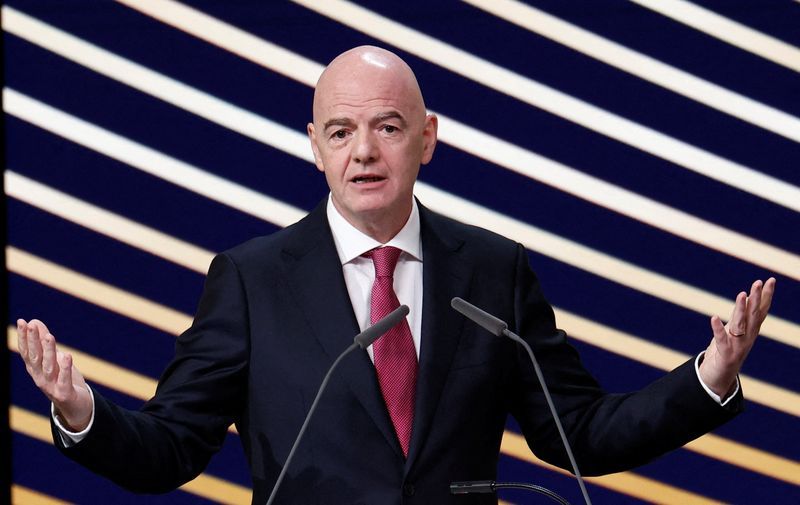
FIFA President Gianni Infantino's grip on the world's most powerful football office has considerably weakened following his contentious proposal to sell a stake in the World Cup to private investors. The ambitious scheme has triggered an unprecedented rebellion amongst major continental confederations, with national football associations from Serbia, Sweden and Wales publicly withdrawing their support. The timing is crucial: the next FIFA presidential election is scheduled for Morocco on March 18, 2027, marking the end of Infantino's current term and setting the stage for a potentially transformative contest that could reshape global football governance for the next four years.
For Malaysian and Southeast Asian football enthusiasts, the leadership contest carries significant implications. The FIFA presidency directly influences tournament structures, commercial arrangements, and the allocation of development funding that benefits smaller confederations like the Asian Football Confederation. Whoever inherits the position will determine how FIFA balances commercial interests with competitive integrity—a concern that resonates deeply across Asia, where emerging football nations aspire to meaningful World Cup opportunities and equitable revenue distribution.
Victor Montagliani, the Canadian businessman serving as CONCACAF president, has emerged as a serious challenger. His position as chief of North American football provides substantial leverage, particularly given that the 2026 World Cup will be hosted across the United States, Mexico and Canada—marking the first time CONCACAF hosts the tournament since 1994. Although CONCACAF rejected Infantino's private equity proposal, the confederation notably stopped short of the total boycott that UEFA implemented, suggesting Montagliani may possess the diplomatic flexibility needed to forge consensus amongst fractious confederation leaders.
Aleksander Ceferin, the Slovenian president of UEFA, represents the European establishment's interests in the race. His symbolic boycott of the previous World Cup final underscored UEFA's escalating frustration with Infantino's stewardship. As Europe's most influential confederation, UEFA's backing would prove decisive in any contested election, and Ceferin's willingness to directly challenge Infantino signals that serious alternative candidates now command major institutional support. However, Ceferin's European orientation could complicate consensus-building amongst African, Asian and South American federations.
Sheikh Salman bin Ibrahim Al Khalifa, the Bahraini sports executive and senior FIFA Council vice president, brings extensive experience within FIFA's inner circles. His AFC presidency positions him as a credible voice for Asian interests, yet his previous opposition to World Cup expansion to 64 teams reveals a conservative approach that may struggle to inspire reformist federations. The AFC itself has launched pointed criticism of Infantino's decision-making processes, suggesting the confederation seeks leadership that prioritises broader consultation over top-down directives.
Nasser Al-Khelaifi, the Qatari PSG president, represents an emerging consensus candidate amongst European officials according to recent reporting. His background bridging football, business and diplomacy, combined with his demonstrated success managing high-profile sports organisations, appeals to confederations seeking stability and commercial acumen. However, his Qatari nationality and close alignment with Middle Eastern interests may provoke resistance from confederations suspicious of regional concentration in football's highest offices.
Lise Klaveness, Norway's football federation president, stands as the contest's most unconventional candidate and most prominent female voice in global football leadership. Her vocal opposition to Infantino's commercialisation agenda and her willingness to pursue ethics complaints against FIFA—notably regarding the Folarin Balogun suspension controversy involving American presidential intervention—demonstrates principled independence. For Southeast Asian football, Klaveness represents a governance model emphasising transparency and competitive fairness over commercial expansion, though her European base may limit coalition-building across non-European confederations.
The Balogun incident itself illustrates the governance crisis confronting FIFA under Infantino's leadership. The suspension of a U.S. forward's ban following presidential intervention raised fundamental questions about FIFA's independence and decision-making integrity. This scandal particularly resonates in Asia, where federations fear that geopolitical leverage—whether wielded by powerful nations or wealthy investors—could determine sporting outcomes rather than competition on the field.
Infantino's privatisation proposal attempted to monetise the World Cup's commercial value by selling investor stakes, an approach that generated fierce opposition across confederations concerned about profit prioritisation over football development. The failed initiative revealed significant fractures in FIFA's governance structure, with major federations feeling excluded from consequential decisions. Southeast Asian football authorities, mindful of their region's developing status, worry that privatised World Cup management could entrench advantages for wealthy confederations while limiting opportunities for emerging nations.
The 2027 election will likely pivot on competing visions for FIFA's future: Infantino's commercial expansion model versus alternatives emphasising democratic governance, equitable development funding and competitive integrity. The outcome directly affects how World Cup opportunities distribute globally, how broadcasting revenues flow to smaller confederations, and whether FIFA's governance becomes more transparent and consultative.
For Malaysian football, the election outcome matters profoundly. AFC development funding, World Cup qualification pathway structures, and the confederation's influence within FIFA all depend on FIFA leadership that respects Asian interests. A Klaveness or Ceferin presidency might prioritise governance reform and competitive fairness, potentially benefiting ambitious Asian nations. Conversely, an Al-Khelaifi or Montagliani victory could emphasise pragmatic commercial partnerships that either advantage wealthier regions or privilege the 2026 host region.
The confederation rebellion against Infantino reflects broader frustration with FIFA's insularity and its prioritisation of commercial interests over member federation consultation. The five emerging candidates represent different governance philosophies, each potentially redirecting FIFA toward distinct priorities. Southeast Asian football watchers should monitor this contest closely, as the elected leader will shape tournament structures, funding mechanisms and governance standards affecting Asian football for the next four years and potentially beyond.

