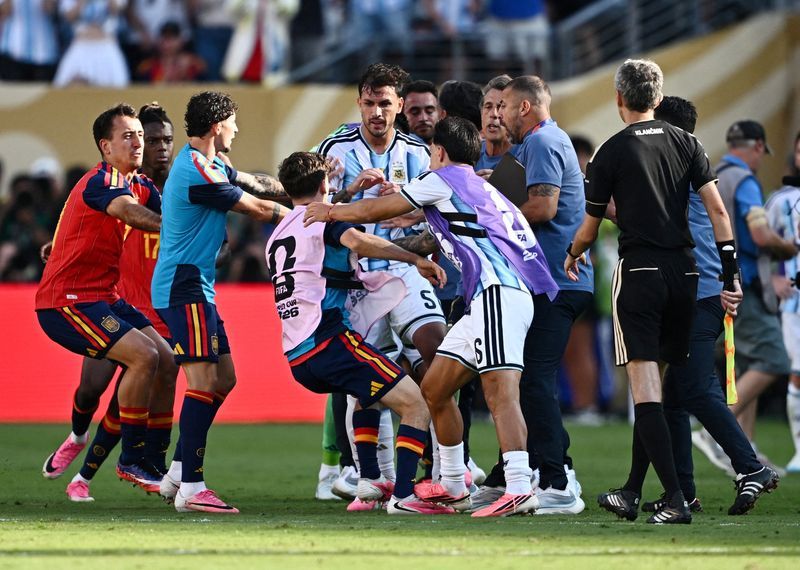
World football's governing body FIFA has triggered a formal disciplinary inquiry into the fractious scenes that tarnished what should have been a celebration at the conclusion of the World Cup final. The move came after Spain's 1-0 triumph over Argentina in extra time descended into chaos as tempers flared at the final whistle, with players from both nations becoming embroiled in a heated physical altercation on the pitch. To oversee the investigation, FIFA appointed a disciplinary and ethics prosecutor tasked with examining the circumstances that led to the confrontation and determining appropriate sanctions.
The dramatic match itself had already been marked by significant tension and disciplinary action before the violence erupted. Argentina midfielder Enzo Fernández received a straight red card in the 93rd minute of regular time for collecting a second yellow card, reducing the South American side to ten men at a crucial juncture. This dismissal, occurring late in the encounter when the pressure was mounting, fundamentally altered the dynamics of play and set the stage for heightened emotions. Argentina's numerical disadvantage meant they had to defend frantically through the remainder of normal time, and the frustration of fighting uphill against a full Spanish complement clearly weighed heavily on the players' minds.
Spain eventually secured their second World Cup title through winger Ferran Torres, who converted decisively during the extra-time period. The moment of Spain's victory should have been met with jubilation and celebration, yet instead it triggered an outbreak of unsporting behaviour. Rather than accepting the result with professionalism, players from the defeated Argentine squad initiated confrontations with their Spanish counterparts immediately upon the referee's final whistle. The incident began when midfielder Leandro Paredes clashed with multiple Spanish players, most notably with defender Eric García and midfielder Gavi, who both found themselves drawn into the physical exchanges.
What started as isolated altercations between individual players rapidly escalated into a broader melee involving numerous members of both squads. The two teams exchanged repeated shoves and pushes, with the situation deteriorating to the point where officials and support staff had to physically intervene to separate the combatants. Argentina coach Lionel Scaloni, witnessing the unseemly scenes unfold before him, attempted to restore order by appealing directly to his players to cease their aggressive behaviour. The unseemly conduct represented a significant blemish on what had been a highly competitive and tactically intense encounter, transforming the final whistle from a moment of sporting triumph into one marred by regrettable violence.
For Malaysian and Southeast Asian football enthusiasts, this incident raises important questions about the conduct expected of elite athletes on the world's largest sporting stage. The World Cup final, watched by billions globally, serves as a showcase of what the sport can achieve when played with skill, passion, and respect. When such high-profile matches are undermined by physical confrontations, it sends troubling messages to younger players and supporters who look to these athletes as role models. The investigation itself underscores FIFA's commitment to maintaining disciplinary standards, though critics argue the governing body's track record in addressing misconduct with consistency remains uneven.
The appointment of a dedicated disciplinary and ethics prosecutor signals FIFA's intention to conduct a thorough examination of the circumstances surrounding the brawl. Such investigations typically involve reviewing video footage from multiple angles, gathering statements from match officials who witnessed the events firsthand, and potentially interviewing the players and coaches involved. The ethics component of the prosecution mandate suggests that FIFA will not merely assess the incidents themselves but also evaluate whether broader conduct issues or systemic problems contributed to the atmosphere that culminated in violence. This comprehensive approach may determine whether individual players face suspension or financial penalties, and whether either national federation receives sanctions.
The absence of an announced timeline for completing the investigation leaves considerable uncertainty about when findings might be released or what consequences might follow. In previous high-profile cases, FIFA has taken weeks or even months to conclude disciplinary matters, particularly those involving multiple parties and complex circumstances. For Spain and Argentina, the waiting period could create additional diplomatic complications, especially given the passionate nature of football culture in both nations. Both countries will be anxious to understand what their respective federations and players might face, and whether the investigation could impact their preparations for upcoming international fixtures or competitions.
This incident also reflects broader tensions that have characterised matches between these two rival nations in recent years. The Argentina-Spain rivalry carries historical weight within world football, and encounters between the sides frequently display an edge that goes beyond typical competitive intensity. The World Cup final setting, with the ultimate prize at stake and the culmination of months of preparation and national hope concentrated in a single match, naturally elevates emotional investment to extraordinary levels. However, such circumstances do not excuse physical confrontations that violate football's fundamental principles of respect and fair play.
The investigation carries implications extending beyond the two nations directly involved. Other football-playing countries across Southeast Asia and beyond will closely monitor FIFA's response, as decisions made in high-profile cases establish precedents that filter down through all levels of international football governance. If FIFA's sanctions are perceived as lenient, it may signal to players and teams that physical altercations at major tournaments carry minimal consequences, potentially encouraging similar conduct in future competitions. Conversely, if sanctions prove severe, FIFA will demonstrate its resolve to maintain discipline, though doing so against nations and players of such prominence requires careful calibration to avoid accusations of bias or favouritism.

