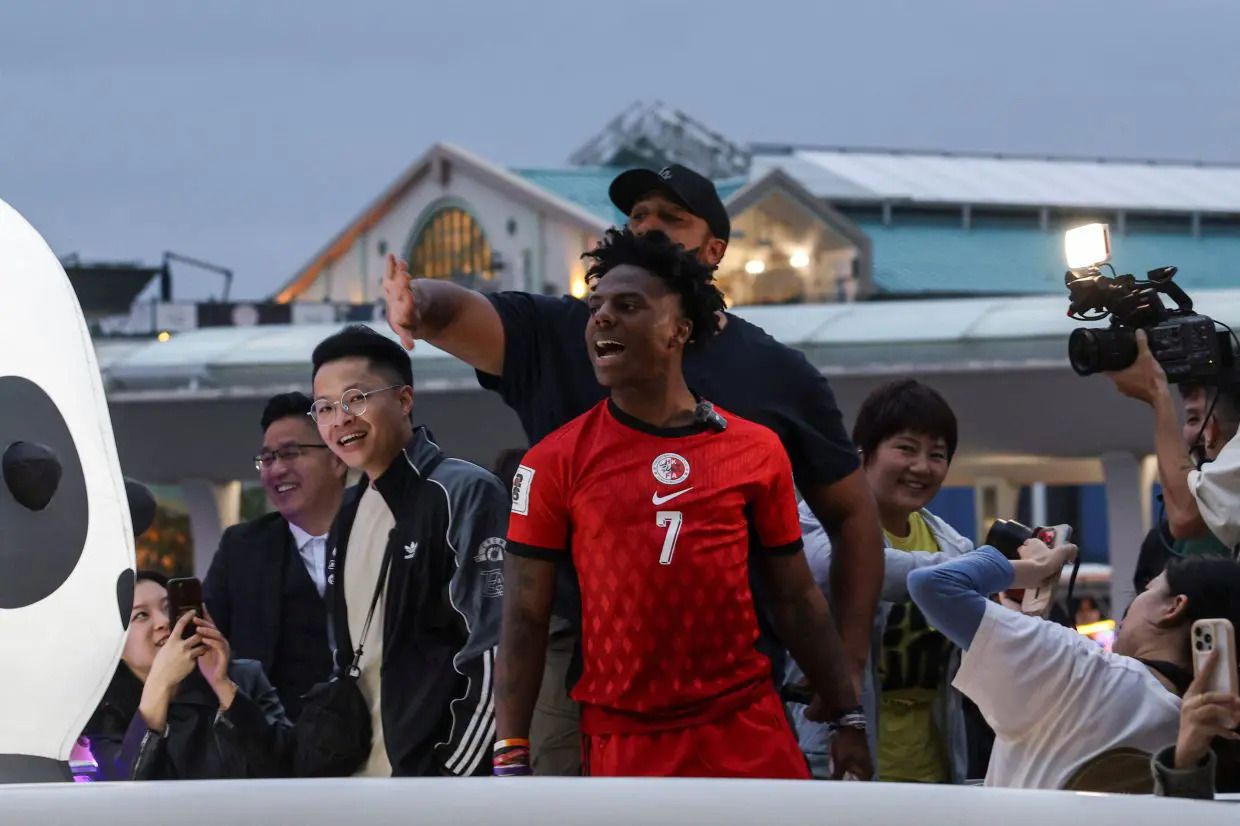
FIFA announced this week that it is investigating allegations of racist insults directed toward the prominent content creator known as IShowSpeed during last week's World Cup fixture between Argentina and Cape Verde at Miami Stadium. The world governing body of football revealed its immediate response to the incident in a statement posted on social media on Tuesday, emphasising that it had become aware of the concerning encounter involving a supporter and the streamer and had swiftly initiated a formal inquiry into the matter.
Darren Watkins Jr, who operates under the online persona IShowSpeed, commands an enormous digital following that underscores the influence of modern content creators in mainstream culture. With more than 57 million subscribers across YouTube alone, and tens of millions additional followers distributed among competing streaming and social media platforms, the 21-year-old African-American entertainer represents a new generation of celebrity whose reach extends far beyond traditional sports viewership. His substantial audience means that incidents of harassment directed at him carry particular significance, potentially influencing how millions of younger fans perceive the sport and its institutions.
The streamer's presence at the World Cup represents a deliberate modernisation of how football's premier competition engages with digital audiences. Operating under a collaborative arrangement negotiated between FIFA, YouTube, and American broadcaster Fox Sports, IShowSpeed has been granted special access to attend and broadcast live footage from matches, bringing real-time commentary and behind-the-scenes perspectives to his global fanbase. This approach reflects the evolving landscape of sports media, where traditional broadcasting partnerships now intersect with independent content creators who often command viewership numbers comparable to established television networks.
The incident at Miami Stadium was not an isolated occurrence, according to reports documenting the streamer's World Cup experience. During a subsequent match involving Argentina and Egypt on Tuesday, IShowSpeed faced further harassment when an Argentine supporter engaged in racial mockery, specifically imitating monkey gestures in an encounter with the content creator. The repetition of such conduct within a short timeframe suggests a broader pattern rather than a singular lapse in spectator behaviour, raising questions about stadium management and the effectiveness of current measures designed to prevent discriminatory conduct during matches.
FIFA's institutional response, articulated through its official statement, conveyed an unambiguous position regarding racist conduct. The organisation declared that it "strongly condemns racism, hate and discrimination in all forms," emphasising that such behaviour fundamentally contradicts the values that football purports to champion. The statement explicitly articulated that these actions have no legitimacy within the sport, at the World Cup specifically, or throughout society more broadly, positioning anti-racism as a matter extending well beyond the sporting realm into broader questions of social responsibility.
The investigation carries implications for how FIFA manages its events and maintains standards of conduct among spectators. As the sport navigates increasing internationalisation and expands its commercial partnerships with digital platforms and creators, the governance frameworks surrounding fan behaviour face new pressures. The presence of high-profile content creators with massive followings creates additional complexity, as incidents that might previously have affected only those physically present at a stadium now circulate instantaneously among millions across multiple continents through social media and streaming platforms.
For Southeast Asian audiences and the broader global south, this episode reflects ongoing tensions within international sports governance. Racism within football remains a persistent challenge across multiple continents, from European club competitions to international tournaments. The World Cup, positioned as a celebration of global football culture, becomes a testing ground for whether international institutions can meaningfully address discriminatory behaviour or whether such conduct persists despite formal condemnations and investigative procedures.
The involvement of American broadcaster Fox Sports and the matches being hosted in Miami adds a particular dimension to this incident. The United States has been repeatedly highlighted as a venue for racist incidents in sports, and the World Cup's expansion to include American matches places scrutiny on whether host nation infrastructure and spectator management systems can effectively prevent such conduct. The specific targeting of an African-American streamer carries additional weight given historical contexts of racism in American sports culture and society more broadly.
IShowSpeed's experience also raises questions about duty of care and protective measures. When FIFA grants special access to content creators who will interact directly with crowds, the organisation arguably assumes responsibility for ensuring their safety and dignity. The recurrence of harassment within days of the initial incident suggests that either preventative measures were insufficient or that those measures were not adequately enforced across multiple match venues.
The investigation's outcome will signal FIFA's commitment to translating its anti-racism rhetoric into tangible consequences. Historically, football's governing bodies have faced criticism for investigations that appear performative rather than substantive, generating headlines without producing meaningful sanctions or systemic reforms. Whether this particular inquiry results in swift action against identified perpetrators, policy changes, or heightened enforcement mechanisms will substantially influence both the sport's credibility on this issue and the experience of marginalised individuals attending World Cup matches in future editions.

