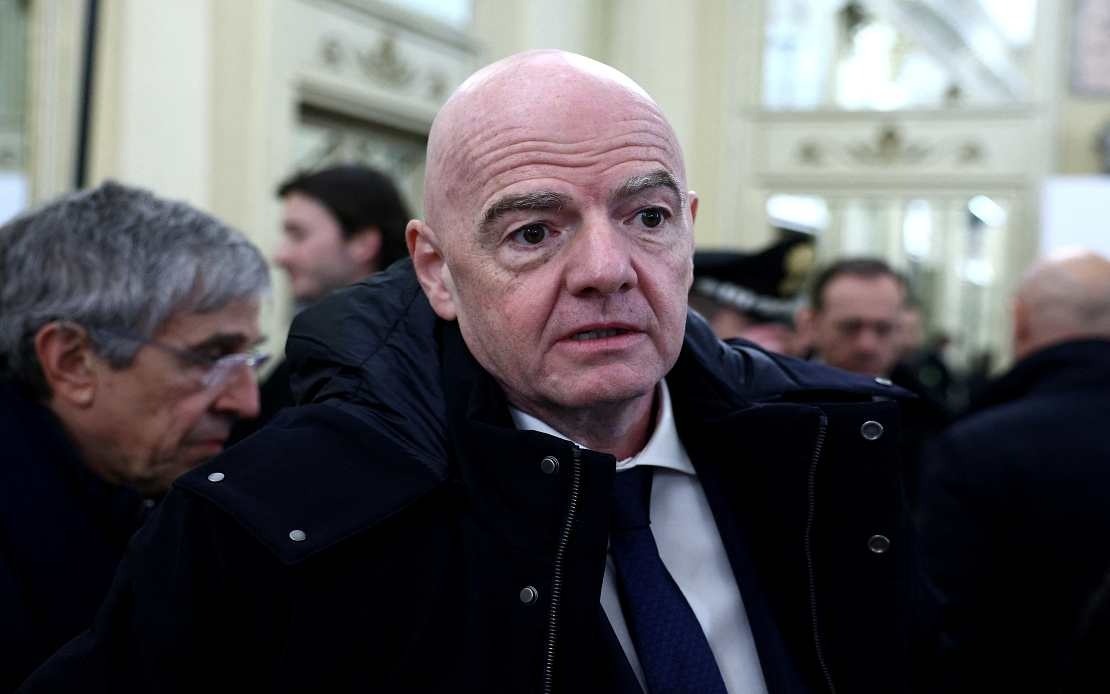
The International Olympic Committee has received a formal complaint against FIFA President Gianni Infantino, alleging that he has repeatedly violated rules governing political neutrality in his interactions with world leaders. Human rights organisation FairSquare, which filed the complaint, contends that Infantino's conduct contradicts the Olympic Charter and the IOC's ethics code, to which he became subject upon joining the IOC as a member in 2020.
The allegations centre on Infantino's management of a disciplinary matter involving a US footballer, where the organisation claims the FIFA president inappropriately allowed external political influence to affect the decisions of supposedly independent committees. According to the complaint, FIFA's disciplinary committee suspended a one-match ban that would have prevented the player from competing in a crucial World Cup knockout fixture against Belgium. FairSquare argues this decision came suspiciously soon after a direct telephone conversation between the US President and Infantino, raising serious questions about the integrity of FIFA's internal governance structures.
Infantino has publicly maintained that FIFA's various committees operate with complete autonomy and are insulated from outside interference, yet he has declined to provide any substantive explanation for the reversal of the disciplinary decision. This silence has only amplified concerns among oversight bodies and civil society organisations about whether procedural safeguards are genuinely in place to protect the sport's governance from political pressure. The absence of transparent reasoning from FIFA has become a focal point of the broader controversy surrounding the case.
FairSquare's formal submission to the IOC outlines what it characterises as five explicit violations of neutrality protocols, alongside preliminary evidence supporting two additional serious breaches of the ethics framework. The organisation's investigation suggests a pattern of conduct rather than isolated incidents, strengthening the case that systemic problems may exist within FIFA's leadership regarding political independence. The complaint represents an escalation in the dispute, moving the matter from FIFA's internal mechanisms to an external, internationally respected oversight body.
The human rights organisation is not acting alone in its criticism. In December, FairSquare had already lodged a complaint directly with FIFA's own ethics committee, following established procedures for addressing governance concerns. That internal complaint appears to have gained traction beyond FairSquare itself, as the Norwegian Football Federation subsequently took the step of formally writing to FIFA's ethics committee to urge serious consideration of the allegations. This support from a national football federation signals that concerns about Infantino's conduct extend beyond advocacy groups into the mainstream football community.
The matter has also attracted political attention in Europe. On June 29, fifty members of the European Parliament issued a joint letter to FIFA's ethics committee demanding that it thoroughly investigate FairSquare's allegations. The involvement of such a large cross-section of European parliamentarians underscores the gravity with which Western democracies view the integrity of FIFA's operations and the potential compromise of fair play through political interference. This level of legislative scrutiny places additional pressure on FIFA to respond substantively to the claims.
For Malaysian and Southeast Asian readers, the significance of this dispute extends beyond European or North American football politics. FIFA's credibility as a global organisation directly affects how its decisions regarding international competitions are perceived across all member nations, including Malaysia. Any evidence that the organisation's leadership allows external political pressure to influence committee decisions undermines the fundamental principle that international sport should remain independent from political manipulation. This principle is particularly important in the Asian context, where smaller nations rely on transparent, fairly applied rules to compete on an equal footing with larger, more politically influential countries.
The complaint also reflects broader concerns about how international sporting bodies respond to allegations of misconduct by senior officials. If Infantino's alleged breaches are substantiated, it would demonstrate that even figures at the highest levels of global football governance can face accountability through formal processes, even though the ultimate outcomes remain uncertain. The IOC's decision on whether to investigate the claims will send a significant message about the effectiveness of oversight mechanisms in international sports administration.
The football world is watching closely to see how the IOC responds. If the Olympic body decides to launch a formal investigation, it would represent a historic moment of external scrutiny into FIFA's internal operations. Conversely, if the complaint is dismissed without serious examination, it may suggest that even credible allegations against senior figures lack sufficient leverage to trigger action. For football fans and administrators across Southeast Asia, the outcome will likely influence their confidence in FIFA's ability to govern the sport fairly and transparently at the highest levels.

