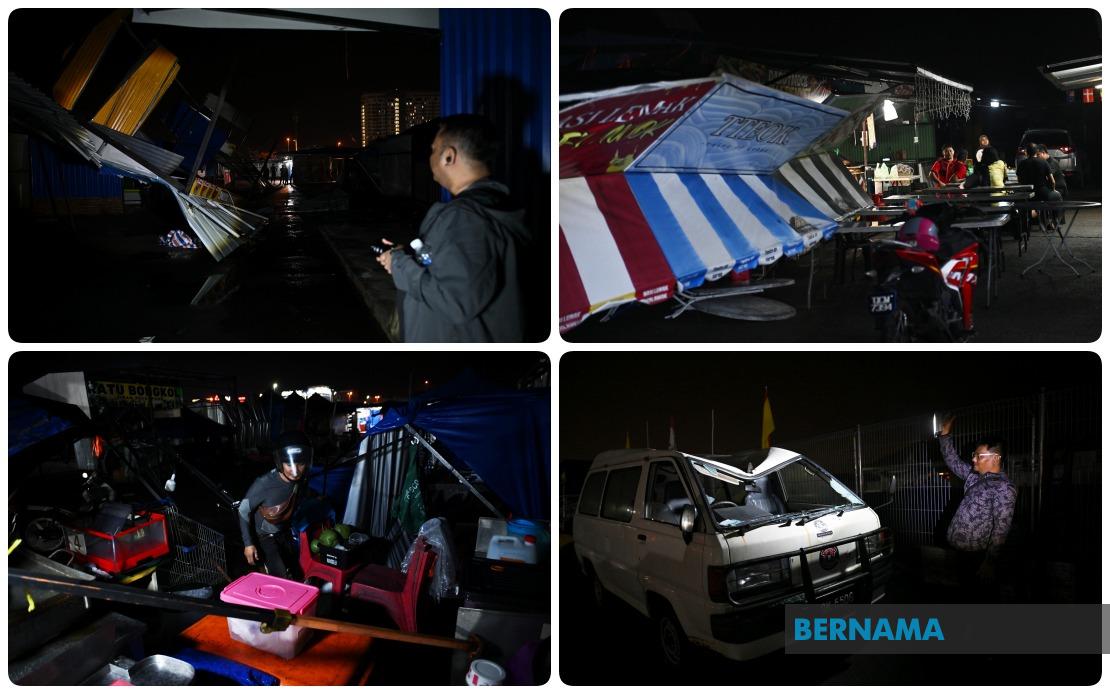
A violent thunderstorm that swept through Kuching over the weekend has dealt a significant blow to the N6 Metrocity 2 Youth Night Market, forcing its temporary closure after strong winds tore through vendor canopies and damaged critical infrastructure at the popular trading hub. The incident, which struck during peak business hours when foot traffic is typically heaviest, sent traders scrambling to safety as structural damage posed an immediate risk to life and limb.
The intensity of the weather system caught many by surprise, with vendors describing scenes of chaos as wind-lifted canopy structures became dangerous projectiles. Mohamad Faisal, a 42-year-old trader who has operated at the night market for a decade, recounted the harrowing moments when he and fellow merchants were forced to abandon their stalls. He noted that the velocity of the winds was such that canopies flew through the air in multiple directions simultaneously, creating an unpredictable and life-threatening environment that discouraged him from attempting to protect his merchandise.
The physical toll on the market has been substantial. Deputy chairman Hamzah Hassan confirmed that approximately 40 trader lots out of roughly 300 permanent stalls sustained severe damage, with losses concentrated primarily on the canopy structures themselves. Individual traders face replacement costs ranging from RM2,000 to RM5,000 per canopy depending on size and construction specifications, figures that do not account for damaged business equipment including cooking appliances and water containers. The cumulative exposure for affected vendors suggests total losses approaching RM200,000 across the market.
Beyond individual vendor losses, the market's shared infrastructure suffered extensive harm. The association's main stage, management office, and electrical supply cable network all experienced significant damage, creating additional financial pressure on the collective operations. These common facilities are essential to the market's functionality, and their repair represents an additional burden that goes beyond individual trader compensation. The scope of destruction appears unprecedented for the venue, according to Hamzah, who stated that this incident surpasses previous natural disaster situations the market has encountered.
The Malaysian Meteorological Department had issued formal thunderstorm warnings for the region, flagging Kuching along with Serian, Siburan, Samarahan, Simunjan, Kapit and Song between 5 pm and 9 pm on the day of the incident. The forecast window captures the evening peak trading hours when maximum commercial activity occurs and when the greatest concentration of traders and customers would be present. This timing amplified the disruption to business operations and heightened safety concerns among those present.
For traders who depend on the night market as their primary or supplementary income source, the incident represents a severe financial setback. Beyond the immediate replacement costs for damaged infrastructure, the closure itself means suspended revenue during a critical trading period. The night market format has long provided entry-level entrepreneurial opportunities for small-scale vendors throughout Sarawak, and disruptions of this magnitude can have ripple effects through local supply chains and consumer access to affordable goods and services.
Hamzah Hassan has signalled that market management is actively seeking financial assistance to distribute among affected traders, positioning requests toward relevant government ministries, locally elected representatives, and cooperative organisations. This approach reflects recognition that individual traders lack resources to absorb such losses independently and that coordinated support may be necessary to ensure business continuity. Such disaster relief mechanisms exist in many Malaysian jurisdictions, though access and speed of disbursement vary considerably.
The incident highlights broader vulnerability challenges facing informal sector traders across Southeast Asia who operate in outdoor or semi-enclosed venues. Climate patterns in the region have demonstrated increasing volatility, and weather events of this intensity are not necessarily rare occurrences. However, adequate infrastructure protection remains inconsistent, with many night markets and outdoor trading zones operating with minimal wind-resistance provisions or emergency protocols.
For Malaysian policymakers and municipal administrators, the Kuching incident underscores the need for comprehensive disaster preparedness frameworks targeting informal economy spaces. Investments in reinforced canopy systems, emergency warning networks, and rapid-response support mechanisms could mitigate future damage. The night market represents an important component of urban economic activity and employment, deserving consideration within broader resilience planning.
The temporary closure will likely impact not only the traders but also the consumer base that frequents the market during weekend evenings. Recovery timelines remain unclear, pending assessment of repair requirements and funding availability. Market management's willingness to solicit assistance suggests a collaborative approach to rebuilding, though the speed of recovery will depend significantly on the responsiveness of government agencies and other stakeholders.
Meanwhile, traders are documenting losses and gathering evidence of damage in anticipation of potential assistance applications. The next phase of the situation will revolve around damage assessments, prioritisation of repairs, and allocation of emergency support. For the broader Kuching business community, the event serves as a reminder of environmental risks inherent in outdoor commercial operations and the importance of robust contingency planning.

