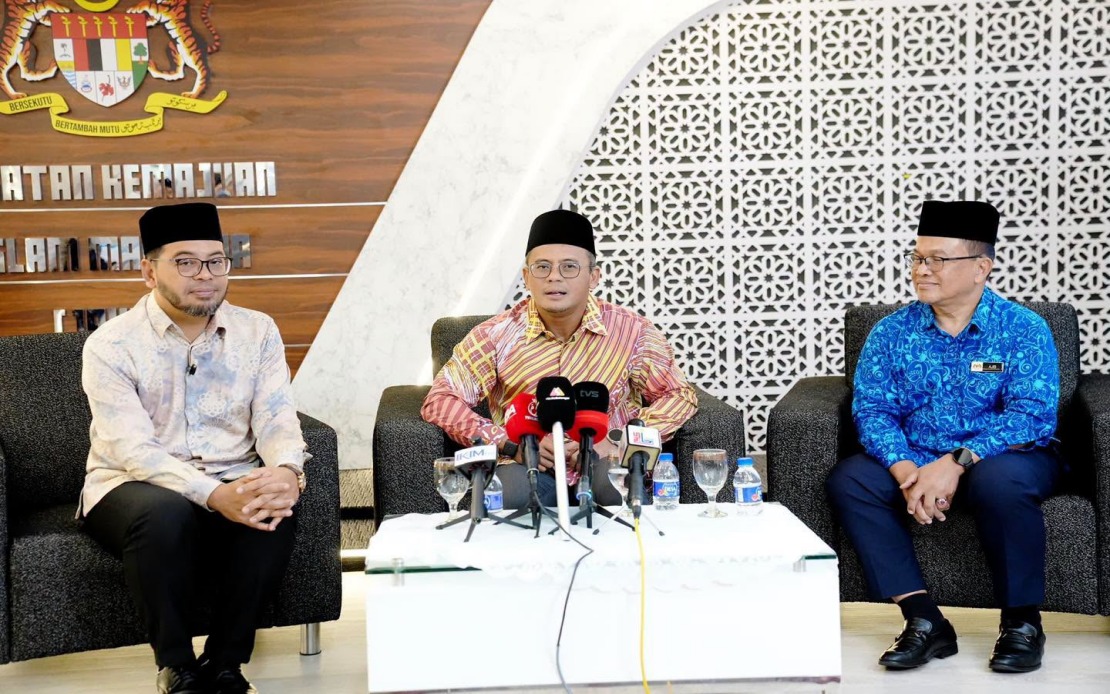
The Festival Turath Islami Selangor has outgrown its regional roots and will debut as a national event next year, marking a significant expansion of what has become a premier gathering for Islamic scholarly discourse in Malaysia. The fourth edition, renamed Festival Turath Islami Malaysia (FTIM) 2026, will run for eight days beginning September 13, with operations centred at the Putra Mosque in Putrajaya rather than the Selangor State Mosque where previous iterations took place. This geographical shift reflects not merely a change of venue but signals the Malaysian government's heightened commitment to positioning classical Islamic scholarship as a cornerstone of national intellectual life and religious development.
Selangor Menteri Besar Datuk Seri Amirudin Shari announced the expansion at a media briefing in Putrajaya, emphasising that the transition to national scale would enable organisers to implement programming at a magnitude previously impossible at state level. The festival represents a collaborative undertaking between the Selangor State Government and the Federal Government through the Prime Minister's Department (Religious Affairs), indicating alignment between state and federal authorities on the importance of preserving and promoting Islamic intellectual traditions. Minister in the Prime Minister's Department (Religious Affairs) Dr Zulkifli Hasan attended the briefing, underscoring federal participation in shaping the festival's direction and content.
This year's edition takes as its central focus the classical Sufi masterwork Al-Hikam al-Ata'iyyah, attributed to the renowned Islamic scholar and mystic Ibn Ata-illah As-Sakandari. The curated theme, "Hikmah Warisan Islam" (The Wisdom of Islamic Heritage), reflects the festival's broader mission to excavate and celebrate the enduring relevance of foundational Islamic texts to contemporary society. Al-Hikam al-Ata'iyyah occupies a distinctive place in Sufi scholarship, offering profound meditations on sincerity, spiritual trust, and the intimate bond between the believer and the Divine. Its influence has permeated Islamic intellectual circles across centuries and remains particularly resonant throughout the Malay-speaking world, where its teachings continue to shape spiritual practice and philosophical inquiry.
The festival's trajectory since inception in 2023 demonstrates a deliberate pedagogical strategy. Each annual edition has selected a seminal classical work as its anchor text, creating a structured curriculum for serious Islamic learning. The inaugural festival examined Ihya' 'Ulumuddin by Imam Al-Ghazali, a monumental treatise on Islamic jurisprudence and spiritual practice. Subsequent years turned attention to Al-Arba'in al-Nawawiyah by Imam al-Nawawi and Tafsir al-Jalalain by Imam Jalaluddin al-Suyuti. This methodical approach transforms the festival into something more sophisticated than a mere cultural showcase; it functions as an advanced seminar series designed to deepen Malaysian audiences' engagement with Islam's intellectual heritage.
The FTIM 2026 programme will draw upon expertise from 23 scholars spanning both local and international contexts, collectively delivering more than 42 scholarly sessions over the eight-day period. The international roster includes Sheikh Dr Ali Jum'ah, a figure of considerable standing in contemporary Islamic scholarship. Domestic participants encompass Prof Dr Sayyid Idris al-Fasi al-Fihri, Ustaz Dr Adi Hidayat, Ustaz Wadi Annuar, and Selangor Mufti Datuk Setia Dr Haji Anhar Haji Opir. This assemblage of intellectual talent indicates organisers' ambition to facilitate genuine cross-pollination between Malaysian Islamic scholars and their international counterparts, potentially elevating the quality of discourse and establishing Malaysia as a serious venue for advanced Islamic learning within Southeast Asia.
The festival calendar encompasses multiple complementary programming streams designed to accommodate diverse levels of engagement. Morning Quranic study circles known as Kuliah Subuh will launch each day's intellectual work. Participants will engage in collective recitation of Dalail al-Khairat, the classical devotional text. Over five consecutive days, Talaqqi Kitab Al-Hikam sessions will enable direct engagement with the year's focal text through intensive study circles. Evening programming will feature Tausiah Perdana (inaugural lectures), Qasidah performances (classical Islamic musical poetry), and an Islamic Book Festival component, ensuring the event appeals to audiences beyond specialist scholars and accommodates various levels of Islamic learning and spiritual interest.
Notably, the 2026 edition will inaugurate the National Muzakarah Ulama Turath, a new institutional mechanism bringing together Islamic scholars from throughout Malaysia for collaborative intellectual work. Muzakarah sessions traditionally function as forums for peer consultation and scholarly consensus-building on Islamic jurisprudence and practice. By establishing this national platform within the festival framework, organisers create space for Malaysia's ulama to collectively address contemporary challenges facing Muslim communities while drawing on classical textual wisdom. This initiative suggests official recognition that Malaysian Islamic leadership requires structured opportunities for intellectual exchange and coordinated response to social questions.
The expansion to national status and the introduction of international scholarly participation position FTIM 2026 as potentially influencing Islamic intellectual trends across Southeast Asia. Malaysian government investment in such programming reflects broader strategic thinking about national identity and regional religious influence. By hosting major international Islamic scholars and creating platforms for sustained engagement with classical texts, Malaysia positions itself as a custodian and interpreter of Islamic heritage for the wider region. This has implications for Malaysia's soft power positioning and its role in global Islamic intellectual discourse, particularly as Western understandings of Islam remain contested and Southeast Asian Islamic contexts increasingly demand authentic regional scholarship.
The relocation of the festival's physical hub from Selangor to Putrajaya, the federal territory designated as Malaysia's administrative centre, carries symbolic weight beyond logistical convenience. Putrajaya's Putra Mosque serves as an architectural and religious focal point of national governance. Situating the festival there integrates Islamic scholarly practice into the symbolic heart of Malaysian governance, suggesting that Islamic intellectual tradition occupies a central place in national vision rather than occupying a peripheral or supplementary position. This geographical choice communicates to both domestic and international audiences that Malaysia's leadership views Islamic heritage scholarship as integral to national development and social cohesion.
The festival programme structure balances intellectual rigour with accessibility, combining advanced scholarly sessions with public programming such as the Islamic Book Festival component. This inclusive approach recognises that Islamic learning in contemporary Malaysia encompasses specialists, religious professionals, and engaged lay audiences. By creating multiple entry points for participation, the festival democratises access to classical Islamic knowledge while maintaining scholarly credibility. The eight-day duration allows for both intensive specialist engagement and periodic drop-in public participation, maximising reach across different demographic and educational backgrounds within the Malaysian Muslim community.
For Malaysian readers, the expansion of FTIM 2026 offers concrete opportunities for deeper engagement with Islamic intellectual tradition during an era when such structured learning opportunities remain limited. The festival represents official acknowledgment that Islamic heritage comprises not merely historical artefacts but living intellectual resources relevant to contemporary ethical, social, and spiritual questions. The international scholar participation creates rare occasions for Malaysian audiences to encounter high-level contemporary Islamic thought while accessing classical texts through perspectives of globally recognised experts. For those interested in Islamic learning, religious studies, or interfaith dialogue, the festival provides substantive programming combining academic rigour with spiritual depth.

