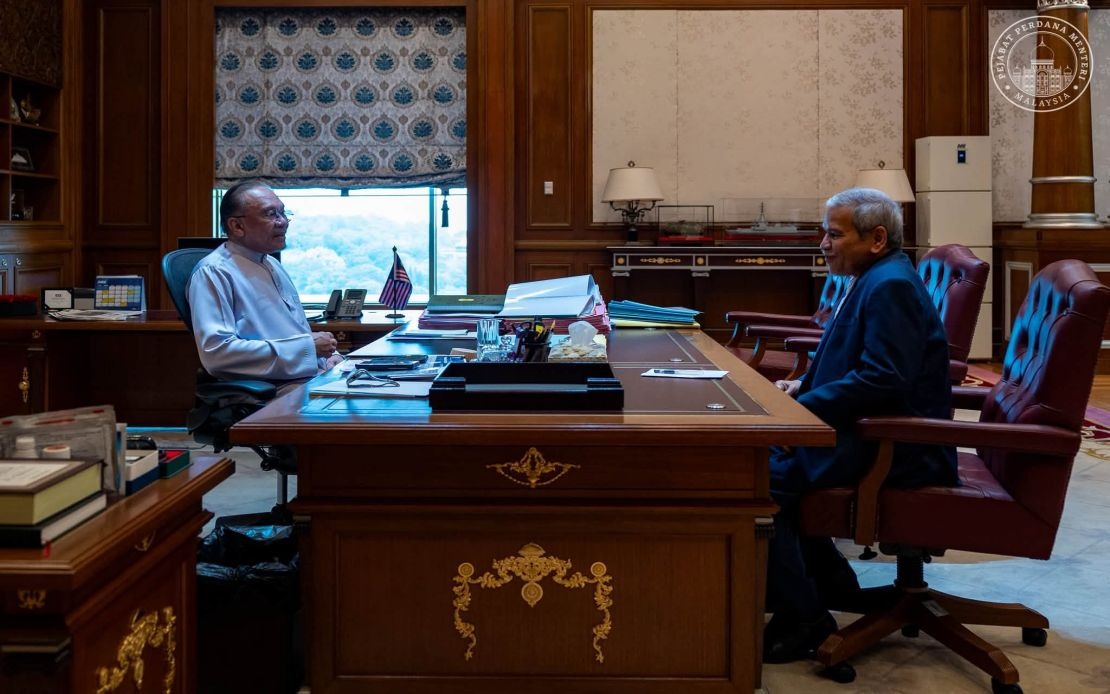
Prime Minister Datuk Seri Anwar Ibrahim has underscored the critical need for the Federal Land Development Authority to remain a robust institution dedicated to improving the living standards and dignity of its settlers and their dependents. His remarks came during a meeting with newly appointed FELDA chairman Tan Sri Ahmad Badri Mohd Zahir at the Prime Minister's office in Putrajaya, signalling the government's continued commitment to the agency's development agenda.
In his capacity as both Premier and Finance Minister, Anwar articulated a comprehensive vision for FELDA's future that balances social welfare considerations with practical business imperatives. He stressed that supporting settler welfare across all age cohorts must proceed hand in hand with initiatives to enhance the authority's economic viability and long-term sustainability. This dual-track approach reflects recognition that FELDA's ability to serve its constituents depends fundamentally on institutional health and financial resilience.
A particular emphasis emerged regarding younger-generation settlers, whose specific challenges and aspirations warrant deliberate policy attention. The demographic transition within FELDA communities has created new pressures distinct from those facing founding-generation participants, requiring tailored interventions and fresh thinking about opportunities and support mechanisms available to second and third-generation families reliant on the scheme.
Anwar expressed confidence in Ahmad Badri's capacity to advance FELDA's restoration and strengthening agenda. The new chairman's appointment came into effect on July 15, following the conclusion of his predecessor Datuk Seri Ahmad Shabery Cheek's tenure on June 30. This transition presents an opportunity to refresh institutional direction while maintaining continuity with established programmes and community relationships that underpin settler welfare.
The MADANI Government has committed to furnishing comprehensive support for FELDA's continued progression and relevance in an evolving socioeconomic landscape. This backing extends beyond rhetorical encouragement to encompassing policy coordination and resource allocation necessary for meaningful institutional reform and service delivery improvements. The government recognises FELDA's dual significance—both as a welfare institution protecting vulnerable communities and as an economic enterprise requiring commercial discipline.
FELDA's historical role in rural development and settler advancement has been substantial, having transformed vast tracts of undeveloped land into productive agricultural communities while providing pathways to improved livelihoods for hundreds of thousands of families. However, contemporary pressures—including commodity price volatility, shifting agricultural demographics, and evolving settler expectations—necessitate ongoing institutional adaptation and investment to maintain effectiveness.
The focus on institutional strengthening rather than dismantling or radical restructuring signals continuity in policy approach. Rather than adopting disruptive change, the government and FELDA leadership appear committed to enhancing existing structures' capacity to deliver improved outcomes. This measured stance acknowledges both FELDA's historical achievements and the transformational capacity of incremental improvements in governance, service delivery, and economic competitiveness.
Economic sustainability concerns remain paramount for FELDA's long-term viability. Volatility in palm oil, rubber, and cocoa markets directly impacts settler incomes and the authority's operational capacity. Strengthening FELDA's economic foundations through diversification, improved productivity, technology adoption, and value-chain integration represents essential groundwork for maintaining welfare provision and expanding opportunity for new and existing settlers.
Younger settlers and their descendants face distinct labour-market realities from their parents' generation, with education levels, career expectations, and mobility patterns creating both challenges and opportunities for FELDA communities. Targeted programmes addressing youth employment, skills development, and entrepreneurial pathways within and beyond traditional agriculture become increasingly relevant for settlement viability and settler satisfaction.
The emphasis on FELDA's future relevance indicates acknowledgment that static institutions risk obsolescence. Continuous adaptation to economic, technological, and social change determines institutional longevity. By prioritising relevance for future generations alongside immediate settler welfare, the government articulates a forward-looking stance that treats FELDA not as a legacy programme requiring managed decline but as an evolving institution with ongoing significance for rural Malaysia.

