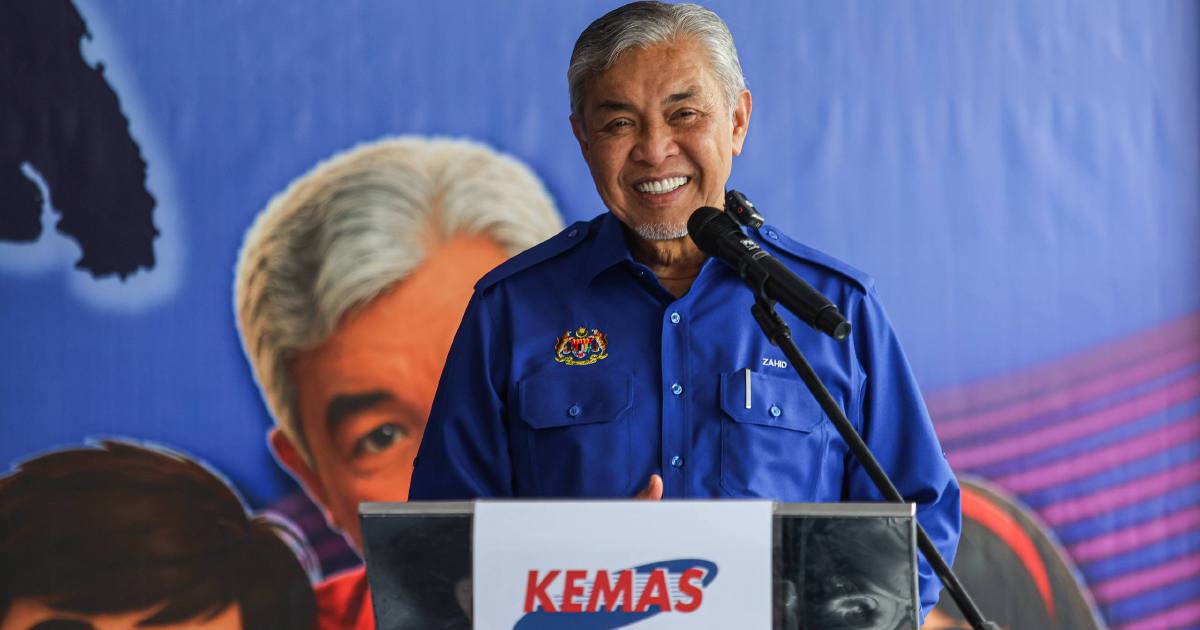
The federal partnership between Barisan Nasional and Pakatan Harapan continues to function smoothly despite the competing interests displayed during the Johor state election campaign, according to coalition leaders evaluating the political landscape in Kota Tinggi. This reassurance comes at a critical juncture when state-level electoral contests typically test the stability of national-level agreements, raising questions about whether the unity government model can withstand regional political pressures.
The broader context of Malaysian politics has shifted significantly since the 2022 general election, which left no single coalition with a clear parliamentary majority. The subsequent formation of the unity government between BN and PH represented a departure from decades of adversarial two-coalition politics, introducing a collaborative framework that surprised many observers. This arrangement has created a novel political environment where the two coalitions must balance competitive behaviour at the state level with cooperative governance at the federal level, a tension that becomes particularly acute during state elections.
Johor holds particular strategic importance in this equation, being the largest state by population in Peninsular Malaysia and traditionally a BN stronghold. The state election campaign itself has generated considerable heat, with both coalitions deploying significant resources and rhetoric to secure victory. That political leaders feel compelled to publicly emphasise the stability of federal ties suggests underlying concerns about whether state-level competition might fracture the unity government framework that has become central to Malaysia's political stability.
The maintenance of good working relations at the federal level despite state-level competition serves multiple purposes for both coalitions. It provides reassurance to investors and international observers that Malaysia's government remains functional and predictable, even during internal political contests. For ordinary Malaysians, such statements attempt to convey that whoever emerges victorious in Johor state polls will not destabilise the national government or disrupt essential services and policy continuity.
From an organisational standpoint, the unity government has required both BN and PH to establish protocols and mechanisms for managing disagreements without allowing them to escalate into systemic breakdowns. This represents institutional learning after the turbulent political periods of 2020 and 2021, when rapid shifts in coalition alignment created prolonged uncertainty and governance challenges. The apparent resilience of federal cooperation through the Johor campaign suggests these frameworks are functioning as intended.
However, the competitive dynamics of state elections inherently test such arrangements. Party activists and grassroots members, who drive campaign machinery at the state level, typically operate with greater freedom than federal ministers and officials. Messages delivered during campaign rallies and ground-level mobilisation efforts may emphasise coalition differences more sharply than official federal-level communications suggest. This creates a gap between the managed messaging of federal leadership and the more combative rhetoric of state-level campaigns.
The Johor election also carries implications for the broader political trajectory of both coalitions beyond the immediate state outcome. Success or failure in Johor influences internal power dynamics within each coalition, shapes leadership narratives heading toward the next general election, and affects the morale and momentum of each coalition's component parties. These ripple effects can eventually influence federal-level politics, making the stakes of state elections substantially higher than they appear on the surface.
For Malaysian voters, the assertion of continued federal cooperation offers a form of insurance against political instability, regardless of which coalition wins the state election. This has become an important consideration in a political environment where state results can trigger unexpected national consequences. The explicit commitment to maintaining federal ties from senior leaders reassures stakeholders that competitive state elections need not threaten the broader governance framework.
Looking forward, the stability of the unity government in the lead-up to future general elections will depend significantly on whether coalitions can maintain this dual approach of competing vigorously at the state level while sustaining cooperation at the federal level. The Johor election effectively serves as a test case for this model, with wider implications for how Malaysian politics will evolve over the next few years. If federal relations genuinely withstand the pressures of state-level competition in Johor, it would suggest the unity government has developed sufficient institutional maturity to manage Malaysia's complex multi-level political system. Conversely, any signs of fracture could indicate that the model remains fragile and vulnerable to state-level disruptions, requiring careful navigation by political leaders to preserve it through to the next general election cycle.

