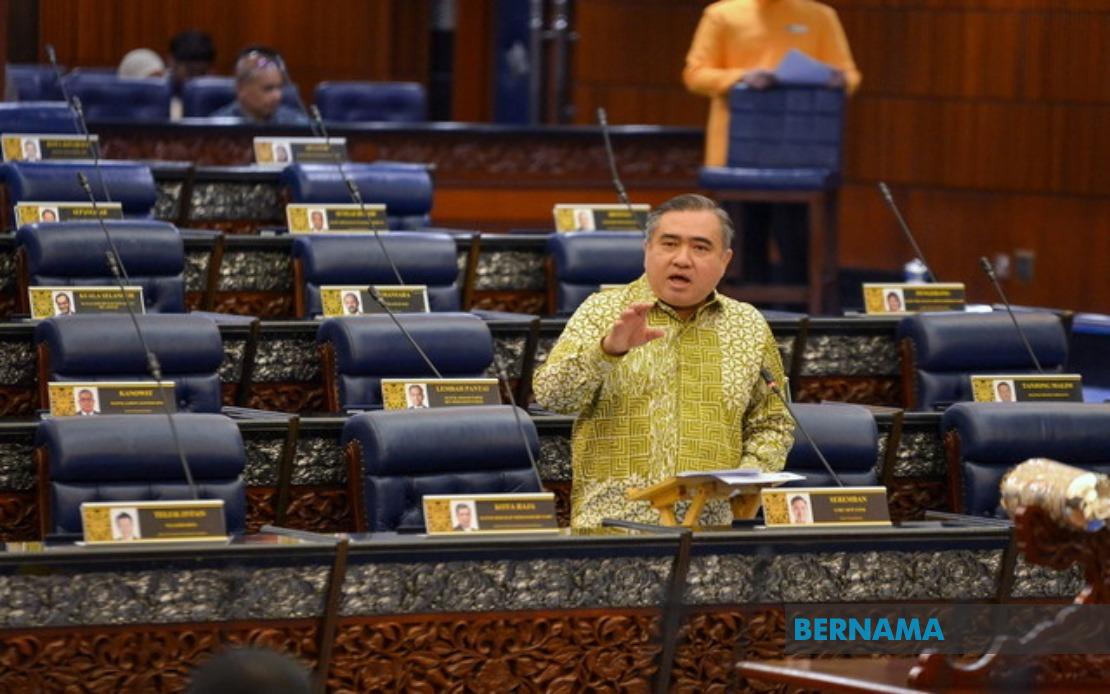
Transport Minister Anthony Loke has confirmed that the Federal Government will shoulder the financial burden of Johor's Elevated Autonomous Rapid Transit (E-ART) project, marking a significant shift in Malaysia's approach to major transport infrastructure development. Speaking during parliamentary proceedings on July 2, Loke revealed that while the appointed consortium will initially bear construction costs, comprehensive financial assessments have demonstrated that the ambitious scheme cannot achieve viability through private sector investment alone, necessitating government intervention to ensure project completion.
The minister's announcement addresses mounting concerns about the E-ART project's financial sustainability within the highly competitive transport infrastructure landscape. Rather than pursuing a purely market-driven model, the government has determined that this transformative system—designed to revolutionise mobility in Johor Bahru and surrounding areas—requires direct public investment to realise its strategic objectives. This pragmatic assessment reflects a broader recognition that mega-infrastructure projects of this magnitude often require hybrid financing structures combining private sector expertise with public financial support to achieve long-term viability and serve the public interest effectively.
Loke indicated that detailed negotiation processes regarding the precise financing methodology, quantum of financial commitment, and repayment arrangements across the concession period remain ongoing. The government intends to submit finalised terms to Cabinet for formal approval before executing the Concession Agreement, suggesting that several critical parameters still require refinement. This measured approach allows stakeholders to conduct thorough due diligence while ensuring that the eventual framework reflects both fiscal responsibility and project requirements. The four-year implementation timeline from Letter of Acceptance issuance provides a reasonably compressed schedule for delivering what promises to be among Southeast Asia's most technologically advanced transit systems.
The E-ART project assumes critical importance within Malaysia's broader transport modernisation agenda, particularly as the region anticipates the January 2027 launch of the Johor Bahru-Singapore Rapid Transit System Link. This timing creates both opportunities and complexities, as planners must coordinate complementary transport networks to maximise regional connectivity benefits. The concurrent development of enhanced public transit infrastructure positions Johor as a gateway hub connecting Malaysian and Singaporean transport systems, generating potential economic spillovers that justify substantial government investment. However, synchronising these major projects requires sophisticated traffic management and resource allocation to prevent operational disruptions during transitional phases.
Recognising these interconnected challenges, the Transport Ministry has collaborated extensively with the Johor government to formulate comprehensive traffic dispersal strategies that strengthen the entire public transport ecosystem. The BAS.MY service network expansion to 28 routes operating 254 buses—including battery-electric vehicles—demonstrates commitment to sustainable mobility alternatives that complement the E-ART system. This layered approach acknowledges that autonomous rapid transit alone cannot address regional congestion; rather, integrated networks combining various transport modes create resilient systems capable of managing diverse passenger volumes and travel patterns across different demographic segments and geographic areas.
The Stage Bus Service Transformation 2.0 programme represents an additional dimension of this integrated strategy, dedicating 157 buses specifically to high-traffic Johor Bahru Sentral and Bukit Chagar corridors commencing in early 2027. This synchronisation with the RTS Link opening reflects sophisticated transport planning that recognises the complementary nature of different transit modes. Rather than viewing bus services and rapid transit as competitive systems, the ministry positions them as mutually reinforcing components within a comprehensive mobility ecosystem. Such coordination between modes enables seamless passenger transfers, optimises resource utilisation, and distributes traffic demand across multiple transportation pathways, reducing pressure on any single infrastructure component.
The Shuttle Selatan service, which commenced operations on June 16 connecting Kulai-Kempas-Johor Bahru and Kempas-Pasir Gudang routes with fourteen daily trips, provides immediate relief while the ministry advances procurement of twelve additional KTM Komuter Southern train sets. This interim service represents pragmatic infrastructure deployment, providing enhanced connectivity during the E-ART development phase while demonstrating government commitment to progressively improving regional transport capacity. The substantial train set procurement initiative signals serious investment in rail-based solutions, complementing the autonomous transit system and creating multiple transportation corridors that distribute passenger volumes efficiently across the transport network.
Addressing parliamentary concerns about affordability and accessibility, Loke reaffirmed government commitment to maintaining public transport fares under strict regulatory control rather than permitting market-determined pricing mechanisms. This policy stance acknowledges that transport services constitute essential infrastructure whose accessibility cannot be compromised by commercial viability considerations. While controlled fares necessarily reduce project revenue and require ongoing government funding injections to offset operational deficits, the minister contends that maintaining affordable mass transit serves broader social and economic objectives that justify subsidisation. This approach prioritises equitable access to mobility for lower-income populations who depend most heavily on public transport systems.
The government's willingness to absorb financial shortfalls resulting from fare ceiling policies reflects a philosophical stance that transport represents a public good deserving public investment. By maintaining accessible pricing while accepting consequent funding demands, the government positions public transit as a social infrastructure commitment rather than a purely commercial enterprise. This perspective proves particularly relevant for Malaysian readers given the region's rapid urbanisation and the escalating mobility challenges confronting growing metropolitan areas. As congestion costs mount and environmental pressures intensify, governments increasingly recognise that subsidised public transport generates broader economic and social benefits exceeding direct revenue calculations.
For Johor specifically, the convergence of E-ART, RTS Link integration, expanded bus networks, and enhanced rail services represents an unprecedented transformation of the regional transport landscape. The government's decisive commitment to financing the E-ART project signals confidence in Johor's strategic importance within Malaysian and regional development frameworks. This infrastructure investment acknowledges that Johor functions as both Malaysia's southern economic engine and a crucial bridge linking Malaysian and Singaporean economies. As one of Malaysia's most rapidly developing states, Johor's transport modernisation carries implications extending beyond state borders, influencing regional economic integration and competitiveness within broader Southeast Asian development patterns.
The E-ART project's successful implementation could establish valuable precedents for future Malaysian mega-infrastructure initiatives, potentially influencing how government approaches financing public transport systems throughout the nation. Should the project deliver anticipated mobility improvements while demonstrating operational efficiency and passenger demand responsiveness, it may justify expanded government investment in similar systems within other major Malaysian metropolitan areas. Conversely, implementation challenges or cost overruns could constrain future transport infrastructure ambitions by raising questions about financial sustainability and project management effectiveness. Consequently, the E-ART project transcends its immediate Johor context, functioning as a critical test case for Malaysia's capacity to successfully execute transformative infrastructure programmes in an increasingly complex and cost-intensive development environment.

