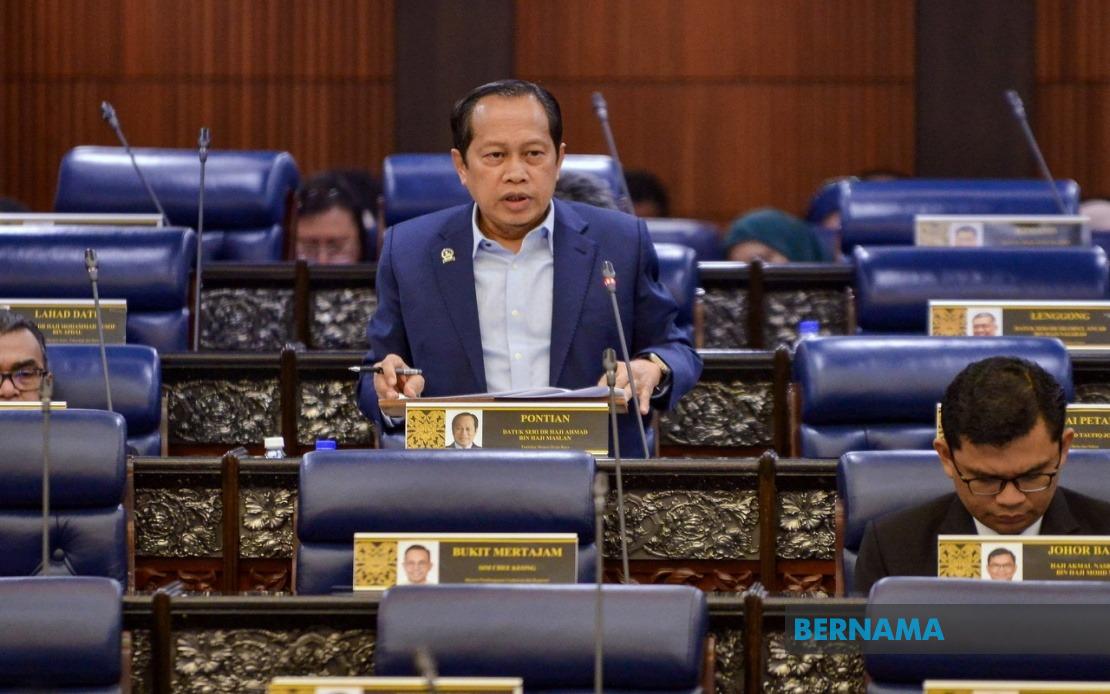
The federal government has released RM1.2 billion in compensation to landowners affected by the Sabah Pan Borneo Highway Phase 1 Project, according to Deputy Minister of Works Datuk Seri Ahmad Maslan. In a parliamentary session on July 14, Ahmad outlined the compensation framework that has extended across Borneo's two largest states, with Sarawak receiving RM737 million for its own PBH allocation. The commitment underscores Putrajaya's pledge to shield property owners from financial hardship when acquiring land for major infrastructure corridors, though questions persist about the project's ballooning costs.
The Sabah segment has emerged as one of Malaysia's most expensive infrastructure undertakings, with its price tag expanding dramatically from the 2015 baseline of RM12.86 billion to the current RM24.889 billion. This near-doubling of expenditure prompted Kota Belud Member of Parliament Isnaraissah Munirah Majilis from WARISAN to seek clarification in the Dewan Rakyat about the justification for such substantial cost growth. Ahmad's response traced the escalation to a fundamental operational shift initiated five years ago when the government abandoned the Project Delivery Partner model in favour of direct Federal Conventional Contractor management, a transition driven by national interest considerations.
The shift from the PDP model represented a watershed moment for the initiative, forcing comprehensive reassessment of all outstanding construction components and engineering specifications. Ahmad emphasised that this transition, while necessitated by policy requirements, triggered a complete technical review that revealed previously unquantified complexities in the remaining work packages. The decision required engineers to recalibrate project scope across all remaining phases, accounting for evolving ground conditions and refined design parameters that had emerged during the project's initial five-year implementation period.
When broken into manageable segments, Phase 1A encompasses 16 separate work packages valued at RM10.9 billion collectively, while the more expansive Phase 1B comprises 19 work packages totalling RM13.989 billion. This subdivision reflects the complexity of constructing a major highway corridor across Sabah's diverse terrain and development zones. The granular approach allows project management to focus on discrete contractual obligations while maintaining overall coordination, though each component introduces additional administrative and engineering demands that contribute to cumulative expenditure.
Beyond procurement model changes, Ahmad identified technical considerations as primary cost drivers. Ground conditions across the proposed route necessitated extensive geotechnical investigation and soil treatment regimes more demanding than originally anticipated. Large-scale utility relocation—involving electricity networks, water infrastructure, telecommunications systems, and petroleum pipelines—required extensive coordination with state agencies and private operators. Design modifications emerged as construction teams engaged with local topographical challenges, environmental constraints, and evolving engineering standards that the original 2015 assessment had not fully captured.
Global and domestic commodity markets have simultaneously imposed upward pressure on the project's financial requirements. Iron, cement, and particularly bitumen—essential for major highway construction—experienced substantial price inflation during the implementation period. Machinery costs have similarly escalated, reflecting both inflationary pressures and heightened demand across regional infrastructure markets as Southeast Asia pursues parallel development ambitions. Labour cost increases compound these pressures, driven by wage expectations in construction sectors across Malaysia and the broader region.
The RM1.2 billion commitment to landowner compensation represents a significant though often overlooked component of infrastructure development. When governments acquire private property for public works, compensation frameworks determine whether affected communities bear the true economic cost of national development or whether public resources absorb these impacts. Ahmad's emphasis that the federal government shoulders the entire burden—including land payments, associated losses, and administrative expenses—signals policy intent to prevent wealth transfer from individual property owners to the state through infrastructure projects.
For Sabah specifically, land compensation represents a critical political variable. The state's development has historically lagged peninsular Malaysia, making major infrastructure investments symbolically important for regional equity narratives. However, substantial cost overruns create tensions: additional compensation becomes necessary to maintain original promises to affected landowners, yet project delays and inflation mean that promised development benefits arrive later than originally projected. The compensation mechanism thus functions as both equity safeguard and barometer of implementation challenges.
The Pan Borneo Highway initiative exemplifies the tension between infrastructure ambition and fiscal reality in contemporary Malaysia. Initially conceived as a transformative development corridor linking Sabah and Sarawak through improved connectivity, the project has absorbed resources at rates that challenge treasury planning. However, displacing communities for infrastructure without adequate compensation creates social grievances that undermine developmental legitimacy. Ahmad's parliamentary clarification attempted to balance these imperatives by demonstrating financial commitment to affected property owners while explaining technical factors driving cost escalation.
The compensation payments also reflect broader Southeast Asian infrastructure patterns. Across the region, major highway and transport corridor projects routinely exceed initial cost estimates, driven by similar factors: underestimated ground investigations, evolving environmental compliance requirements, utility coordination complexities, and commodity price volatility. Thailand, Vietnam, and Indonesia have faced comparable challenges, suggesting that Malaysian project managers confront structural difficulties inherent to large-scale infrastructure development in diverse terrain rather than unique administrative failures.
Looking forward, the PBH's trajectory carries implications for future Malaysian infrastructure planning. Projects of such magnitude require more robust initial assessment, potentially incorporating contingency allocations that reflect realistic uncertainty rather than optimistic baseline estimates. The transition from PDP to conventional contracting, while perhaps necessary for other policy reasons, demonstrated that procurement model changes mid-project generate significant cost reassessments. Future initiatives might benefit from avoiding such transitions or, if unavoidable, building greater flexibility into financial frameworks from inception.
For Malaysian readers, the PBH situation illustrates the genuine complexities underlying infrastructure development, extending beyond simplified narratives of government competence or failure. Cost escalation, while substantial, reflects measurable technical and market factors that project teams must address if construction is to proceed safely and durably. The land compensation commitment signals that ordinary citizens bear formal protection when their property supports public works, though inflation erodes purchasing power for those compensation payments made several years after land acquisition.

