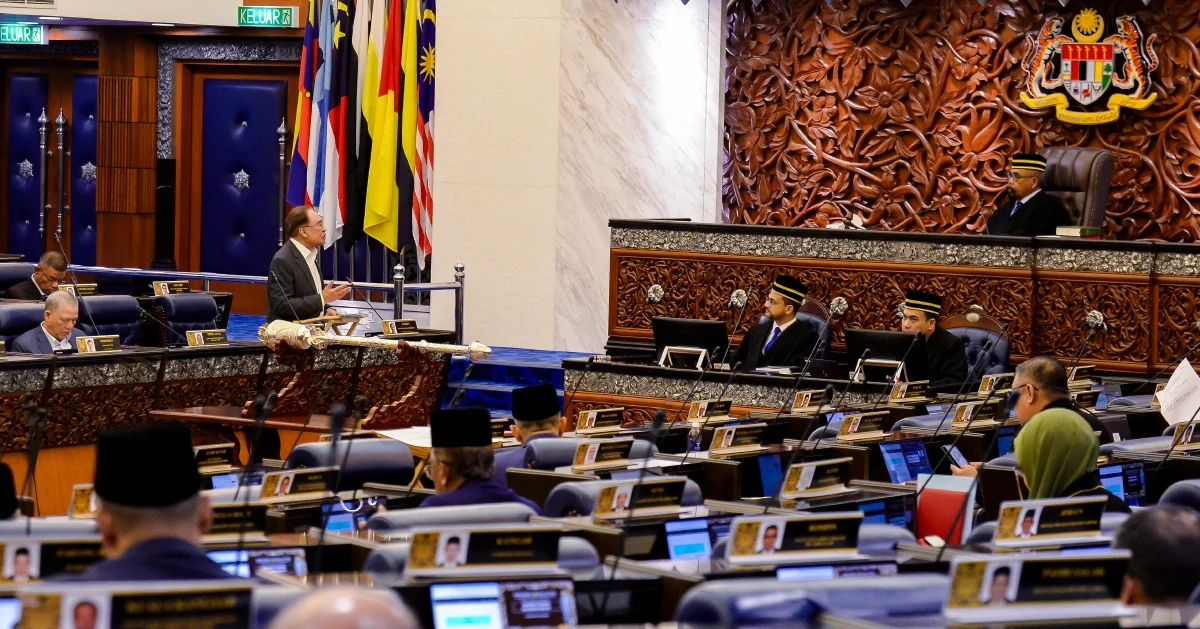
Prime Minister Datuk Seri Anwar Ibrahim has drawn a clear line on federal financial responsibility, asserting that the central government in Putrajaya should not automatically shoulder the burden of costs arising from policy decisions taken by state governments. The statement signals a more disciplined approach to inter-governmental fiscal relations and reflects growing concerns about how budgetary pressures are distributed across Malaysia's federal-state administrative structure.
Anwar's position represents a significant statement about the boundaries of federal support and underscores an increasingly complex debate over how Malaysia's two-tier governance system manages its finances. In a federal framework where states retain considerable autonomy in certain policy domains, the question of who ultimately pays for the consequences of state-level decisions has long been contentious. The Prime Minister's remarks suggest the administration is moving toward a model where states bear greater accountability for their fiscal choices.
The timing of Anwar's comments reflects broader budgetary challenges facing Malaysia's federal government. With competing national priorities ranging from infrastructure development to social welfare programmes, the federal government faces persistent pressure to allocate limited resources efficiently. When state-level decisions generate unexpected costs that flow to the federal budget, they can distort central planning efforts and divert funds from strategically important national initiatives. This dynamic has become increasingly problematic as states pursue development agendas that may not align with federal fiscal priorities.
Malaysia's federal-state fiscal arrangement has historically been characterized by significant federal transfers to states through various mechanisms, including the Federal Territories allowance and development grants. However, these transfers are typically calculated based on projected revenues and established formulae rather than on an open-ended commitment to cover all state expenditure consequences. Anwar's statement suggests the government intends to maintain this bounded approach rather than move toward unlimited federal underwriting of state spending decisions.
The practical implications extend across multiple policy areas where states exercise substantial jurisdiction. Education, healthcare delivery, local government administration, and infrastructure maintenance all fall within state purview, yet costs can escalate beyond initial projections. When states implement policy expansions—whether salary increases for state employees, new welfare schemes, or major infrastructure projects—the federal government has sometimes found itself pressured to provide supplementary funding. Anwar's declaration indicates resistance to normalizing such arrangements.
From a Malaysian perspective, this stance reflects mature fiscal federalism principles practiced in established federal systems worldwide. In countries like Canada and Australia, sub-national governments are expected to manage their budgets within their revenue sources, even when decisions have broader economic spillovers. The principle encourages fiscal discipline at state level and prevents moral hazard, where states might be tempted toward profligacy if they know the federal government will cover shortfalls. For Malaysia, adopting stronger boundaries could incentivize more prudent financial management among state administrations.
However, the transition toward such boundaries requires careful calibration. Some states, particularly those with weaker revenue bases, depend substantially on federal transfers for essential service delivery. Abruptly shifting responsibility could create service disruptions in education, healthcare, and local administration if states lack independent fiscal capacity to absorb new costs. The federal government will likely need to distinguish between structural transfers that support basic service delivery and supplementary funding requests that arise from discretionary state spending decisions.
The statement also carries implications for how Malaysia navigates an increasingly competitive regional landscape. Southeast Asian peers face similar pressures to rationalize government spending, improve fiscal sustainability, and ensure that public resources reach high-impact programmes. By establishing firmer boundaries on federal-state financial entanglement, Malaysia signals commitment to fiscal responsibility—a positive indicator for credit rating agencies and international investors assessing the country's economic management. Conversely, if federal costs continue expanding due to uncontrolled state spending, it could constrain Malaysia's ability to invest in competitiveness-enhancing programmes like technology, skills development, and regional infrastructure connectivity.
The governance challenge lies in implementing this principle without creating genuine hardship. States governed by opposition parties might perceive the policy as punitive, while federal-state relations could become unnecessarily adversarial if interpreted as a partisan tool. Transparent mechanisms for distinguishing routine state operations from genuinely unexpected cost pressures, along with clear formulae for any exceptional support, would help depoliticize the arrangement and build consensus.
Anwar's position also reflects fiscal pressures specific to Malaysia's current conjuncture. As the federal government pursues various national initiatives and manages a debt burden requiring careful stewardship, every ringgit of unplanned expenditure represents a genuine opportunity cost. Whether funding major infrastructure, expanding social safety nets, or addressing climate-related challenges, the federal budget faces multiple competing claims. Resisting automatic cost transfers from states frees up fiscal space for federal priorities while creating incentives for states to demonstrate greater financial responsibility.
Moving forward, the effectiveness of this approach will depend on implementation. The federal government will need to communicate clearly about which costs it considers state responsibility and develop transparent processes for evaluating exceptional funding requests. States, meanwhile, should be supported through capacity building in financial planning and management, enabling them to anticipate costs and budget accordingly. Such institutional strengthening would serve Malaysia's overall governance quality.
The underlying principle Anwar articulates—that governance units must bear the financial consequences of their policy choices—aligns with accountability principles essential to democratic administration. When state leaders make decisions while knowing federal authorities will cover costs, democratic incentives become misaligned. Citizens voting in state elections cannot effectively discipline leaders whose fiscal recklessness gets subsidized by the federal government. Clarifying financial responsibility reinforces the connection between electoral choices and governmental outcomes, strengthening democratic accountability throughout Malaysia's system.

