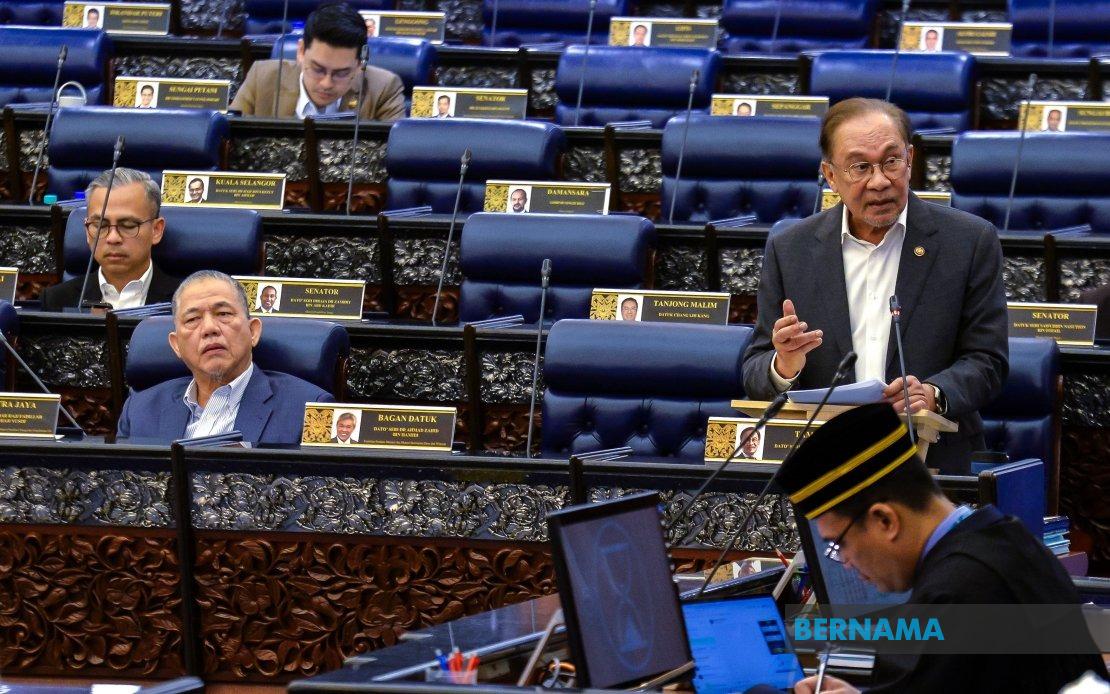
Prime Minister Datuk Seri Anwar Ibrahim has moved to settle ongoing debates about federal fund distribution by clarifying that the government's approach prioritises the developmental needs and welfare of residents across all states rather than merely matching allocations to tax contributions. Speaking during parliamentary question time in Kuala Lumpur on June 30, Anwar underscored that nearly every state receives larger federal grants than the tax revenue it generates, with only two exceptions: Selangor and Penang, which maintain higher tax collection figures relative to their allocations.
The clarification emerged as Anwar addressed concerns raised by Datuk Seri Doris Sophia Brodi from GPS-Sri Aman regarding allegations that certain states receive insufficient or unequal treatment from the federal government. Brodi had questioned whether the current funding model fairly reflects the revenue each state contributes to national coffers and whether the MADANI Government has taken concrete steps to improve the distribution mechanism. The exchange highlighted persistent regional tensions over resource allocation, a perennial issue in Malaysia's federal structure where wealthier, more industrialised states naturally generate higher tax revenues.
Anwar detailed the criteria guiding allocation decisions, emphasising that the government assesses urgent infrastructure and social requirements unique to each state's circumstances. The Prime Minister pointed to flood mitigation initiatives, the Pan Borneo highway upgrade, road construction projects, water drainage system improvements, poverty reduction programmes, and educational and institutional development as key considerations in determining federal support levels. This needs-based approach reflects a philosophy that development investments should flow to areas where they address the most pressing deficiencies rather than follow purely economic logic.
The distinction between revenue contribution and allocation receipt remains a source of political friction across Malaysian federalism. Wealthy urban centres like Selangor and Penang generate disproportionate tax revenues through their concentration of commerce, industry, and high-income earners, yet they also attract substantial federal spending on national infrastructure projects. Conversely, less developed states with smaller economic bases receive proportionally larger allocations relative to what they contribute, reflecting policy decisions to narrow development gaps and prevent regional inequality from widening further.
Anwar seized the opportunity to highlight what he characterised as the MADANI Government's commitment to addressing regional imbalances. He contrasted current funding levels for states including Kedah, Terengganu, and Kelantan with allocations provided by previous administrations, arguing that the present government has prioritised these traditionally less developed regions with record funding. This comparison carries political weight, as these states have historically received less attention from federal programmes and infrastructure investment, contributing to perceptions of marginalisation among their populations.
The government's allocation methodology reflects broader policy tensions inherent to federal systems where central governments must balance fiscal efficiency with equity concerns. Pure market-based distribution—matching allocations to tax contributions—would reward already-wealthy regions while potentially trapping poorer states in cycles of underdevelopment. Conversely, excessive redistribution risks creating resentment among high-income states whose residents feel their contributions are disproportionately transferred elsewhere. Malaysia's approach attempts to navigate this tension by allocating discretionary funds according to assessed needs while allowing the general taxation system to reflect economic capacity.
For Malaysian readers concerned about regional development disparities, Anwar's statement underscores that the federal government maintains a conscious redistributive agenda within its allocation framework. The emphasis on flood mitigation, highway improvements, and water infrastructure reflects practical priorities that affect living standards across multiple states, particularly those vulnerable to seasonal flooding or geographic isolation. These investments have tangible impacts on commerce, safety, and quality of life that extend beyond merely equalising per-capita spending.
The debate also carries implications for interstate relations and political stability. States that perceive themselves as net contributors to federal finances—particularly Selangor and Penang—occasionally voice frustrations about federal spending patterns, while developing states expect continued investment to address infrastructure deficits. Anwar's public restatement of allocation principles serves partly to manage these expectations and reinforce that distribution decisions follow published criteria rather than political favouritism.
Looking forward, the MADANI Government's approach suggests continued commitment to needs-based allocation frameworks rather than revenue-matching systems. This philosophy aligns with development economics principles emphasising that convergence between regional economies requires targeted investment in underdeveloped areas. However, sustaining this approach requires managing perceptions among wealthier states and ensuring that allocation decisions remain transparent and defensible against accusations of political bias.
For Southeast Asian observers monitoring Malaysian fiscal federalism, the allocation debate reflects broader regional trends regarding how central governments balance efficiency, equity, and political stability. Malaysia's experience demonstrates that transparent criteria and periodic public explanation of allocation methodologies help legitimate resource distribution decisions, even when they produce winners and losers. As development challenges evolve—from infrastructure gaps toward service quality and economic diversification—allocation frameworks will likely require periodic recalibration to remain responsive to genuine needs across the federation.

