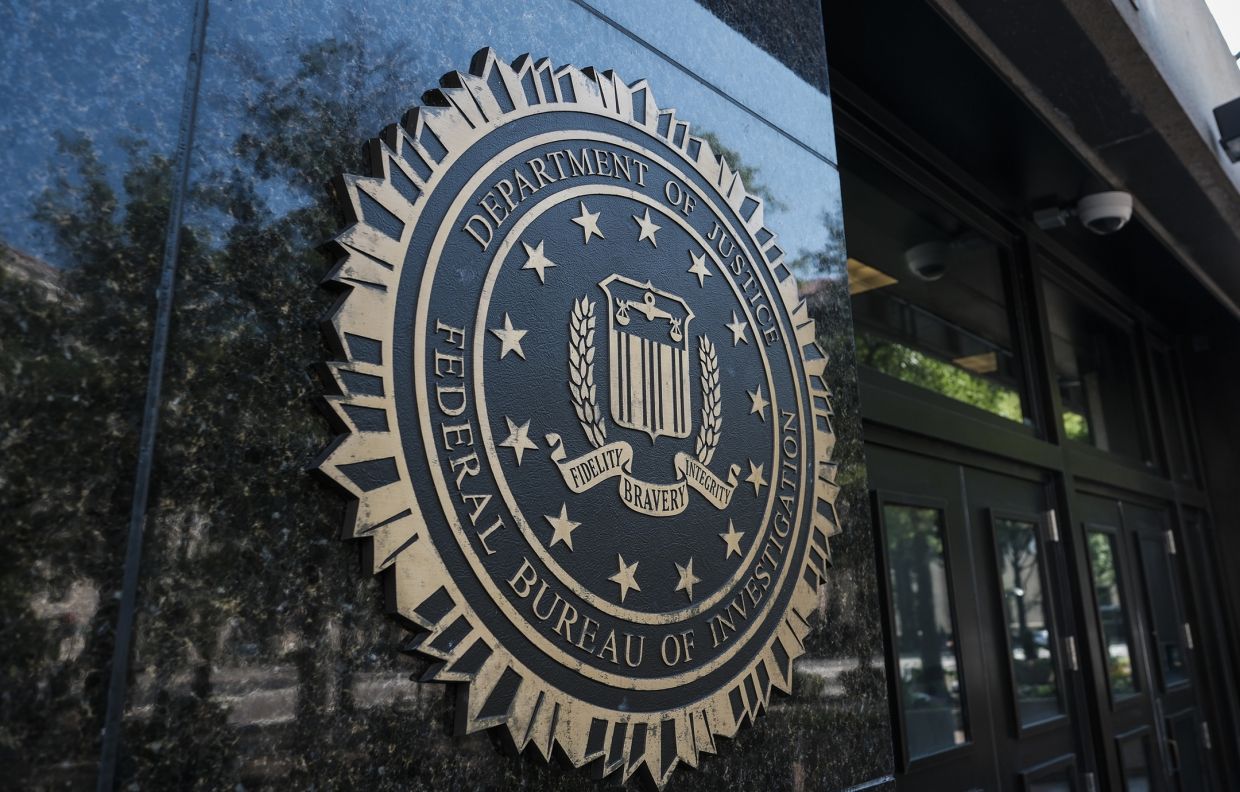
A supervisory FBI agent working out of Washington has been arrested following his own confession to stealing approximately US$1 million in cryptocurrency from an account obtained during an active criminal investigation. Patrick Yaroch's case has exposed a striking breach of trust within federal law enforcement, raising questions about oversight mechanisms for agents handling seized assets and digital evidence.
According to an affidavit filed in the case, Yaroch voluntarily disclosed his actions to a Justice Department employee, citing overwhelming guilt over what he had done. The supervisory agent described his conscience as being tormented by the theft, indicating his desire to "get it off his chest" drove his decision to confess rather than continued concealment. This voluntary disclosure, while demonstrating some moral recalibration on Yaroch's part, does little to mitigate the fundamental violation of his official responsibilities.
The scale of the alleged theft appears difficult to determine with precision. Yaroch initially claimed uncertainty about the exact amount, suggesting the stolen funds had become intermingled with his legitimate personal assets. However, when investigators examined his cryptocurrency wallet where the deposits had been made, they discovered approximately US$1 million (RM4.09 million) in holdings. The discrepancy between his vague estimate and the investigators' findings raises questions about whether Yaroch was being deliberately evasive or genuinely unable to account for his own financial activities.
Yaroch allegedly began withdrawing funds sometime between late 2024 and early 2025, executing between ten and twelve separate transactions. Crucially, he utilised a pass phrase to access the suspect's cryptocurrency account that the FBI itself had obtained during its legitimate investigation into that individual. This detail underscores how the agent weaponised his official access and investigative tools for personal enrichment, transforming law enforcement authority into a mechanism for theft.
In conversations with colleagues, Yaroch articulated a rationale for his actions that blended personal frustration with institutional critique. He claimed he had been "spinning out of control" and expressed exasperation that the FBI "could not or would not act against adversarial cryptocurrency accounts." Whether this represented genuine frustration with perceived gaps in agency policy or a self-serving justification for criminal conduct remains unclear, though such statements offer a window into the psychological state of someone abusing their position.
The timing of events surrounding Yaroch's arrest reveals an intriguing tension in how federal authorities managed the situation. The agent had been cooperating with investigators and explicitly planned to continue doing so on August 3, after consulting with a lawyer. Rather than allowing this cooperation to proceed, FBI leadership opted to search his residence and take him into custody over the weekend, seemingly prioritising swift arrest over continued voluntary disclosure. This tactical decision may reflect institutional concerns about maintaining control of the narrative or preventing further obstruction.
Curiously, Yaroch has not yet been formally charged with theft of the cryptocurrency itself, a gap that investigators attribute to the speed of their investigation. The expedited nature of the arrest—occurring even as Yaroch was positioning himself to cooperate further—suggests authorities wanted to secure custody immediately rather than risk any further complications. The absence of a lawyer formally representing Yaroch in court records as of the case filing indicates the pace of developments has outstripped normal legal procedures.
Internet search records obtained during the investigation paint a revealing portrait of Yaroch's motivations and fantasies. In May, he queried ChatGPT for investment strategies targeting US$1 million in capital, explicitly stating a goal of retiring by age 40. His online inquiries further disclosed aspirations toward what he characterised as a "slower-living" lifestyle centred on agricultural and vineyard operations, with particular interest in locations such as Cilento in Italy or Portugal's Dao region. These details suggest the theft was not merely opportunistic but part of a calculated attempt to finance a fundamentally different life trajectory.
For Malaysian and Southeast Asian readers, this case carries significant implications for understanding how digital asset crimes penetrate even the highest levels of law enforcement infrastructure. Cryptocurrency's borderless nature and the technical expertise required to secure it have created vulnerabilities that traditional oversight mechanisms struggle to address. The Yaroch case demonstrates that federal investigators in developed economies remain inadequately protected against insider threats, a reality with direct relevance to regional law enforcement agencies increasingly encountering digital assets in criminal investigations.
The incident also highlights broader questions about the custody chain for seized cryptocurrency in major investigations. Regulatory frameworks worldwide, including those being developed across the Association of Southeast Asian Nations, must grapple with how to prevent law enforcement officers themselves from becoming vectors of theft. The potential for abuse intensifies as cryptocurrency values climb and as digital forensics becomes more sophisticated—tools that empower legitimate investigation equally enable illicit appropriation.
Yaroch's confession and subsequent arrest may ultimately serve as a cautionary precedent for international law enforcement cooperation on digital crimes. As Malaysian authorities and their regional counterparts expand capacity in blockchain forensics and cryptocurrency tracing, the infrastructure built to investigate these crimes creates concentrated access points that demand exceptional security protocols. The case underscores that technological solutions alone cannot substitute for rigorous institutional oversight and psychological screening of personnel handling sensitive digital assets.

