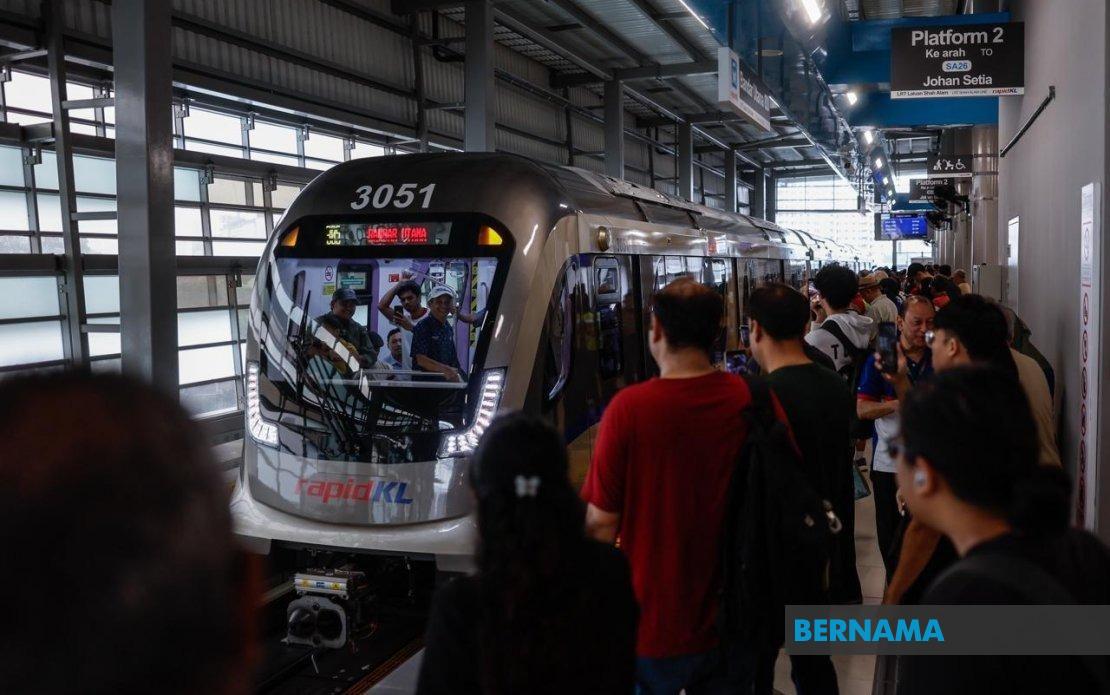
A mechanical fault in one of the train's components triggered an incident on the Light Rail Transit 3 Shah Alam Line on July 4, when the defective part made contact with the power conductor, Rapid KL revealed in a statement issued Thursday. The occurrence, which took place at 7.05 pm at Shah Alam Stadium Station, generated an audible explosion-like sound accompanied by visible sparks, though fortunately no persons on board sustained injuries and the line's regular operations continued without disruption.
Following the incident, Rapid KL personnel immediately took the affected train out of service, ensuring that all passengers were safely transferred to the next station and able to complete their journeys using an alternative train. This swift operational response reflected the transit operator's established safety protocols for managing mechanical emergencies while minimising passenger inconvenience.
The train in question was subsequently conveyed to Rapid KL's depot facility for comprehensive technical examination. During this inspection, engineers identified the problematic component and proceeded with its replacement. The entire diagnostic and repair process was conducted with the objective of restoring the vehicle to full operational capability while adhering to all safety standards.
Rapid KL confirmed that the train received clearance to return to active service only after exhaustive inspections verified its suitability for safe operations. This cautious approach underscores the importance placed on preventive maintenance and thorough validation before redeploying any vehicle that has experienced a technical anomaly.
Beyond addressing the immediate cause of the July 4 incident, Rapid KL initiated a broader precautionary programme involving inspection and monitoring activities across other trains within the LRT3 fleet. This fleet-wide assessment aims to identify any similar component issues before they potentially affect operations or passenger safety, representing a proactive quality assurance measure.
The incident highlights the critical role that regular maintenance cycles and component inspection play in operating modern rapid transit systems. As the LRT3 Shah Alam Line continues to serve commuters across the Klang Valley region, ensuring the reliability of rolling stock and infrastructure becomes increasingly vital to maintaining public confidence in the system's safety and dependability.
For Malaysian commuters accustomed to using the LRT3 service, such incidents naturally raise questions about maintenance standards and safety protocols. The transparency with which Rapid KL disclosed the cause and remedial actions taken suggests a commitment to public accountability, though the occurrence also points to the ongoing engineering challenges inherent in maintaining aging public transport infrastructure.
The Shah Alam Stadium Station incident occurred against a backdrop of continued scrutiny on Malaysia's public transport systems. With the LRT3 serving a significant portion of the Klang Valley's commuter base, maintaining operational safety and service reliability remains paramount. The swift response to this incident demonstrates that Rapid KL maintains contingency procedures and response mechanisms designed to manage such situations with minimal disruption to passenger services.
Looking forward, the comprehensive inspection of the LRT3 fleet following this incident may yield valuable insights into component performance across the system. Such findings could inform future maintenance scheduling and procurement decisions, ultimately contributing to enhanced reliability of this crucial public transport corridor serving millions of Malaysians annually.
Passenger safety remains central to Rapid KL's operational philosophy, as underscored by the statement emphasising this commitment. The replacement of the defective component, combined with fleet-wide monitoring initiatives, reflects the operator's recognition that maintaining technological systems requires constant vigilance and rapid corrective action when issues surface.

