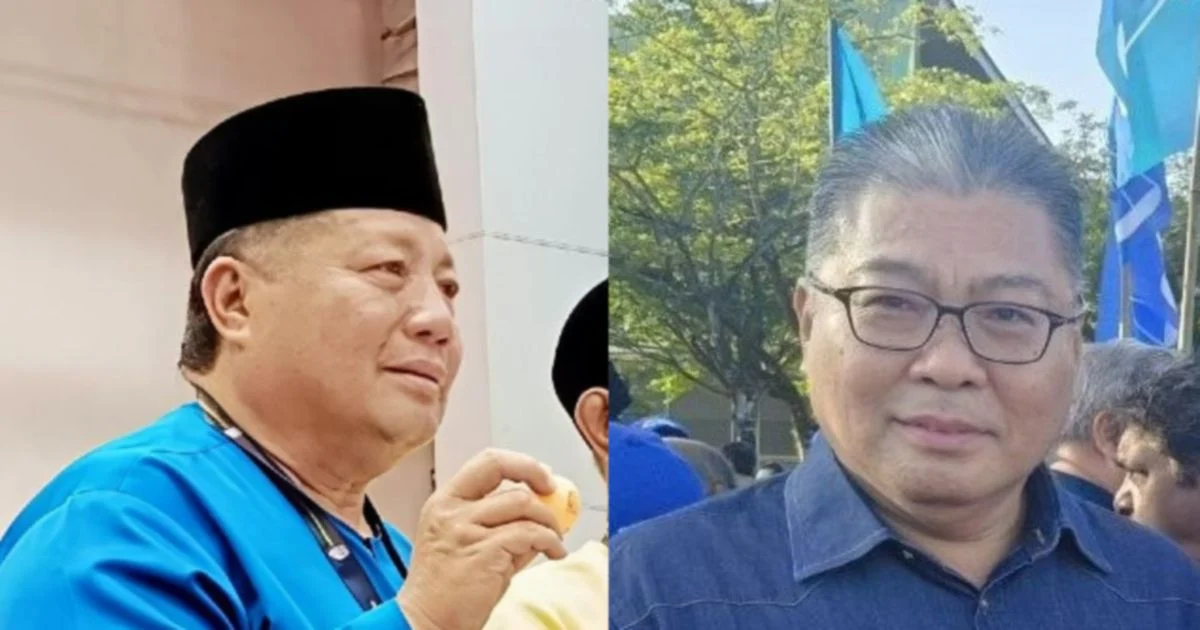
The upcoming Johor state election has brought into sharp focus the personal toll of Malaysia's fractious coalition politics, with two brothers preparing to face each other across opposing party lines in the Kahang seat. Datuk Maulizan Bujang, a former Umno division chief in Tebrau, has publicly extended warm wishes to his sibling Mazlan, who is contesting the same constituency but under the Perikatan Nasional banner—a symbolic gesture that captures both the civility and underlying tensions of Malaysia's contemporary political landscape.
The race in Kahang represents more than a routine electoral contest between the country's two main political alliances. It exemplifies how the fracturing of Malaysia's traditional political establishment has seeped into the most intimate of circles, forcing families to make stark choices about their political loyalties. Unlike previous decades when Malaysian politics operated largely within the framework of ruling and opposition coalitions with clearer ideological boundaries, the emergence of PN as a significant third force has created situations where brothers, cousins, and in-laws must choose between competing visions of governance, often backed by different power brokers and constituencies.
Umno's presence in Kahang through traditional party machinery and organizational networks reflects its continued dominance in Johor's political establishment. The party has governed the state for decades and maintains deep roots in rural constituencies like Kahang, where community connections and patronage networks remain influential. Mazlan's decision to contest under PN, however, signals the appeal that Anwar Ibrahim's coalition holds for candidates seeking political advancement or who have become disillusioned with Umno's internal dynamics. The decision to run as PN rather than under other non-Umno parties suggests calculated positioning within a coalition that has shown electoral competitiveness and ministerial appeal.
Johor has been a proving ground for Malaysia's shifting political allegiances over recent years. The state election, whenever called, typically serves as a barometer for sentiment in the Malay heartland and among the predominantly Bumiputera electorate that forms the backbone of Umno's traditional support base. Recent electoral cycles have seen increasing contestation in constituencies that Umno once dominated with comfortable margins, as PN has made inroads by emphasizing alternative narratives around governance, transparency, and anti-establishment messaging that resonates with certain voter demographics.
Maulizan's public statement wishing his brother well reflects a pragmatism increasingly common among Malaysian politicians who recognize that family relationships must endure regardless of electoral outcomes. Such gestures serve multiple purposes: they soften the harsh edges of political competition, signal magnanimity to voters, and acknowledge that election losses need not translate into family discord. In a society where extended family networks and community respect remain culturally significant, politicians increasingly recognize that public antagonism toward close relatives can damage personal standing even as it scores short-term political points.
The Kahang contest also illustrates the varying calculus driving candidate selection across Malaysia's coalitions. Umno typically fields candidates with established party credentials and local networks, relying on institutional advantages and the party machinery's organizational capacity. PN, by contrast, has cultivated a reputation for fielding candidates who position themselves as challengers to entrenched political establishments, sometimes attracting defectors from larger parties or individuals with outsider appeal. The presence of Mazlan as a PN candidate suggests he either saw greater opportunities within that coalition or perceived Umno's selection process as insufficient for his political ambitions.
For voters in Kahang, the contest between these two brothers presents an unusual choice, as it allows direct comparison of two candidates with identical family backgrounds but divergent political trajectories and allegiances. Voters can assess how each candidate articulates the competing visions represented by Umno and PN—whether through promises of developmental continuity versus reform, or through appeals to tradition versus change. The familial connection also serves as a reminder to voters that political divisions, while real and consequential, need not preclude personal respect or family loyalty.
The broader context of Johor's electoral politics reveals why such contests matter beyond the individual constituency. Johor's 56 state seats remain crucial to any coalition's claim to govern Malaysia, given the state's substantial population and economic significance. Each seat contested in the state carries implications for Kuala Lumpur-level politics, parliamentary representation, and the ongoing bargaining that shapes national government formation. A PN breakthrough in traditionally Umno-held seats like Kahang would signal further erosion of Umno's once-dominant position, while an Umno victory would demonstrate the party's continued capacity to retain support despite coalition reshuffles and internal turbulence.
The dynamics within Johor also reflect wider trends in Malaysian electoral behavior, particularly among younger voters and urban constituencies where party loyalty has become less automatic and more transactional. Candidates increasingly position themselves on individual merit and local accomplishments rather than relying solely on party affiliation, a trend that benefits PN's approach of recruiting candidates who can articulate localized grievances and promises while maintaining coalition backing.
Maulizan's well-wishes toward Mazlan, therefore, represent more than fraternal goodwill—they signal an acceptance that Malaysian politics has fundamentally changed, forcing politicians to navigate new realities where traditional power structures no longer guarantee outcomes and where competition occurs across multiple fronts and within multiple institutions simultaneously. The Kahang race will provide voters and observers with evidence about whether PN can sustain its challenge to Umno in rural Johor constituencies, or whether the electoral logic of incumbent governance and established networks will ultimately prevail.

