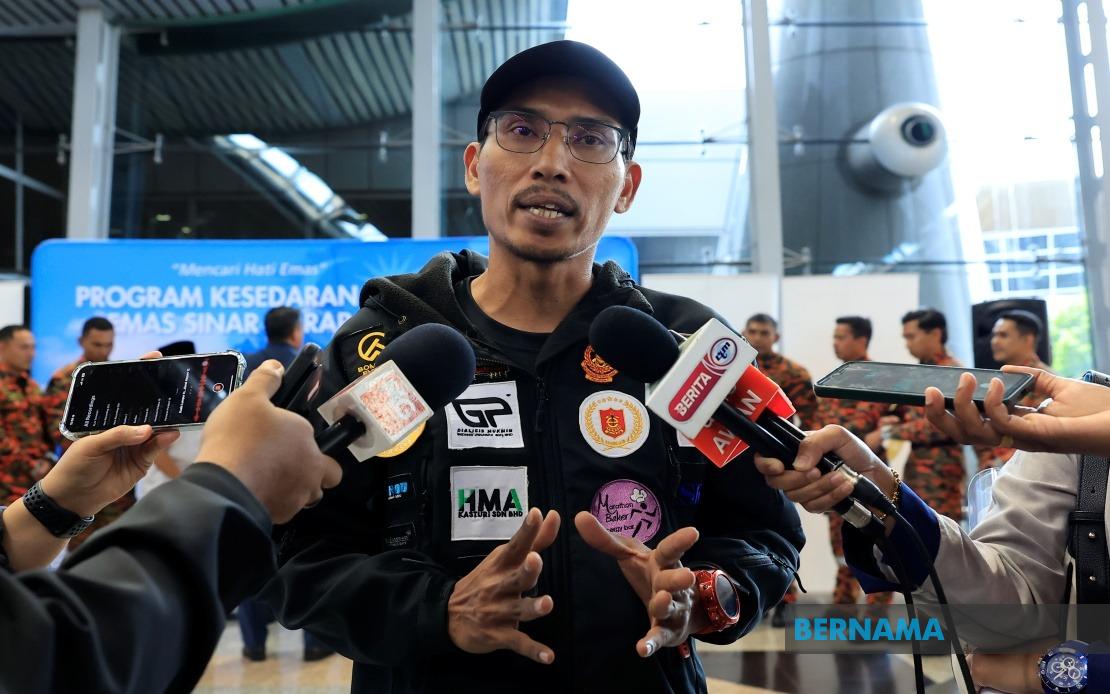
The family of Mohd Fakhrul Munir Mohd Isa, a 44-year-old officer with Malaysia's Fire and Rescue Department (JBPM), remains cautiously optimistic about his fate following catastrophic flash floods and landslides that struck the Rasuwa district in Nepal. The experienced climber, known widely as Loe, went missing along with other members of a Malaysian expedition attempting to reach Everest Base Camp. Despite the communication blackout that has left his loved ones anxious, his family has chosen to maintain faith that he and his companions will emerge from the disaster alive.
Mohd Saiful Munir Mohd Isa, 46, Loe's older brother and an operations officer at Port Klang Fire and Rescue Station, expressed the family's determination to remain positive despite the grim circumstances. Speaking to reporters, he acknowledged the painful reality they now confront—that they must simultaneously hold onto hope while accepting the possibility of an unfavourable outcome. This difficult emotional balance reflects the uncertainty surrounding rescue operations in mountainous terrain following natural disasters of this magnitude, where communication infrastructure is often the first casualty.
The communication silence from the expedition group, rather than being viewed as a sign of the worst, is being interpreted by the family as a natural consequence of the environmental catastrophe that has engulfed the region. Mohd Saiful Munir emphasised that the family understands how disaster scenarios create conditions where stranded individuals cannot establish contact with the outside world. This interpretation, while grounded in practical reality, demonstrates how families of missing persons in remote locations must navigate the psychological terrain between hope and despair during the critical initial hours and days following such incidents.
Loe's passion for mountaineering is deeply embedded in his professional and personal identity, making his frequent expeditions to Nepal unremarkable within his family circle. Nepal has effectively become his second home, with Mohd Saiful Munir noting that his brother typically undertakes three to five climbing expeditions to the country annually. This established pattern of regular travel suggests that Loe possessed substantial experience navigating Nepal's challenging terrain and understanding its meteorological patterns, though no amount of expertise can prepare climbers for the sudden, violent onset of flash floods and landslides in high-altitude valleys.
Beyond his climbing achievements, Loe maintains active involvement in cycling, reflecting a broader commitment to endurance sports and mountain-based athletic pursuits. His professional expertise as a member of JBPM's special forces team—a unit trained for high-risk rescue and emergency response operations—likely equipped him with survival skills and situational awareness beyond those of typical recreational climbers. Yet even such professional training offers limited protection when natural forces of the magnitude witnessed in Rasuwa strike without warning in confined valley spaces.
The last confirmed communication between the brothers occurred approximately one week before Loe's departure for Nepal, leaving the family without any updated information about his status or condition. Based on the expedition's planned route toward Everest Base Camp, authorities and family members have deduced that the group was likely positioned in the valley region when the flash floods and accompanying landslides occurred. This geographical assessment, while helpful for search and rescue coordination, underscores how quickly mountain weather can transform a planned climbing itinerary into a survival situation.
Mohd Saiful Munir has consciously adopted a measured approach to processing information during this crisis, resolving to rely exclusively on official communications from relevant authorities rather than speculation or rumour. He characterises the current situation as one of entrapment—individuals caught in a disaster zone, physically present but unable to transmit signals or reach rescue personnel. This framing, while sobering, acknowledges both the severity of their predicament and the realistic constraints faced by emergency responders attempting to locate and extract missing persons from areas rendered inaccessible by flooding and geological instability.
The JBPM has officially confirmed that two of its officers remain unaccounted for in the aftermath of the Nepal disaster. JBPM director-general Datuk Seri Nor Hisham Mohammad identified both Mohd Fakhrul Munir Mohd Isa and Mohd Sani Harul, who serves as deputy director of the Planning and Research Division, as missing personnel. The presence of two JBPM officers within the expedition highlights how Malaysian emergency services personnel engage with high-altitude mountaineering as both professional development and personal challenge.
The broader Malaysian contingent consisted of ten individuals en route to Everest Base Camp when disaster struck. The expedition represents the kind of international engagement increasingly common among Malaysian professional and military personnel, who participate in climbing expeditions both for personal fulfilment and as team-building exercises. The presence of multiple Malaysians within the affected region has prompted coordinated response efforts from Malaysian government agencies and diplomatic representatives stationed in Nepal.
Flash floods and landslides in Nepal's mountainous terrain represent recurring hazards during specific seasons, though the intensity of individual events remains difficult to predict. The Rasuwa district, situated in Nepal's northern reaches, experiences weather patterns that can shift rapidly from clear conditions to severe precipitation, creating sudden danger for mountain expeditions. Climate change patterns have potentially altered the frequency and severity of such weather events, though establishing direct causation requires substantial meteorological and hydrological analysis.
The Malaysian government faces mounting pressure to mobilise rescue and recovery resources in coordination with Nepalese authorities. Such operations in remote mountainous regions present substantial logistical challenges, particularly when ground access is compromised by flooding and landslides. Coordinating international rescue efforts across borders adds additional complexity to response mechanisms, requiring diplomatic channels and resource-sharing agreements between nations.
For the families awaiting news from Nepal, the period following initial reports of missing persons represents an agonising waiting phase characterised by incomplete information and dwindling but persistent hope. Mohd Saiful Munir's public statements reflect a family attempting to maintain emotional equilibrium while acknowledging harsh possibilities. The experience of Malaysian families with missing relatives abroad brings into focus how international travel, particularly in pursuit of adventurous activities, carries inherent risks that extend beyond the individual participant to affect entire family networks across borders.
The unfolding situation in Nepal will likely prompt discussions within Malaysia regarding safety protocols for expeditions undertaken by government employees and military personnel, as well as broader considerations about how citizens engaged in high-risk mountaineering activities can better prepare themselves and inform their families. While such discussions should not deter Malaysians from international climbing pursuits, they may contribute to enhanced preparedness and communication systems that could prove invaluable during genuine emergencies.

