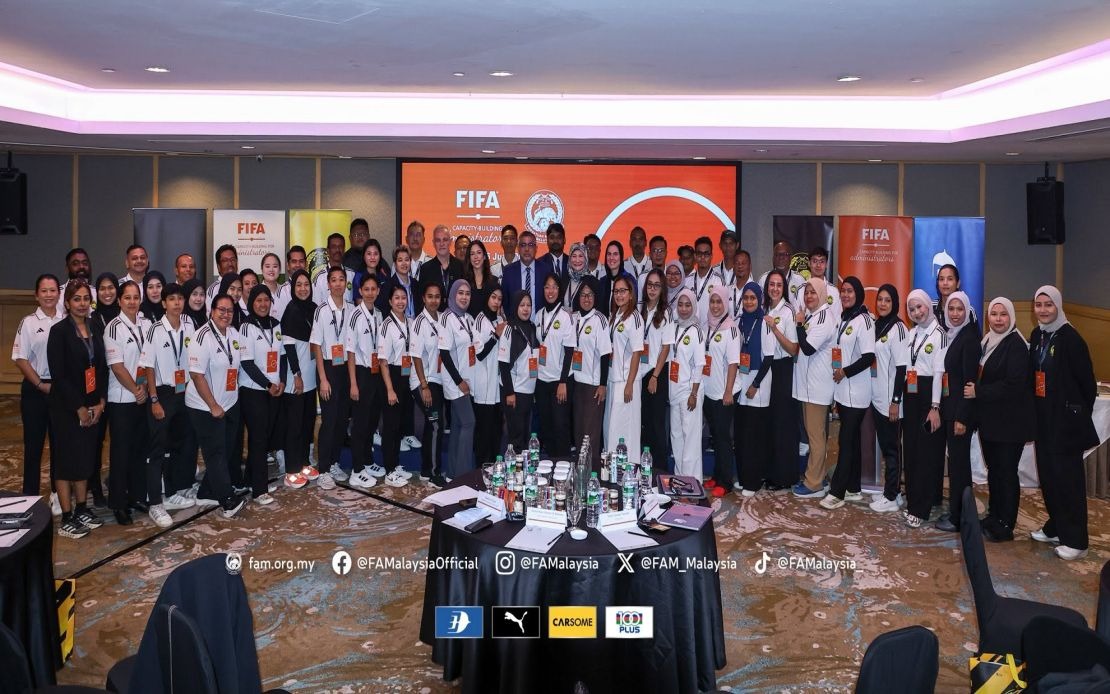
The Football Association of Malaysia is moving beyond on-field development to address a critical gap in its women's football ecosystem: the professionalization of administrative and management functions. Beginning in June 2026, FAM will conduct the FIFA Capacity-Building For Administrators 2026 programme, a four-day intensive training initiative designed to equip team managers and administrative officers with contemporary skills in sports management and organisational leadership.
This strategic initiative recognises that sustainable growth in women's football requires more than talented players and skilled coaches. Behind every successful women's team stands an intricate network of managers, administrators, and support staff whose competence directly influences player welfare, team logistics, competition standards, and institutional credibility. By targeting this often-overlooked layer, FAM is addressing a development bottleneck that has constrained the professionalisation of Malaysian women's football.
The programme will be delivered by two FIFA Women's Football Development Experts, Safia Abdeldayem and Pema Choden Tshering, bringing international best practices directly to Malaysia. Their involvement signals FIFA's confidence in FAM's commitment and provides participants access to globally-tested frameworks rather than locally-improvised solutions. This direct knowledge transfer creates multiplier effects across the domestic system.
Curriculum content spans four core modules reflecting current priorities in global women's football development. Women's Leadership addresses the persistent underrepresentation of women in decision-making positions within football structures. Women's Competition examines tournament formats, scheduling logistics, and competitive integrity specific to the women's game. Club and Players' Rights explores contractual frameworks, welfare provisions, and dispute resolution mechanisms. Strategic Planning equips participants to develop medium to long-term roadmaps aligned with institutional goals and resource constraints.
These modules represent a departure from reactive, ad-hoc administration toward systematic, principle-based management. Malaysian women's football has historically suffered from inconsistent administrative standards, unclear governance pathways, and limited succession planning. The curriculum directly confronts these deficiencies by establishing common standards and shared understanding across the administrator cohort.
FAM's emphasis on expanding the pool of skilled administrators reflects demographic reality: women's football remains severely under-resourced compared to men's competitions, and the administrator shortage compounds this disadvantage. Recruiting, training, and retaining quality managers and administrators requires deliberate investment. By positioning administrative capability-building as a strategic priority, FAM signals that women's football infrastructure merits institutional attention comparable to elite men's programmes.
The programme's timing and structure also align with broader AFC and FIFA initiatives to professionalise women's football across Asia. Malaysia's participation demonstrates responsiveness to regional standards and positioning within competitive regional hierarchies. As other AFC member associations undertake similar programmes, Malaysia's administrators gain comparative advantage through early adoption and engagement with international experts.
Datak Suraya Yaacob's participation as both a FIFA Women's National Team Competitions Committee member and AFC Women's Football Committee member indicates high-level institutional support. Her dual roles mean insights from this Malaysian programme will feed into AFC-level discussions, potentially influencing regional policy. This visibility enhances FAM's influence within continental governance structures.
The programme also addresses retention and career development for women's football professionals. Administrative roles in women's sport frequently offer lower compensation, reduced job security, and limited advancement prospects compared to men's football. By offering FIFA-credentialed training, FAM enhances the professional standing of these roles, making them more attractive to capable candidates and improving retention of experienced administrators who might otherwise transition to more lucrative sectors.
Successful programme outcomes should yield measurable improvements in tournament administration, player welfare compliance, financial transparency, and strategic coherence across women's clubs and national teams. More subtly, developing shared professional language and standards among administrators strengthens the institutional fabric binding women's football together, facilitating knowledge-sharing and collaborative problem-solving.
For Malaysian readers, this development carries broader implications. Women's sports generally remain marginalised in funding, media coverage, and institutional support across Southeast Asia. FAM's commitment to administrative infrastructure signals that women's football can achieve professional standards comparable to international models. This validation has spillover effects, potentially encouraging investment in women's sports administration across other codes and federations.
The programme also models skills transfer relevant beyond women's football. The modules address generic management challenges—leadership development, competition design, rights protection, strategic planning—applicable to diverse sports and organisational contexts. Participants emerging from this training may catalyse broader professionalisation trends within Malaysian sports administration.
FAM's framing emphasises sustainability and ecosystem thinking rather than quick-fix initiatives. Creating stronger support structures now establishes foundations for weathering future challenges and enabling sustained growth. This long-term perspective distinguishes this investment from episodic interventions and positions women's football administration as a legitimate sector requiring continuous development rather than occasional attention.