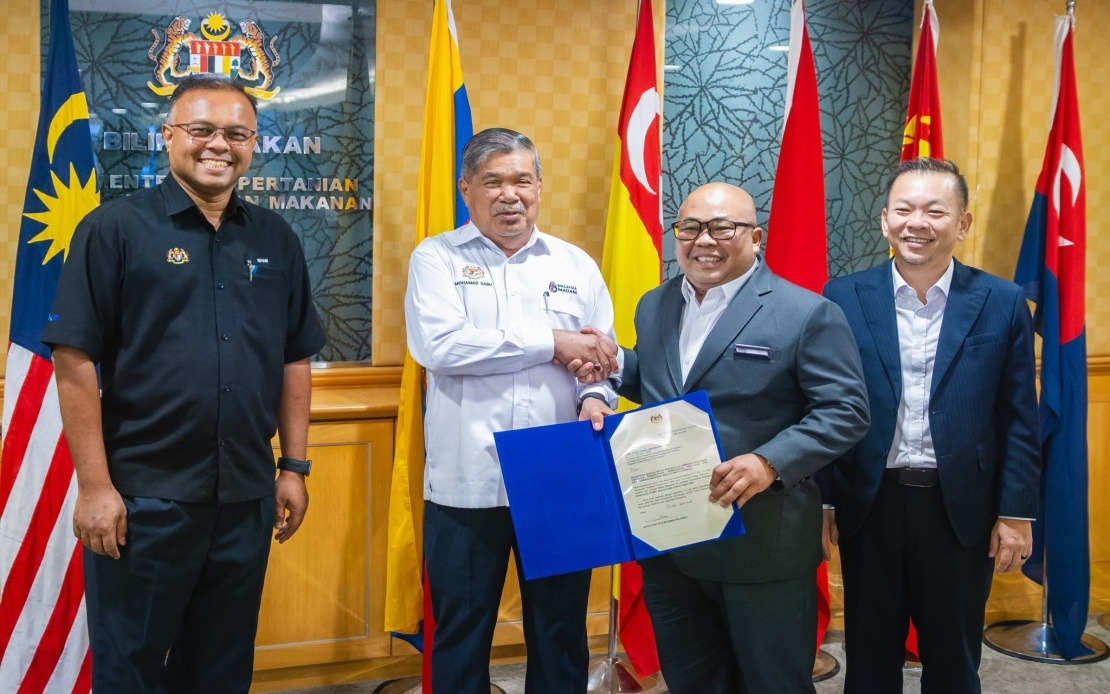
Faisal Iswardi Ismail, who previously served as deputy director-general in charge of food security and operations at the Federal Agricultural Marketing Authority, has been elevated to the position of director-general with effect from August 1. Agriculture and Food Security Minister Datuk Seri Mohamad Sabu formally handed over the appointment letter at a post-Cabinet meeting in Kuala Lumpur on August 5, marking the official transition in leadership at the key agricultural body.
The appointment represents a significant moment for FAMA, an organization that sits at the nexus of Malaysia's agricultural production and market dynamics. By promoting from within, particularly from a deputy director-general who already held responsibility for critical operational and food security functions, the government signals continuity in strategic direction while acknowledging established institutional knowledge. Ismail's prior role overseeing food security and operations suggests he has already accumulated substantial experience in the complexities of managing agricultural marketing in Southeast Asia's largest palm oil and rubber economy.
In his official remarks, Mohamad Sabu underscored the magnitude of the responsibilities now vesting with the new director-general. He characterized the trust extended through the appointment as weighty, reflecting the outsized importance of FAMA within Malaysia's broader agricultural ecosystem. The minister emphasized that FAMA functions as a linchpin connecting smallholder farmers and agribusiness entrepreneurs to viable market channels, a role that becomes increasingly vital as Malaysia navigates evolving global trade patterns and domestic food security imperatives.
The responsibilities enumerated by the minister paint a picture of an organization grappling with multifaceted challenges. Marketing local agricultural products requires sophisticated understanding of consumer preferences, export standards, and competitive positioning against regional and international producers. Strengthening the food supply chain entails coordinating activities across production, distribution, and retail networks, ensuring efficiency while mitigating waste and spoilage. These operational dimensions demand both technical expertise and political acumen, particularly when commodity price fluctuations can trigger farmer protests and consumer dissatisfaction simultaneously.
Increasing farmer and agri-food entrepreneur income constitutes perhaps the most politically sensitive dimension of FAMA's mandate. Rural constituencies form a substantial voting bloc in Malaysia, and agricultural profitability directly influences rural livelihoods and migration patterns to urban centers. A director-general who successfully expands farmer earnings can generate political goodwill, whereas failure to arrest declining rural incomes becomes a liability for the administration. This dual economic and political nature of agricultural policy explains the ministerial emphasis on Ismail's appointment and the public celebration of his elevation.
The timing of the appointment carries additional significance within Malaysia's current political context. Agricultural policy has assumed greater prominence as the government prioritizes food security concerns in a post-pandemic environment marked by supply chain disruptions and inflationary pressures on essential commodities. FAMA's effectiveness in stabilizing agricultural markets and ensuring adequate domestic supply of key foodstuffs has become a barometer of governmental competence. The formal presentation of the appointment letter at a post-Cabinet meeting suggests that this leadership transition was deliberated at the highest levels of government, underscoring its perceived importance.
Regionally, Malaysia's agricultural sector faces intensifying competition from Thailand, Indonesia, and Vietnam, which have invested heavily in agricultural modernization and export infrastructure. FAMA's role in helping domestic producers maintain competitive advantage in regional and global markets thus extends beyond domestic policy considerations. A capable director-general with operational experience can facilitate knowledge transfer, encourage adoption of improved practices, and forge market linkages that position Malaysian agricultural products favorably against competitors who are themselves upgrading capabilities and market presence.
Monamad Sabu's public congratulations on social media, extending wishes for ease in executing duties, reflects the growing importance of direct political communication in Malaysian governance. By personalizing the message and framing the appointment as a matter of individual capability rather than bureaucratic routine, the minister amplified the symbolic significance of Ismail's elevation. This approach also serves to raise public expectations regarding FAMA's performance under new leadership, creating accountability that extends beyond internal government mechanisms.
For agricultural stakeholders including farmers, traders, exporters, and distributors, the appointment of a director-general with deep operational experience offers some reassurance that institutional direction will proceed without disruptive transitions. Ismail's familiarity with FAMA's operational challenges, having managed them as deputy director-general, suggests he can implement strategic initiatives without expending excessive time on learning curves. Continuity in institutional culture and relationships with external stakeholders can facilitate faster execution of policy directives emanating from the ministry.
The appointment also reflects broader trends in Malaysian public service management, where organizations increasingly recruit leaders from within, valuing institutional experience and relationships. This approach contrasts with external recruitment models that prioritize fresh perspectives but entail integration periods. By promoting Ismail, the government arguably prioritizes implementation capacity over transformative change, suggesting that FAMA's trajectory under new leadership will likely emphasize optimization of existing functions rather than wholesale restructuring.
Looking forward, Ismail's tenure will be assessed against measurable indicators including farmer income growth, FAMA market share for local produce, supply chain efficiency metrics, and export performance. These dimensions will determine whether his appointment proves strategically sound and whether the institutional knowledge he brings translates into tangible improvements in Malaysia's agricultural marketing ecosystem and rural prosperity.

