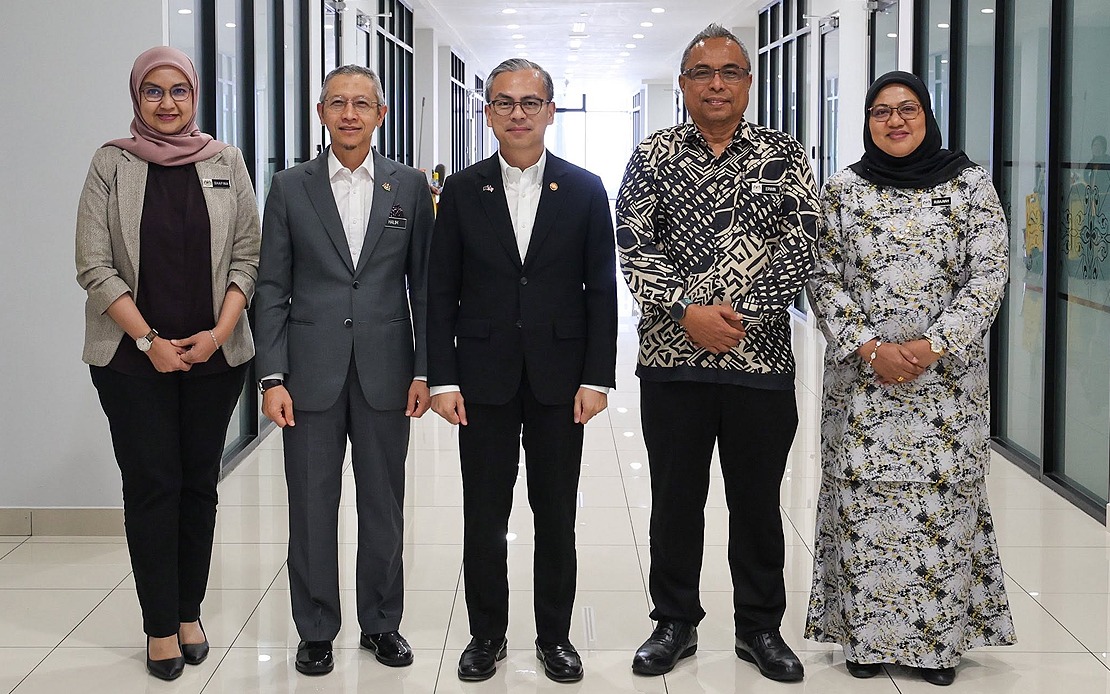
Communications Minister Datuk Fahmi Fadzil has welcomed the appointment of Erwin Khairul Ahmad as the new director-general of the Information Department, known locally as JaPen, marking a significant leadership transition within Malaysia's principal government communications agency. The minister also extended his congratulations to Wan Saidatul Shafina Mohd Amin, who has assumed the role of deputy director-general with specific responsibility for digital content initiatives.
Fahmi's public endorsement underscores the importance of continuity and strategic direction at JaPen, which serves as a critical conduit between the government and Malaysian citizens. In his statement, the minister emphasised the need for the incoming leadership team to maintain the department's commitment to transparent and effective public communication. He urged both officials to approach their responsibilities with unwavering dedication, demonstrating the wisdom necessary to navigate increasingly complex media landscapes and the enthusiasm required to modernise government information services.
The appointment of Wan Saidatul Shafina as deputy director-general specifically overseeing digital content reflects a deliberate organisational strategy. This structural choice highlights government recognition that digital platforms have become central to reaching and engaging Malaysians across all demographics. As social media and online channels proliferate, JaPen's ability to deliver timely, accurate information through these mediums has become indispensable. The creation of a dedicated digital content leadership position signals that the department intends to strengthen its capabilities in this domain, addressing both the opportunities and challenges posed by rapid technological change and shifting public communication patterns.
The Public Service Department announced both appointments formally, with Tan Sri Wan Ahmad Dahlan Abdul Aziz, the director-general of the Public Service Department, presenting the official letters of appointment. This ceremonial confirmation, conducted through established civil service channels, underscores the formal nature of these senior appointments and reflects the institutional procedures governing Malaysia's public administration. The involvement of top-level public service leadership in presenting the appointment letters emphasises the strategic importance placed on these roles within the broader government machinery.
Fahmi also publicly acknowledged the contributions of Julina Johan, his predecessor as director-general at JaPen. Such recognition of outgoing leadership is customary in Malaysian government circles, yet it carries symbolic weight beyond mere courtesy. Julina Johan's tenure occurred during a period of significant media transformation and evolving public expectations regarding government transparency and responsiveness. By acknowledging her service, dedication, and contributions, Fahmi reinforced the institutional continuity of JaPen while allowing for the fresh approaches that new leadership might bring.
The transition in JaPen's top positions comes at a moment when Malaysian government communications face mounting scrutiny and competition. Traditional media outlets coexist with diverse online news sources, independent commentators, and citizen journalists. Public trust in official information channels remains variable, influenced by perceptions of political bias, selective reporting, and the pace of information dissemination. Against this backdrop, the new director-general and deputy director-general inherit an institution tasked with restoring confidence in government communications whilst adapting to new technological realities and audience expectations.
The emphasis on digital content leadership deserves particular attention given Malaysia's internet penetration rates and the prevalence of social media usage among younger populations. Nearly all urban Malaysians and substantial rural populations access information through digital channels, yet government communication strategies sometimes lag behind private sector sophistication in these platforms. By elevating digital content to a deputy director-general level, JaPen signals commitment to parity between traditional and digital communication methods. This structural change could enable faster decision-making regarding online content strategy, more responsive engagement with emerging digital trends, and better coordination between various government agencies sharing information responsibilities.
Erwin Khairul Ahmad's appointment as director-general positions him to shape JaPen's strategic direction during a formative period. The Information Department manages not only direct government communication but also coordinates information policy across multiple agencies, oversees media relations, manages government archives and records, and increasingly serves as custodian of national narratives. The director-general must balance multiple stakeholder interests including senior government officials seeking visibility, media organisations demanding access and transparency, and citizens expecting accurate, timely information.
For Malaysian readers and Southeast Asian observers, these personnel changes carry implications beyond routine bureaucratic shuffling. They reflect government investment in its communication infrastructure at a time when information trustworthiness and digital competency increasingly determine political and social outcomes. The explicit prioritisation of digital content capability suggests acknowledgment that future government legitimacy depends partly on mastering contemporary information distribution and engagement methods. Whether the new leadership successfully translates institutional restructuring into improved public communication effectiveness will become apparent through observable changes in JaPen's output, responsiveness, and digital presence in coming months.