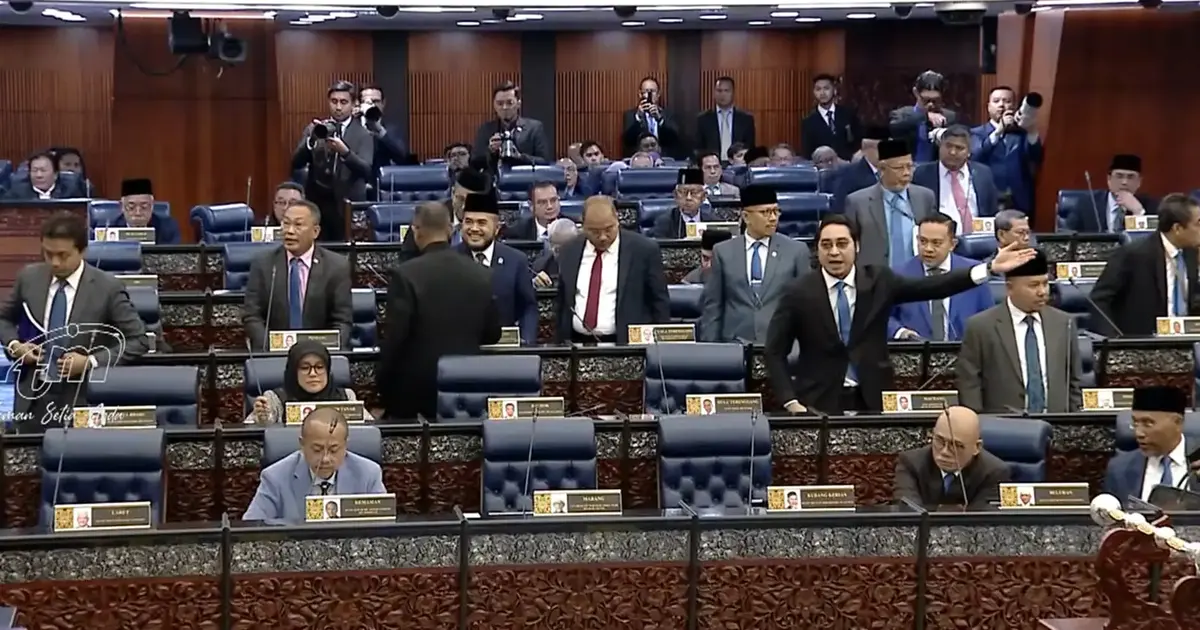
Communications Minister Fahmi Fadzil has publicly commended Bersatu MPs for their decision to remain present during a Tabung Haji Royal Commission of Inquiry sitting, drawing a sharp distinction between the conduct of government-aligned lawmakers and their counterparts from other opposition coalition partners.
The minister's remarks underscore growing tensions within the Perikatan Nasional opposition alliance, particularly regarding how component parties have handled parliamentary proceedings related to the embattled sovereign wealth fund. Tabung Haji, which manages pilgrimage savings and investments for Muslim Malaysians, has faced sustained scrutiny over financial irregularities and governance concerns that prompted the establishment of the royal commission.
Bersatu's decision to participate in the RCI proceedings positions the party differently from other PN MPs who chose to stage a coordinated walkout during the hearing. This divergence reflects broader philosophical differences within the opposition coalition regarding constructive engagement with parliamentary inquiries and public accountability mechanisms. The willingness of Bersatu lawmakers to sit through the proceedings signals a pragmatic approach to legislative business, regardless of political colour or institutional affiliation.
Fahmi's public acknowledgment of Bersatu's attendance carries political significance beyond mere procedural courtesy. By highlighting the contrast between the two approaches, the minister effectively elevates Bersatu's conduct as the more responsible alternative, reinforcing narratives about which opposition parties are genuinely committed to parliamentary scrutiny and governance accountability. This messaging proves particularly strategic given ongoing discussions about potential shifts in political alignments and coalition formations in Malaysian politics.
The Tabung Haji inquiry represents one of the government's flagship accountability initiatives, designed to investigate alleged misconduct and financial mismanagement spanning several years. The royal commission's work requires sustained input from lawmakers representing various constituencies and interests, making opposition participation crucial for maintaining the inquiry's legitimacy and public trust. When substantial blocs of MPs stage boycotts, they effectively undermine the commission's ability to showcase broad-based parliamentary consensus on accountability matters.
Bersatu's participation also reflects the party's distinct positioning within PN, where it maintains closer working relationships with the government on certain matters compared to other coalition partners. This tactical flexibility has previously enabled Bersatu to navigate between opposition status and collaborative governance when deemed strategically advantageous, a pattern evident in various legislative votes and parliamentary proceedings over recent years.
The boycott by other PN MPs appears rooted in different calculations about opposition solidarity and party discipline. Some coalition partners may view parliamentary walkouts as necessary demonstrations of opposition principle, while others question whether such tactics serve constituent interests or merely perform dissent for internal consumption. These disagreements expose fundamental fractures within PN regarding its long-term direction and strategic objectives.
For Malaysian observers monitoring political developments, these internal PN dynamics offer important insights into coalition stability and the opposition's capacity to present unified fronts on matters of public interest. The Tabung Haji inquiry, affecting millions of Malaysian Muslims with savings held by the fund, transcends partisan considerations and touches genuine public welfare concerns. Opposition parties' varied responses to scrutiny of the institution therefore reveal whether their primary motivation involves principled oversight or factional positioning.
Fahmi's intervention also signals government satisfaction with Bersatu's cooperative approach on this particular issue. As communications minister overseeing public messaging around major inquiries, his public praise serves to reinforce the narrative that constructive engagement yields better democratic outcomes than reflexive boycotts. This messaging, while factually grounded in the specific Tabung Haji proceedings, carries broader implications for how other parliamentary business and future inquiry processes might unfold.
The contrasting responses from within PN raise questions about whether the opposition coalition can sustain coherent positions on major governance issues. Malaysian politics increasingly turns on these questions of internal alignment and party discipline, particularly as opposition leaders attempt to position themselves as viable alternative governments deserving public confidence. Episodes where component parties adopt conflicting strategies inevitably complicate such positioning and suggest unresolved tensions about coalition governance principles.
Looking forward, the Tabung Haji RCI proceedings will likely generate additional moments where opposition parties must decide between participation and protest. How Bersatu continues to navigate these decisions, and whether other PN components follow its lead or entrench oppositional stances, will substantially shape perceptions of the opposition's maturity and fitness for governance. Meanwhile, government allies will closely monitor whether Bersatu's cooperative approach extends to future matters of legislative or policy importance, potentially influencing broader political calculations about coalition feasibility and institutional relationships across Malaysia's complex political landscape.

