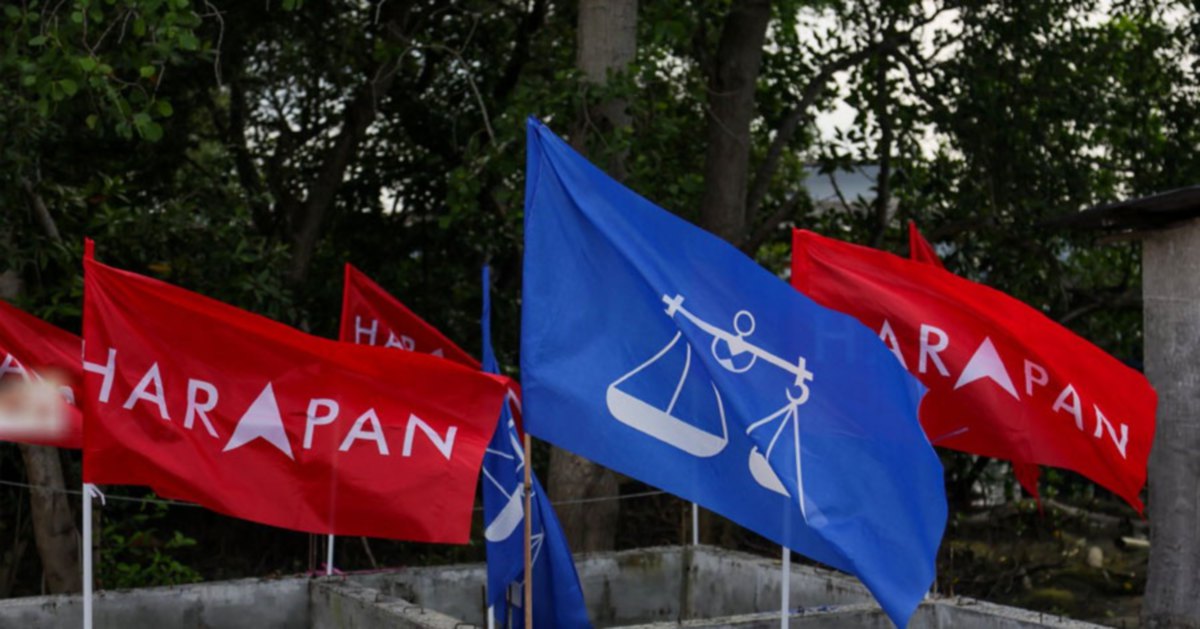
Pakatan Harapan's communications director Datuk Seri Fahmi Fadzil publicly confirmed yesterday that Datuk Seri Amirudin Shari, who serves as the opposition coalition's election director, held discussions with party chairman Datuk Seri Anwar Ibrahim. The confirmation comes at a critical juncture as Pakatan Harapan and Barisan Nasional navigate complex negotiations over parliamentary seat allocations ahead of what observers anticipate could be significant electoral developments.
The meeting between Amirudin and Anwar represents routine but strategically significant coordination within Pakatan Harapan's leadership structure. As election director, Amirudin holds responsibility for overseeing the coalition's campaign machinery and seat strategy across Malaysia's diverse electoral landscape. His direct engagement with Anwar, who chairs the umbrella coalition, underscores the importance of maintaining alignment on critical decisions affecting the partnership's electoral positioning and negotiating posture with Barisan Nasional.
Pakatan Harapan currently comprises three major component parties: the Democratic Action Party, the Malaysian United Indigenous Party, and the National Trust Party. The coalition has governed in Malaysia previously and represents a significant political force capable of contesting substantial numbers of parliamentary seats. The ongoing discussions with Barisan Nasional—which includes the United Malays National Organisation, Malaysian Chinese Association, and Malaysian Indian Congress among other parties—reflect the complex mathematics of Malaysian politics, where no single coalition has dominated recent elections without strategic alliances.
The timing of these discussions carries particular weight given Malaysia's political volatility over recent years. Cross-party negotiations and seat-sharing arrangements have become increasingly intricate as both major coalitions attempt to construct winning configurations. These technical discussions, though often conducted away from public scrutiny, ultimately determine which candidates contest which seats and therefore shape the electoral battlefield. For voters and political observers, understanding these allocations provides insight into how each coalition assesses electoral strengths and weaknesses across different constituencies.
For Pakatan Harapan specifically, the seat negotiations with Barisan Nasional must balance several competing considerations. The coalition must preserve sufficient seats for its component parties to maintain their individual viability and internal cohesion while securing enough competitive seats to justify continued partnership. Meanwhile, accommodating Barisan Nasional's own requirements—particularly the substantial seat demands of larger partners like UMNO—requires careful negotiation. These dynamics play out across Malaysia's 222 parliamentary constituencies, each with distinct demographic profiles, historical voting patterns, and competitive dynamics.
The confirmation by Fahmi Fadzil, speaking in his capacity as communications director, suggests Pakatan Harapan is managing these negotiations with disciplined internal communication. Rather than allowing speculation to dominate public discourse, the coalition has chosen transparency about its leadership engagement, which can be interpreted as confidence in ongoing discussions. This approach also signals to the broader political establishment that Pakatan Harapan maintains functional coordination between its senior leaders, an important factor in coalition dynamics where perceptions of internal cohesion affect both negotiating leverage and voter confidence.
From a Malaysian political economy perspective, these seat allocation discussions carry implications extending beyond mere electoral positioning. The constituencies at stake include major urban centres, rural Malay-majority areas, Chinese-dominant regions, and ethnically mixed constituencies. How these are distributed between Pakatan Harapan and Barisan Nasional reflects and shapes the coalitions' respective commitments to different constituencies and policy priorities. Urban constituencies, for instance, have shown stronger support for Pakatan Harapan in recent elections, while rural and Malay-majority seats remain competitive between the coalitions.
The broader Southeast Asian context also deserves consideration. Malaysia's alternation between governing coalitions represents one of the region's most developed examples of competitive democracy. Unlike some neighbouring countries where power transitions prove contentious, Malaysia's political system—despite its challenges—has accommodated peaceful transfers of power. The current negotiations between Pakatan Harapan and Barisan Nasional demonstrate this system functioning, with different coalitions competing and cooperating across various electoral arrangements. For observers across Southeast Asia, these discussions illustrate how established democratic institutions manage coalition politics.
Looking forward, the results of these negotiations will become apparent when seat allocations are eventually announced. Voters, analysts, and party activists will scrutinise whether their respective coalitions have secured competitive seats in key battlegrounds. The strength of candidates fielded in critical constituencies, combined with the momentum each coalition can generate, will ultimately determine electoral outcomes. Until seat allocations are finalised, however, these behind-the-scenes discussions between senior leadership figures—such as the Amirudin-Anwar meeting—will continue shaping the architecture of Malaysia's next electoral contest. Fahmi's confirmation acknowledges this reality while providing stakeholders assurance that coalition leadership remains engaged and coordinated during this pivotal negotiating period.

