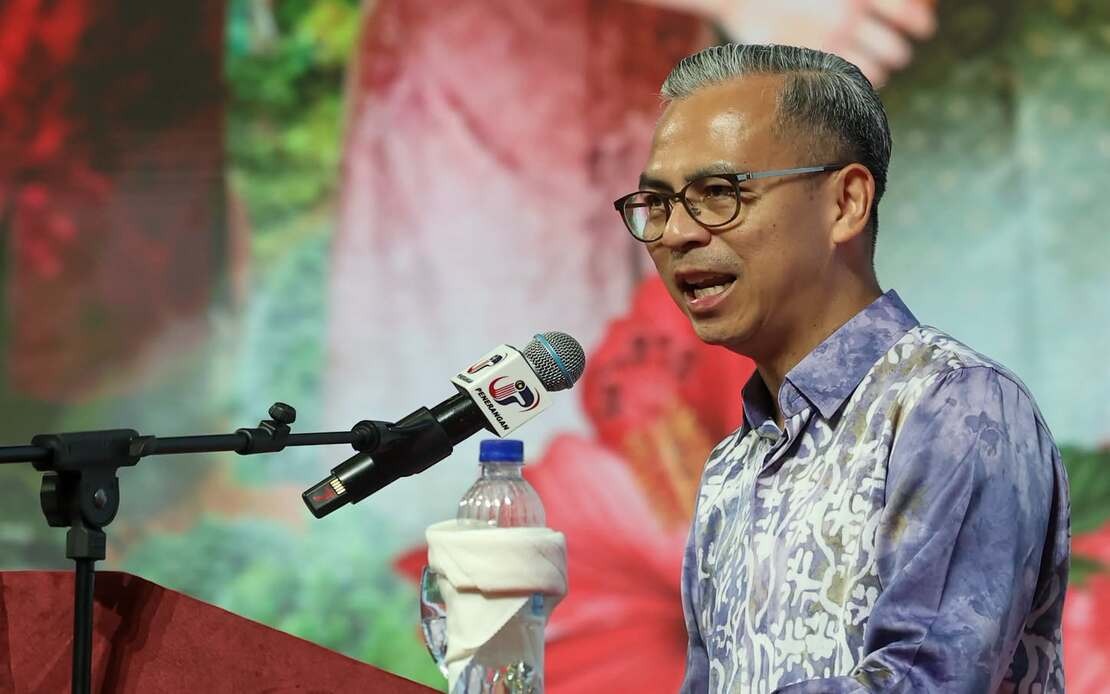
Communications Minister Datuk Seri Fahmi Fadzil has publicly commended renowned Malaysian recording artist Faizal Tahir for creating 'Aku Berjanji', the officially designated theme composition for the country's 2026 National Day and Malaysia Day (HKHM) observances. The minister's endorsement came following the song's premiere performance during the launch ceremony of the 2026 National Month and Fly the Jalur Gemilang Campaign, held in Ipoh on July 19 under the direction of Prime Minister Datuk Seri Anwar Ibrahim.
Fahmi took to social media to express his appreciation for the work, acknowledging that Faizal's composition carries substantive thematic elements centered on national cohesion, collective identity, and patriotic sentiment. The minister's recognition extends beyond mere acknowledgment of musical merit; his public statement reflects the government's deliberate strategy in leveraging popular culture and contemporary artists to reinforce national messaging during significant civic occasions. By associating a respected musician with the independence celebrations, authorities aim to broaden the campaign's appeal across demographic groups, particularly among younger audiences who consume content through music and digital platforms.
The unveiling of the campaign itself signals the beginning of Malaysia's sustained promotional drive leading into the dual celebrations of independence and the formation of the Malaysian federation. The 2026 timeframe represents a pivotal moment for national reflection, marking decades since the nation's founding. Government officials have recognized that utilizing established artistic talent provides greater cultural resonance than traditional state-produced commemorative materials, making the choice of Faizal Tahir strategically sound from a communications perspective.
Fahmi's commentary also extended to practical matters concerning the physical display of national symbols during the festive period. He urged the Malaysian public to participate enthusiastically in the 'Fly the Jalur Gemilang' initiative, with specific emphasis on ensuring that national flags are maintained in respectable condition and mounted with proper care. This directive addresses a recurring concern in Malaysian civic discourse regarding the dignified presentation of the country's primary national emblem, reflecting ongoing governmental efforts to cultivate reverence for constitutional symbols.
An additional dimension of the minister's message focused on emerging technological challenges to national symbol integrity. Fahmi cautioned social media participants about the risks inherent in utilizing artificial intelligence systems to generate or manipulate images of the Jalur Gemilang, warning that errors produced through such digital means could potentially diminish or undermine the symbolic authority of the flag. This guidance acknowledges the contemporary landscape where AI-generated content proliferates rapidly across digital networks, often without adequate verification or cultural sensitivity considerations.
The concern about AI-generated flag imagery reflects a broader governmental awareness of digital-era vulnerabilities affecting national symbols. Unlike previous decades when flag misrepresentation occurred primarily through intentional acts or limited printing errors, the democratization of AI image generation tools means that unintended or careless flag distortions could propagate widely across social platforms before correction becomes possible. The minister's preemptive guidance attempts to establish community norms around responsible digital content creation during patriotic occasions.
Faizal Tahir's selection as the composer of this year's defining national celebration song places him within a significant cultural lineage of Malaysian artists who have shaped the soundtrack of national identity. The decision to commission an established performer rather than selecting from institutional music bodies underscores a modernization of how governments approach patriotic messaging. Contemporary audiences increasingly engage with nationalism through popular music consumption, making commercial and chart success relevant criteria for officials coordinating cultural programming.
The campaign launch in Ipoh carried particular symbolic weight, as the city serves as Perak's capital and represents an important regional center outside the federal territory. By initiating the national campaign from a state capital rather than from Kuala Lumpur, the government communicated an intention to distribute patriotic messaging geographically and to encourage participation across all regions of the peninsula and beyond. This decentralized approach contrasts with historical practices of centralizing major state occasions within the capital.
The broader context of these celebrations encompasses Malaysia's continued efforts to foster intercommunal unity during a period of persistent social divisions. Government messaging consistently emphasizes themes of togetherness and shared national purpose, with cultural initiatives serving as vehicles for communicating such aspirations. Music, particularly when performed by respected artists with cross-community appeal, operates as a non-partisan medium for advancing unity narratives more effectively than political rhetoric alone.
For Malaysian citizens and residents, the 2026 celebrations will represent an opportunity for collective reflection on national identity and progress across multiple decades of independence and federation. The selection of contemporary popular music as a central component of official commemorative programming reflects evolving understandings of how national consciousness is constructed and transmitted in the twenty-first century. Faizal Tahir's 'Aku Berjanji' will function as both cultural artifact and political messaging tool, embedding governmental priorities regarding unity and patriotism within artistic expression that audiences will encounter repeatedly across media platforms during the coming year.

