A prolonged heat wave affecting 17 areas across Malaysia has begun to exact a heavy toll on the nation's agricultural sector, forcing farmers to radically alter their irrigation schedules and confront mounting productivity losses. The phenomenon, which has disrupted daily community activities from Peninsular Malaysia to Sabah and Sarawak, represents a mounting challenge for crop producers already contending with climate variability and rising input costs. The Malaysian Meteorological Department (MetMalaysia) issued a Level 1 hot weather alert—its cautionary category—on August 25, signalling that affected regions had experienced daily maximum temperatures between 35 and 37 degrees Celsius for at least three consecutive days.
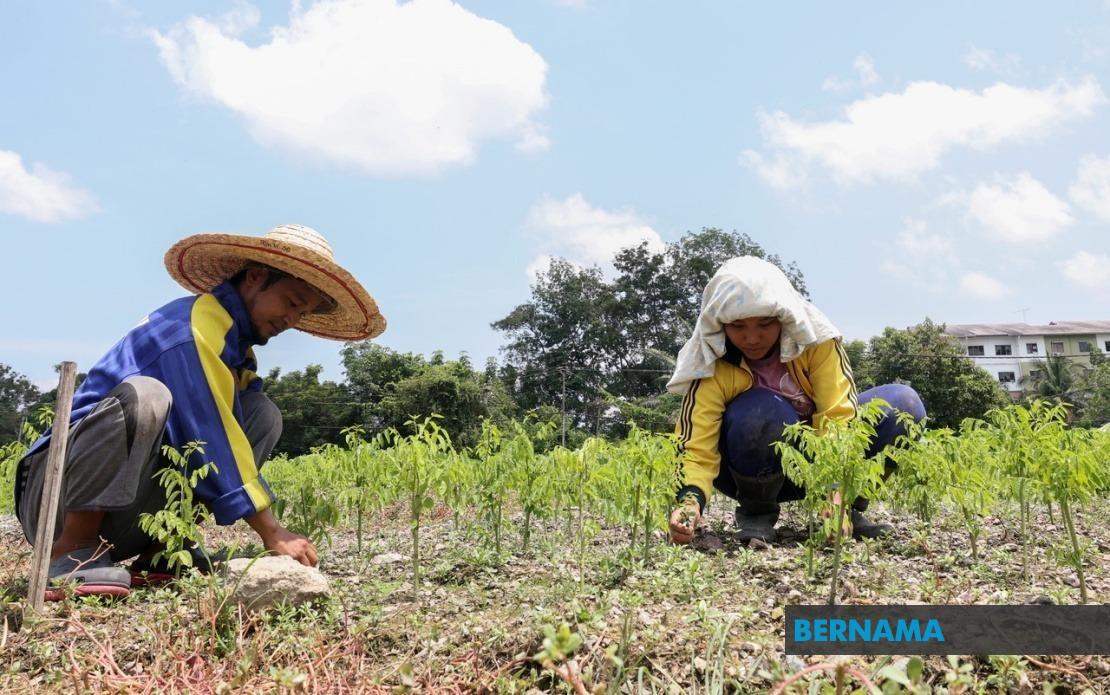
The strain on agricultural operations is most visible in Sandakan and surrounding districts in Sabah, where vegetable growers have become unwilling experimenters in intensive moisture management. Firyanus Salamba, a 33-year-old farmer operating in Batu 7, Sandakan, reported a dramatic shift in his watering routine. Where his vegetable plots previously required irrigation once daily under normal weather patterns, the extreme heat has necessitated three separate watering sessions—morning, afternoon, and evening—to maintain adequate soil moisture for crops such as okra, sweet shoots, and mustard greens. This tripling of labour and water inputs represents not merely a logistical inconvenience but a significant upward pressure on production costs during a period when market prices for fresh vegetables have shown limited upward movement.
Yet the intensified irrigation regimen has failed to prevent yield deterioration. Despite adhering to this demanding watering schedule, Salamba observed notable production declines across his vegetable portfolio. Chilli plants have proven particularly vulnerable to the extreme conditions, struggling to survive even with supplementary water provision. This vulnerability is particularly troubling given chillies' economic importance to Malaysian agriculture and their prominence in domestic cuisine and export markets. The difficulty in maintaining viable chilli production during heat waves points to a potential structural challenge for the sector, as climate patterns shift toward more frequent and intense temperature extremes.
Flower nursery operators face remarkably similar predicaments, according to findings from a Bernama survey conducted during the alert period. Commercial flower producers have adapted their schedules to include at least two daily watering cycles to prevent flowering plants from wilting and succumbing to desiccation. The ornamental horticulture sector, which generates significant export revenue and supplies domestic landscaping and event industries, faces the risk of substantial inventory losses if heat episodes persist or intensify. Unlike vegetable production, where yield losses translate into lower harvest volumes, nursery losses often mean complete crop failure—plants that wilt during extreme heat frequently die rather than recover once temperatures moderate.
The geographic distribution of the affected areas underscores the nationwide character of this weather phenomenon. Eleven regions across Peninsular Malaysia have been placed under Level 1 alert status, spanning Perak's Larut and Matang, Kuala Kangsar, Kampar, and Batang Padang districts; Kelantan's Kuala Krai; Pahang's Kuantan, Raub, Temerloh, and Pekan; and Selangor's Hulu Selangor and Gombak. This concentration across multiple states suggests a sustained atmospheric pattern rather than isolated local phenomena. In Sabah, the five affected areas—Telupid, Tenom, Sandakan, Pitas, and Beluran—indicate that the heat wave has penetrated deeply into East Malaysia's agricultural zones. Marudi in Sarawak represents the sole affected location in that state, yet even this single site indicates the weather system's extensive reach across the nation.
MetMalaysia's classification framework provides a useful reference point for understanding heat wave severity. The Level 1 alert, designated as the cautionary category, triggers when daily maximum temperatures sustain levels of 35 to 37 degrees Celsius over a minimum three-day period. This threshold, while scientifically precise, masks the practical difficulties farmers face in real-time decision-making. Agricultural productivity does not decline in sharp steps corresponding to meteorological classifications; rather, heat stress accumulates gradually across plant tissues and soil profiles, with impacts compounding across multiple consecutive days of extreme conditions. Farmers operating without sophisticated thermal monitoring systems must rely on visual observations and experience to judge when intervention becomes necessary.
The implications of this heat wave extend beyond immediate harvest impacts. Prolonged exposure to extreme temperatures can reduce seed viability in breeding programmes and affect the genetic quality of propagation materials. For flower nurseries and vegetable seed producers, which supply downstream agricultural operations, thermal stress during critical growth phases may compromise germination rates and disease resistance in subsequent planting seasons. This cascading effect could perpetuate productivity losses across multiple production cycles. Additionally, the need for intensified irrigation during peak heat periods places pressure on water resources, particularly in regions where aquifers are already stressed or where irrigation infrastructure relies on seasonal rainfall patterns that climate change may be disrupting.
The timing of this heat alert carries particular significance for Malaysian agricultural planning. August represents a transitional month in the region's monsoon cycle, and sustained extreme temperatures during this period may indicate shifts in traditional weather patterns that farmers have historically used to schedule planting and harvest operations. Agricultural extension services and government agencies will need to monitor whether such heat episodes become more frequent or intense, as this would necessitate broader reforms to crop selection, irrigation infrastructure investment, and farmer training programmes. Adaptation strategies might include promoting drought-resistant crop varieties, investing in precision irrigation systems that minimise water waste, and developing early warning systems that enable farmers to implement protective measures before thermal stress becomes severe.
For Malaysia's agricultural sector, this widespread heat alert serves as a tangible reminder of climate vulnerability. The nation's agricultural output faces mounting pressure from temperature extremes, erratic rainfall, and pest pressures that intensify under altered climatic conditions. While short-term responses—increased watering, protective shading, crop adjustments—can mitigate immediate losses, longer-term resilience requires systemic changes to farming practices, research priorities, and policy frameworks. The challenges confronting farmers like Firyanus Salamba in Sandakan are not merely local difficulties but indicators of broader climatic transitions that will shape Malaysian agriculture's trajectory in coming decades.

