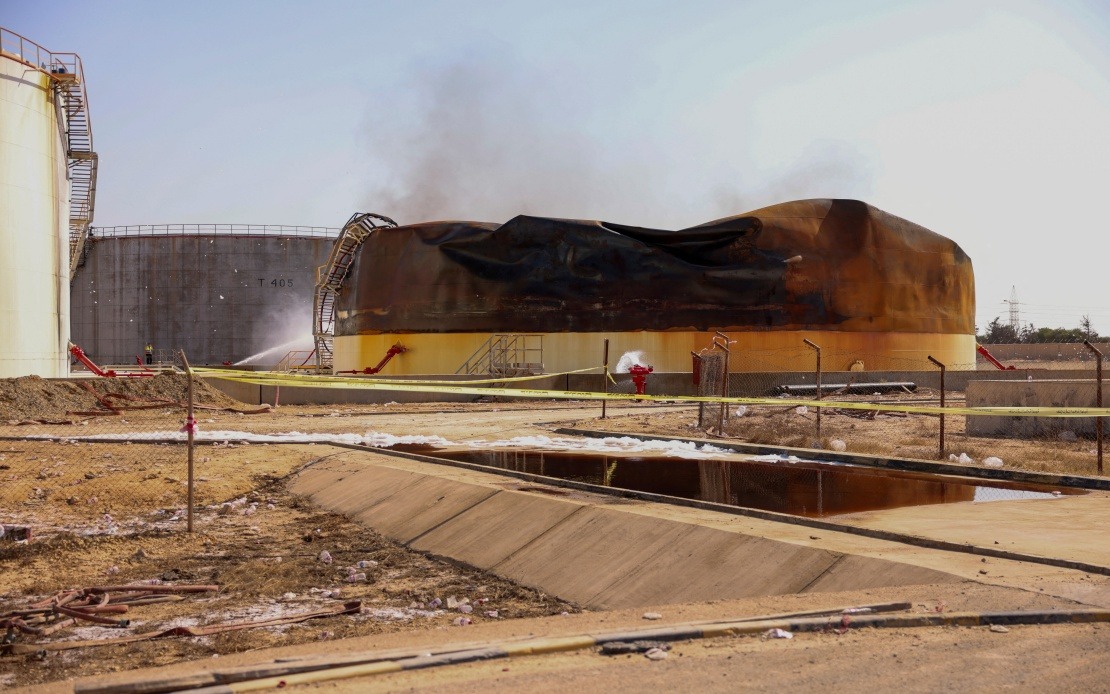
A blast near the Zawiya power plant in western Libya on Saturday has incapacitated several electricity generation units, according to the state-owned General Electricity Company of Libya (GECOL). The incident marks an escalation in threats to the country's already fragile energy infrastructure, which has struggled to meet demand across the nation amid ongoing political instability and security challenges.
GECOL officials have launched an investigation to pinpoint what triggered the explosion and assess the full extent of damage to the facility. Technical teams are working systematically to understand the precise circumstances that led to the shutdown of multiple generation units, though initial reports suggest the blast occurred in close proximity to the plant's main operational areas. The company has not yet disclosed whether the explosion was accidental or the result of deliberate action.
Restoration efforts are proceeding gradually as GECOL attempts to bring the damaged generation capacity back online. The electricity company has appealed to citizens for patience while repair teams labour to stabilise the national grid and restore normal supply levels. Officials have committed to continuing round-the-clock operations until electricity services return to full capacity, acknowledging the critical nature of power supply to hospitals, water systems, and other essential services.
The timing of this explosion is particularly concerning given that it follows a series of drone strikes on Zawiya's infrastructure just one week earlier. Those previous attacks targeted oil storage facilities, desalination plants, and other power-related installations, suggesting a coordinated campaign against the western Libyan city's economic and social backbone. The pattern of strikes within such a short timeframe has intensified worries about the security situation in the region and the vulnerability of key installations.
Authorities remain unable to identify those responsible for either the drone strikes or Saturday's explosion. No militant group or state actor has claimed responsibility for any of the recent attacks. Investigations are ongoing to trace the origin of the drones and establish the identity of those behind the coordinated assault on Zawiya's critical infrastructure. This lack of clarity has compounded anxiety among residents and officials about future threats.
Libya's energy sector has long been caught in the crossfire of the country's protracted political conflict. The nation has endured years of competition between rival governments and armed factions, each seeking control over oil and gas resources that form the backbone of the economy. Power generation facilities have frequently become targets in this struggle, with damage to plants and transmission networks contributing to chronic electricity shortages that affect millions across the country.
For Southeast Asian observers, Libya's infrastructure crisis underscores how fragile energy systems become in conflict zones, a cautionary tale relevant to regional stability. Malaysia and neighbouring nations depend on secure energy supplies for their own development, making international efforts to stabilise Libya's power sector a matter of indirect but real concern. The difficulty in identifying attackers also highlights how modern drone technology has made even remote infrastructure vulnerable to asymmetric threats.
The Zawiya power plant is one of several major generation facilities that Libya depends upon to meet electricity demand. When multiple units go offline simultaneously, the entire grid faces stress, potentially leading to rolling blackouts or widespread outages. Given that Libya's population and economy are concentrated in coastal cities, disruptions to central plants like Zawiya can have cascading effects across the entire western region.
GECOL's apology to citizens reflects the frustration that power cuts generate among ordinary Libyans. Access to reliable electricity is essential not only for comfort but for public health, telecommunications, water purification, and small business operations. Prolonged or frequent outages can accelerate brain drain as skilled workers and young people emigrate in search of better living conditions, further undermining Libya's capacity for recovery and state-building.
The broader context reveals how overlapping challenges—ongoing military conflict, political fragmentation, and now apparent infrastructure sabotage—create compounding obstacles to Libya's stabilisation. Even when ceasefire agreements are reached, the underlying causes of instability remain, and critical facilities continue to face threats from various actors seeking leverage or responding to perceived slights. Until Libya achieves genuine political reconciliation and security sector reform, the energy sector will remain vulnerable.
International actors including the United Nations and neighbouring countries have attempted mediation and support for Libya's recovery, yet progress remains limited. The continued targeting of civilian infrastructure like power plants suggests that some parties view the economy itself as a weapon in their political struggle, willing to inflict collective suffering on the population to advance factional interests. This dynamic makes reconstruction remarkably difficult even when technical expertise and funding are available.

