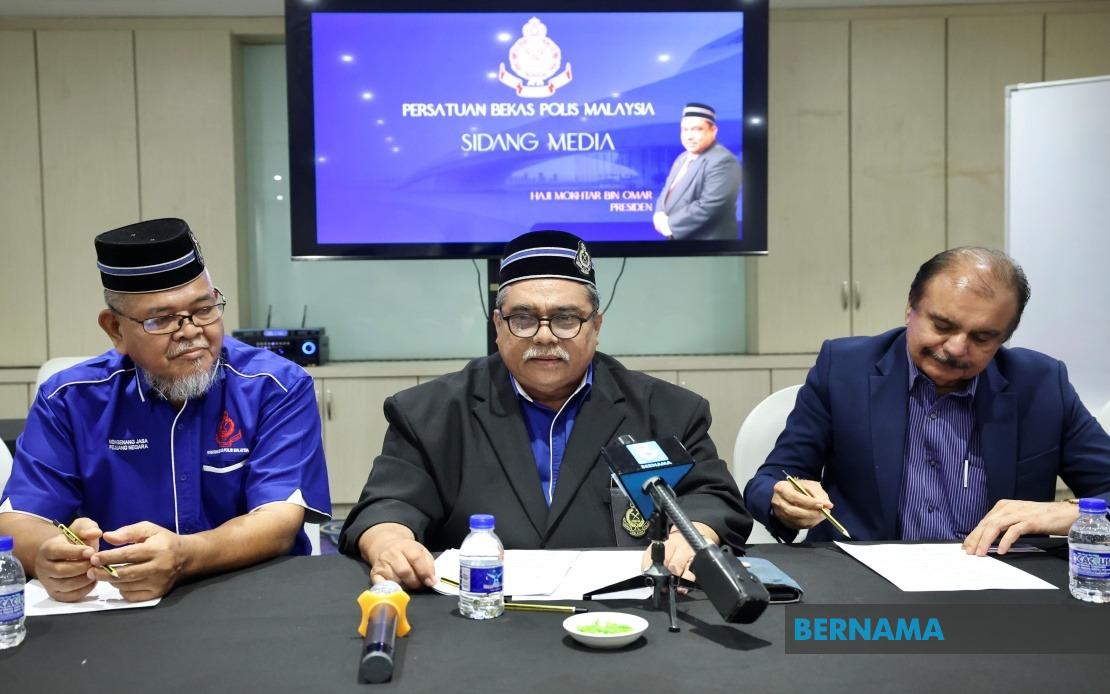
The Malaysian Ex-Police Association (PBPM) has made an urgent appeal to the federal government for financial assistance, specifically requesting the implementation of a monthly allowance scheme targeting the most vulnerable segment of its membership—non-pensionable former police officers who currently receive no regular income support. The association's president, Mokhtar Omar, highlighted the plight of officers who served the nation during critical periods but were denied pension benefits due to their employment classification, a situation affecting roughly 40,000 of the organization's total 86,000 registered members.
The scope of those affected extends across several categories of former personnel spanning decades of service. Records maintained by PBPM trace the issue back to 1972, encompassing officers who worked in the Special Squad, the Home Guard, and those engaged on contract terms as inspectors during the Emergency period. These individuals represent a demographic whose contributions to national security and public safety remain largely unrecognized in Malaysia's current welfare framework. Many completed years of dedicated service under conditions often more demanding than their pensionable counterparts, yet administrative or contractual technicalities excluded them from retirement benefits that would otherwise provide financial stability.
Mokhtar Omar emphasized that the financial burden on this group has intensified significantly in recent years as Malaysia's cost of living has surged across essential categories including food, housing, utilities, and healthcare. Having lost the steady income provided by their careers in law enforcement, many former non-pensionable personnel now find themselves navigating retirement without the safety net that pensioners enjoy. The association leadership contends that the government's investment in supporting this cohort remains relatively modest compared to the broader national budget, particularly when weighed against the security services these individuals rendered during pivotal moments in Malaysia's history.
During remarks to the press, Mokhtar articulated the moral dimension of the appeal, noting that those who risked their safety for national stability deserve recognition as their numbers dwindle with advancing age. He pointed out that every passing year reduces the remaining population eligible for assistance, making intervention increasingly urgent. The argument carries particular weight given that many Emergency-era personnel are now in their eighties or nineties, facing health complications and reduced capacity to generate alternative income.
The PBPM has proposed a specific monthly allowance structure ranging between RM300 and RM500, figures designed to provide meaningful relief without creating unsustainable fiscal obligations for the government. Beyond this primary request, the association has advocated for a comprehensive review of the existing Police Heritage Trust Fund (TAWP), suggesting that current assistance rates fall short of actual needs. The proposed reforms would expand the fund's mandate beyond its traditional focus to encompass educational support for descendants of deceased officers, healthcare subsidies, and emergency relief during natural disasters or personal crises.
Parallel to its advocacy efforts, PBPM is pursuing an independent fundraising strategy to bridge the gap between need and government provision. Information Chief Datuk Dr Basant Singh Sidhu announced plans for an October fundraising dinner designed to mobilize corporate sector participation and community support. The target of RM1 million represents a substantial but achievable goal given potential contributions from multinational corporations, private enterprises, and philanthropic individuals with connections to Malaysia's law enforcement community.
The proceeds from this fundraising initiative would be deployed directly toward immediate welfare requirements that current government programs do not adequately address. Medical equipment, wheelchairs, hearing aids, and nutritional supplements including milk represent essential items for aging former officers struggling with chronic conditions and limited financial resources. This practical approach acknowledges that while systemic government support remains the ultimate objective, grassroots fundraising can generate tangible relief in the interim.
The broader context of Malaysia's pension and welfare system reveals significant gaps that extend beyond former police personnel. The non-pensionable category exists across multiple government and public service sectors, reflecting historical employment practices that were common decades ago. As Malaysia's population ages and living costs climb, these gaps become increasingly visible and increasingly difficult for affected individuals to manage independently.
For Malaysian policymakers, the PBPM's appeals present both a humanitarian imperative and a practical governance question. Establishing a precedent of supporting non-pensionable former public servants carries budgetary implications but also reflects commitments to recognizing long-service contributions regardless of technical employment status. The demographic reality—that most beneficiaries are now elderly—suggests a finite fiscal obligation that will naturally diminish over time.
Regionally, Malaysia's approach to veteran welfare and recognition of former security personnel carries significance for Southeast Asian comparisons. Nations throughout the region grapple with similar challenges regarding historical employment classifications and their consequences for retirement security. The resolution PBPM seeks could establish a framework worth examining in neighboring countries facing comparable situations.
The association's dual approach—combining government advocacy with community fundraising—reflects pragmatic recognition that change may not come swiftly through official channels alone. By maintaining public pressure while simultaneously demonstrating the private sector's capacity and willingness to contribute, PBPM seeks to create momentum that eventually compels policy response. The October fundraising dinner will serve as both an immediate relief mechanism and a visible statement of ongoing commitment to members whose sacrifices remain insufficiently honored.

