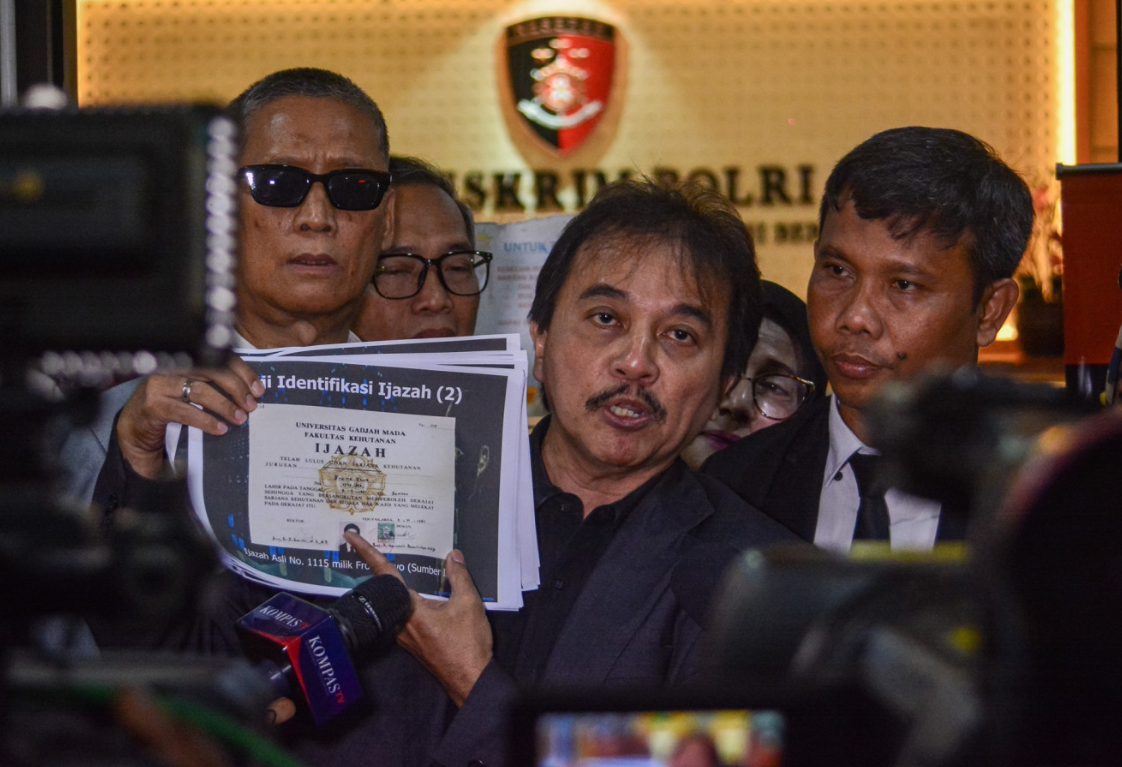
Jakarta Police have escalated their investigation into a six-year controversy surrounding former president Joko Widodo's academic credentials by detaining former youth and sports minister Roy Suryo and health activist Tifauzia Tyassuma on Friday morning. The two suspects were apprehended at their respective homes as part of standard procedure ahead of transferring the defamation case to prosecutors, according to Roy's legal representative Ahmad Khozinudin. The arrests represent a significant turning point in what has become one of Indonesia's most contentious political disputes, drawing scrutiny to how the authorities handle allegations against senior public figures and the use of cybercrime legislation to silence critics.
The Jakarta Police's General Crimes Directorate characterised the detention as administrative necessity within the investigative process rather than punitive action. Investigation director Senior Commissioner Iman Imanuddin explained at a press conference that the measure aimed to prevent bureaucratic delays and ensure proper procedural completion, including mandatory health examinations and evidence verification before the case transitions to the Jakarta Prosecutor's Office. Police officials framed the detention as standard protocol when transferring suspects between investigative stages, yet legal observers have questioned whether the timing and necessity of holding suspects overnight before a Monday handover constitutes proportionate action.
Roy and Tifa stand accused of defaming Jokowi by publicly alleging his university diploma was fraudulent and of manipulating electronic documents to substantiate these claims. The charges invoke the Electronic Information and Transactions Law, which carries maximum penalties of six years imprisonment and reflects Indonesia's increasingly broad application of cybercrime statutes to political disputes. This legal framework has drawn criticism from rights groups for potentially chilling legitimate public discourse and enabling authorities to suppress dissenting voices, particularly regarding matters of national interest such as presidential credentials.
The diploma controversy itself traces its origins to 2019 when initial questions about the authenticity of Jokowi's academic qualifications first surfaced on social media platforms. What began as unverified online speculation gradually evolved into a substantive legal dispute that consumed considerable judicial and political attention throughout the subsequent years. Multiple court proceedings, official investigations, and formal challenges have addressed various aspects of the dispute, creating a tangled legal landscape that reflects broader tensions within Indonesia's democratic institutions regarding transparency, accountability, and the proper mechanisms for addressing high-level allegations.
A pivotal moment arrived in May 2025 when the National Police formally declared Jokowi's diploma authentic and closed their investigation into forgery allegations. This conclusion appeared to settle the matter definitively, representing an authoritative law enforcement determination. However, the announcement did not resolve underlying scepticism among critics who maintained reservations about the investigation's thoroughness or impartiality. When authorities convened a case review in July 2025, individuals including Roy Suryo seized the opportunity to reiterate their objections to the police findings and continue pressing their allegations through available legal and public forums.
The trajectory from these July proceedings to Friday's arrests occurred relatively swiftly, suggesting prosecutors moved aggressively to pursue defamation charges once police declared the diploma authentic. This sequence raises questions about the relationship between law enforcement determinations and subsequent legal strategies, particularly whether defamation prosecutions represent legitimate protection of Jokowi's reputation or constitute strategic use of criminal law to suppress ongoing criticism and obstruct continued investigation into the diploma's origins. The distinction carries substantial implications for democratic governance and the permissible bounds of official accountability in Indonesia.
Roy's professional background as a former minister in the Susilo Bambang Yudhoyono administration situates the current proceedings within broader political rivalries between successive Indonesian governments. His detention thus acquires additional significance beyond the specific diploma dispute, potentially reflecting efforts by the current administration to neutralise critics from prior political eras. This contextual dimension concerns observers tracking whether Indonesia's justice system can maintain institutional independence from executive influence, particularly in cases touching prominent political figures and involving allegations about presidential conduct.
Legal representation for the detained suspects quickly mobilised to challenge the detention's validity. Defence lawyer Refly Harun argued that holding Roy and Tifa was excessive and unnecessary, emphasising that his clients had consistently complied with official summonses and reporting requirements throughout the investigation. Harun pointed to the imminent Monday handover to prosecutors as rendering overnight detention procedurally unjustified, framing the measure as punitive rather than administrative in character. This defence position articulates concerns about investigative overreach and the potential for detention authority to function as a coercive tool independent of legitimate procedural necessity.
The broader suspect category in the defamation case initially encompassed eight individuals, though the police subsequently dropped charges against three—Eggi Sudjana, Damai Hari Lubis, and Rismon Sianipar—following mediation processes. This selective prosecution pattern invites scrutiny regarding the criteria determining which suspects face continued legal proceedings, whether mediation represented genuine conflict resolution or strategic case management, and why Roy and Tifa remained in the prosecutorial pipeline whilst others exited through mediation channels. The asymmetric treatment of similarly situated suspects raises fairness concerns and suggests possible prosecutorial discretion shaped by considerations beyond purely evidentiary factors.
For Malaysian and Southeast Asian observers, the Indonesian diploma controversy illuminates recurring challenges within regional democracies concerning institutional independence, the use of cybercrime legislation as political instruments, and the balance between protecting official reputation and preserving legitimate public discourse. Indonesia's experiences provide instructive precedent regarding how unresolved questions about high-level conduct can persist for years, metastasise across multiple legal forums, and ultimately generate prosecutorial responses that critics characterise as suppressive rather than clarificatory. The case demonstrates the vulnerability of Southeast Asian judiciaries to executive pressure and the absence of consensus standards governing acceptable criticism of powerful political figures.
The detention of Roy and Tifa represents an inflection point where Indonesia's authorities hardened their response to sustained criticism, transitioning from investigative processes to custodial measures that signal intensified commitment to prosecuting the allegations. Whether this escalation reflects appropriate enforcement of defamation law or constitutes authoritarian overreach remains contested, with outcomes likely to influence how Indonesian civil society organisations and international observers assess the government's commitment to pluralistic governance and protected political expression. The coming weeks will determine whether prosecutors pursue full conviction efforts or whether defence petitions to suspend detention gain judicial acceptance.