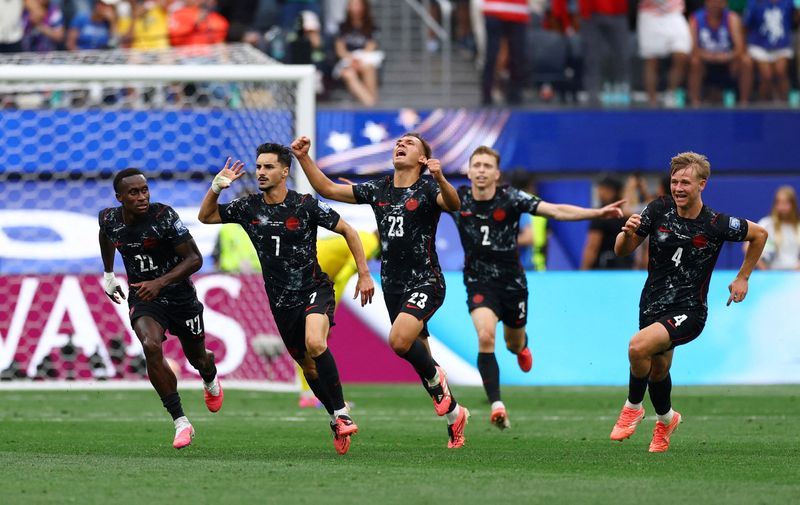
Canada has achieved a historic milestone at the World Cup, advancing to the last 16 for the first time ever after Stephen Eustaquio's dramatic stoppage-time strike secured a 1-0 victory over South Africa at Los Angeles Stadium on Sunday. The Canadian midfielder collected the ball near the penalty area in the 92nd minute and unleashed a powerful effort that flew past diving South African goalkeeper Ronwen Williams, capping a thrilling conclusion to the opening knockout-round match of the tournament. The goal sent Canadian supporters into raptures and delivered a momentous breakthrough for a football programme that has never previously progressed beyond the group stage in three prior World Cup appearances.
The match itself reflected the nervousness of two nations competing in their first knockout encounter at this level. South Africa appeared content to frustrate Canada and force the contest into extra time and potentially a penalty shootout, adopting a cautious approach that limited meaningful chances. Canada, by contrast, created opportunities throughout the 90 minutes but lacked the clinical finishing to capitalise until Eustaquio's moment of inspiration in the dying seconds. The defensive solidity displayed by both teams made the breakthrough feel like a release of accumulated pressure.
Canada's best chance before the interval came from a corner kick that sparked a scramble in the South African penalty box. Moise Bombito directed a header goalward, only for Aubrey Modiba to clear the ball off the line. Seconds later, Tajon Buchanan's close-range attempt struck goalkeeper Williams in the chest. These early openings suggested Canada would find a way through, yet the breakthrough proved elusive until the final moments.
A controversial moment early in the second half drew heated protest from Canada's coaching staff when Richie Laryea tumbled in the penalty area. The initial decision to wave play on stood following a VAR review, much to the frustration of the Canadian contingent filling the stands in their red colours. Canada coach Jesse Marsch visibly protested the ruling as teams departed for halftime, underlining the significance of what many perceived as a missed penalty opportunity.
South Africa's defensive approach intensified after the interval, with the team showing little ambition to press forward or create attacking momentum. Canada squandered another opportunity when Tani Oluwaseyi's shot fell to Jonathan David, who could not convert the ricochet after Mbekezeli Mbokazi made an excellent clearance. The Canadians' frustration mounted as South Africa appeared content to hold their defensive shape and hope for a favourable outcome in extra time.
Eustaquio's late intervention transformed the narrative entirely. The midfielder's powerful finish demonstrated the clinical edge Canada had lacked for much of the contest, arriving at a moment when the match seemed destined for additional periods. His composure in that critical instant—receiving the ball on the edge of the box and striking it cleanly past Williams—defined a career-defining moment for both himself and his nation. Eustaquio reflected on the magnitude of the achievement after the final whistle, expressing pride in his team's collective belief and resilience.
Canada coach Jesse Marsch acknowledged his team's intensity throughout the encounter while noting they had not been sufficiently lethal in front of goal for most of the match. Yet Marsch reserved his highest praise for Eustaquio's decisive contribution, declaring his players as heroes and emphasising the pride he felt in their accomplishment. The coach's words captured the emotional significance of Canada's breakthrough on the global stage, representing a tangible step forward for a nation working to establish itself as a serious football nation.
The achievement gains additional context given Canada's circumstances heading into the match. As co-hosts of the tournament, the Canadian squad paradoxically played their first knockout-stage game on foreign soil, having contested their group matches at home. They arrived at Los Angeles Stadium with just three days' rest following a 2-1 group-stage defeat to Switzerland on Wednesday, making their energetic performance and ultimate victory even more impressive. These practical challenges made their advancement feel like a genuine test of character and preparation.
South Africa, meanwhile, can reflect with some pride on reaching the knockout stages for the first time at their fourth World Cup attempt. Yet their timid exit will leave the team with regrets, particularly regarding their lack of ambition in creating pressure on the Canadian goal. Hugo Broos, the 74-year-old South African coach, offered a cryptic response when asked about his future, indicating that this World Cup would be his last regardless of the team's performance going forward. South Africa's defensive structure proved ultimately insufficient to prevent defeat when the moment of reckoning arrived.
Canada's next challenge will test their newfound pedigree at this level. The team will face either the Netherlands or Morocco on July 4 in Houston, with a quarter-final berth at stake. This fixture represents an immediate opportunity to prove that Sunday's victory was not a one-off achievement but rather the foundation for a sustained tournament run. For Malaysian and Southeast Asian football observers, Canada's progression offers instructive lessons about sustained investment in player development and the value of major tournament hosting in building national football capacity.
The Eustaquio moment will resonate throughout Canadian football consciousness for years to come, representing the breakthrough that transformed the nation's World Cup narrative. The stoppage-time strike encapsulated the drama inherent in knockout football while delivering the historical achievement that had eluded Canadian teams for decades. As the tournament progresses, all eyes will focus on whether Canada can leverage this momentum or whether their run ends against one of Europe's traditional football powers.

