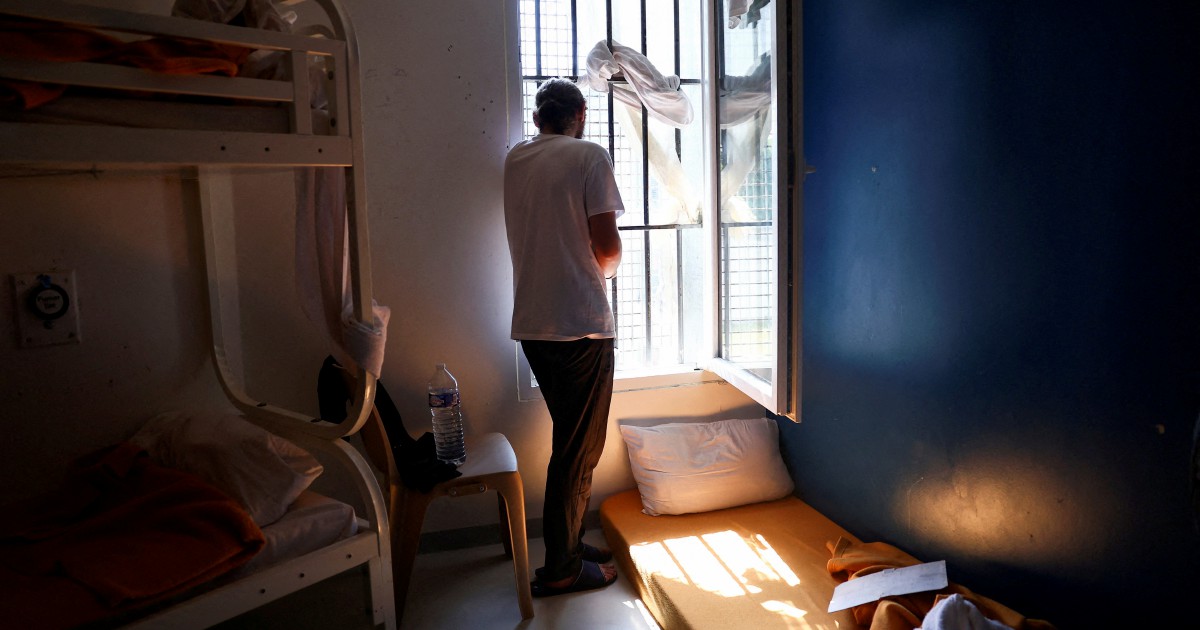
When the thermometer climbed past 37 degrees Celsius on a scorching summer day in France, one prisoner fashioned an improvised cooling system from wet towels draped across his cell window bars—a desperate attempt to survive conditions that would be considered inhumane in virtually any other context. The image captured by visiting officials crystallised a crisis that has been simmering across Europe's detention system: ageing prison infrastructure, never designed for modern climate extremes, is becoming genuinely dangerous when combined with severe overcrowding.
The intersection of climate change and custodial management is creating a perfect storm in European prisons. Facilities built decades ago lack adequate ventilation, air-conditioning systems designed for temperate conditions, and sufficient space per inmate to allow for proper airflow. When temperatures soar during heat waves that are becoming increasingly frequent and intense, these buildings transform into pressure cookers where basic human dignity becomes an afterthought. Medical experts warn that prolonged exposure to such conditions poses serious health risks, particularly for vulnerable populations including elderly inmates and those with pre-existing medical conditions.
France's prison system exemplifies the scale of the challenge. Officials have publicly acknowledged that many facilities operate at capacity levels exceeding 100 per cent, with some institutions housing significantly more inmates than their original design specifications. This overcrowding predates the current climate crisis but is dramatically amplified by it. A single cell designed for one or two individuals sometimes holds three or four, meaning that during extreme heat, the concentration of body heat, limited air circulation, and inadequate facilities create genuinely dangerous conditions. The wet towel strategy observed by the visiting politician represents not an innovative solution but rather the breakdown of basic infrastructure management.
The broader European context reveals this is not an isolated problem confined to France. Prison systems across the continent struggle with similar structural issues rooted in decades of underinvestment and inconsistent policy responses to rising incarceration rates. Countries including Italy, Spain, and Greece have experienced severe overcrowding crises, though their manifestations differ based on local climate patterns and infrastructure conditions. Heatwaves have become a litmus test exposing these systemic weaknesses, demonstrating that infrastructure investment has not kept pace with either population growth or the intensifying demands of climate change.
For Malaysian observers, the European prison crisis carries instructive lessons. While Malaysia's climate differs from temperate Europe, tropical and equatorial regions face equally serious heat management challenges in custodial settings. Prison systems across Southeast Asia operate under comparable pressures of overcrowding and ageing infrastructure, particularly as criminal justice systems struggle to manage rising populations. The experience of European nations suggests that incremental responses and emergency measures are insufficient; comprehensive infrastructure upgrades and realistic capacity management require sustained political commitment and substantial investment.
The humanitarian implications extend beyond immediate physical discomfort. Extreme heat exacerbates existing mental health challenges among incarcerated populations, increases aggression and violence within facilities, and complicates the management of infectious diseases. Medical professionals have documented how heat stress impairs cognitive function, affects medication efficacy, and creates conditions where minor health issues rapidly become serious complications. Prison administrators across Europe report that controlling behaviour and maintaining order becomes significantly more difficult during extended heat periods, creating cascading management challenges that ripple through entire systems.
Political responses have been characterised by acknowledgment without comprehensive action. European officials and ministers have visited facilities, observed conditions, and expressed concern, but legislative responses have remained limited. Some jurisdictions have implemented emergency measures including modified work schedules, temporary early release programmes, and modest infrastructure improvements, yet these address symptoms rather than underlying causes. The scale of necessary intervention—wholesale modernisation of thousands of facilities across multiple countries—represents enormous financial and political commitments that governments have been reluctant to undertake.
The climate change dimension adds urgency to discussions that previously centred on criminal justice reform and human rights. As heat waves intensify in frequency and duration, the problem becomes self-reinforcing: overcrowded facilities with inadequate infrastructure become increasingly dangerous during heat events, yet addressing overcrowding requires either releasing inmates or building new facilities, both politically contentious positions. Meanwhile, the infrastructure problem persists independently of population levels, as even optimally-capacity facilities with substandard design cannot adequately protect occupants during extreme heat.
Experts argue that sustainable solutions require three parallel interventions. First, immediate infrastructure modernisation including improved ventilation systems, better insulation, and installation of cooling capacity where feasible. Second, realistic assessment of prison capacity with corresponding adjustments to incarceration rates and sentencing policies. Third, broader regional cooperation on climate adaptation strategies that explicitly incorporate custodial facilities into planning frameworks. European countries are beginning to engage with these questions, yet implementation lags considerably behind acknowledgment of the problems.
The image of the prisoner with wet towels around his window bars will likely become emblematic of a broader institutional failure—not merely of prison management but of societies' unwillingness to invest adequately in infrastructure until crises force their hands. For Southeast Asia, including Malaysia, the lesson is clear: addressing overcrowding and infrastructure deficiencies now, proactively, costs far less financially and ethically than managing humanitarian crises that inevitably emerge when systems are pushed to their breaking points during environmental stress.

