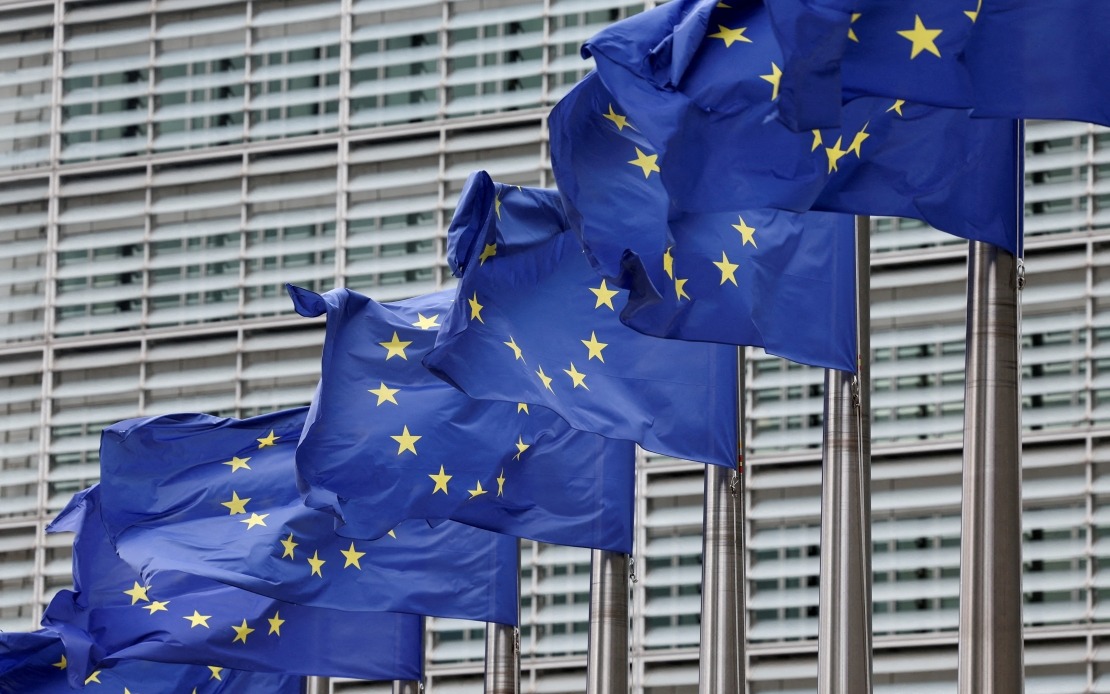
The European Union's foreign ministers are convening in Brussels on Monday to deliberate on escalating geopolitical tensions across West Asia, with a particular focus on whether the bloc should impose tougher economic measures targeting Israeli settlements expanding into the occupied West Bank. The meeting represents a critical juncture for European unity on a Middle Eastern issue that has consistently exposed fractures within the 27-nation alliance, as divergent strategic interests and historical perspectives collide over how forcefully to respond to settlement activity that the international community largely considers illegal under international law.
The European Commission has prepared a comprehensive menu of policy options designed to guide the discussions, featuring proposed trade mechanisms that would restrict or outright prohibit the importation of goods originating from Israeli settlements. These measures represent a potential escalation in Europe's economic pressure on Israel, moving beyond rhetorical condemnation toward concrete measures that could meaningfully affect settlement-based enterprises. The specificity of these prepared options suggests that Brussels intends to move beyond previous discussions and present ministers with actionable proposals rather than abstract frameworks.
However, the path to implementing any sanctions framework remains fraught with procedural and political obstacles. The fundamental challenge lies in whether the EU's 27 member states can forge consensus on this volatile matter. Spain, Ireland, and Belgium have emerged as the most vocal advocates for stringent sanctions, explicitly linking Israel's settlement expansion to violations of international law and calling for robust European economic consequences. This trio represents a significant bloc of support for a harder line, yet they face entrenched opposition from other capitals that have historically prioritized diplomatic engagement and expressed concerns about the precedent of targeted sanctions.
Germany's position exemplifies the complexity within European capitals. Despite its historical commitment to supporting Israel's security and its substantial economic ties with the country, Germany has also faced growing domestic pressure from civil society and left-leaning constituencies to take a firmer stance on Palestinian rights. Yet Berlin has resisted joining calls for severe sanctions, reflecting the cautious diplomacy that typically characterizes German foreign policy on issues involving Israel. This reluctance from a major EU economic and political power significantly complicates efforts to build the consensus required for effective action.
The procedural mechanics of EU decision-making introduce another layer of complexity. Should these trade measures be formally classified as foreign policy sanctions rather than purely commercial regulations, they would require unanimous approval from all 27 member states—a threshold that transforms any proposal into a negotiation where a single dissenting voice can veto the entire initiative. This unanimity requirement has historically served as a brake on EU action in contentious foreign policy matters. Alternatively, if measures are categorized as trade restrictions rather than sanctions, they could proceed under qualified majority voting, which requires support from 15 of 27 member states representing at least 65 percent of the EU's combined population. This lower threshold significantly increases the likelihood of passage, yet disagreement persists over how to classify any proposed measures.
The Monday gathering addresses multiple crises simultaneously, reflecting the compressed international agenda confronting European policymakers. Beyond the Israeli settlement question, ministers will assess the deteriorating humanitarian situation in Iran and the ongoing consequences of Russia's invasion of Ukraine. The inclusion of these diverse regional flashpoints in a single meeting underscores how Middle Eastern instability intersects with European security concerns, as Middle Eastern developments can affect energy security, refugee flows, and broader stability in Europe's southern neighborhood.
Regarding Ukraine specifically, the EU is expected to advance further sanctions targeting Russian individuals, entities, and organizations involved in prosecuting the war. These measures against Moscow represent an area where EU consensus typically proves more robust than on Middle Eastern matters, given the direct threat Russia poses to European security and the broad agreement on supporting Ukrainian resistance. Nevertheless, even on this front, uncertainty surrounds whether member states will agree on an ambitious new sanctions package encompassing comprehensive trade restrictions. Such comprehensive measures could carry significant economic consequences for European businesses with Russian connections, generating domestic political pressure in some capitals to limit the scope of economic measures.
Ukraine's participation in these consultations carries symbolic and practical significance. Ukrainian Foreign Minister Andrii Sybiha has been invited to join the EU ministers for informal discussions, ensuring that Kyiv's perspective shapes European deliberations on the conflict affecting its territory. This arrangement reflects the EU's commitment to including affected parties in strategic discussions while also providing Ukraine with direct access to European decision-makers at a critical juncture in the conflict. The presence of Ukrainian leadership in these sessions reinforces European commitment to supporting Ukraine while simultaneously highlighting the multiplicity of crises demanding European attention and resources.
For Malaysia and other Southeast Asian nations, the EU's internal divisions on Israeli settlements carry broader implications for understanding how Western powers navigate contentious geopolitical questions. Malaysia, which has consistently advocated for Palestinian rights within international forums, may find encouragement in the activism of Spain, Ireland, and Belgium, yet the difficulty these nations face in achieving EU-wide consensus illustrates the enduring challenge of mobilizing major power coalitions around issues affecting smaller nations' core interests. The outcome of Monday's meeting will signal whether the EU can overcome its internal divisions to present a unified economic position or whether disagreement will continue to fragment European foreign policy.
The settlement question also intersects with broader debates about European strategic autonomy and the EU's role as a normative power committed to international law. If the EU proves unable to implement economic consequences for settlement expansion despite its stated commitment to international legal norms, this failure may further undermine European credibility in championing rules-based international order, particularly in Asia where regional powers watch how Western institutions address their own declared principles.
The diplomatic maneuvering preceding Monday's session will likely involve intensive bilateral negotiations among foreign ministries, with particular focus on whether Germany can be persuaded to accept qualified majority voting procedures or whether opponents of sanctions can secure sufficient support to block measures. Spain, Ireland, and Belgium will presumably coordinate strategy to maximize pressure for tough measures, while other states navigate the complex intersection of their relationships with Israel, commitment to international law, and concern about economic ramifications. The stakes extend beyond this particular meeting, as the EU's ability to act decisively on settlement sanctions will influence its capacity to project coherent positions on other Middle Eastern questions.

