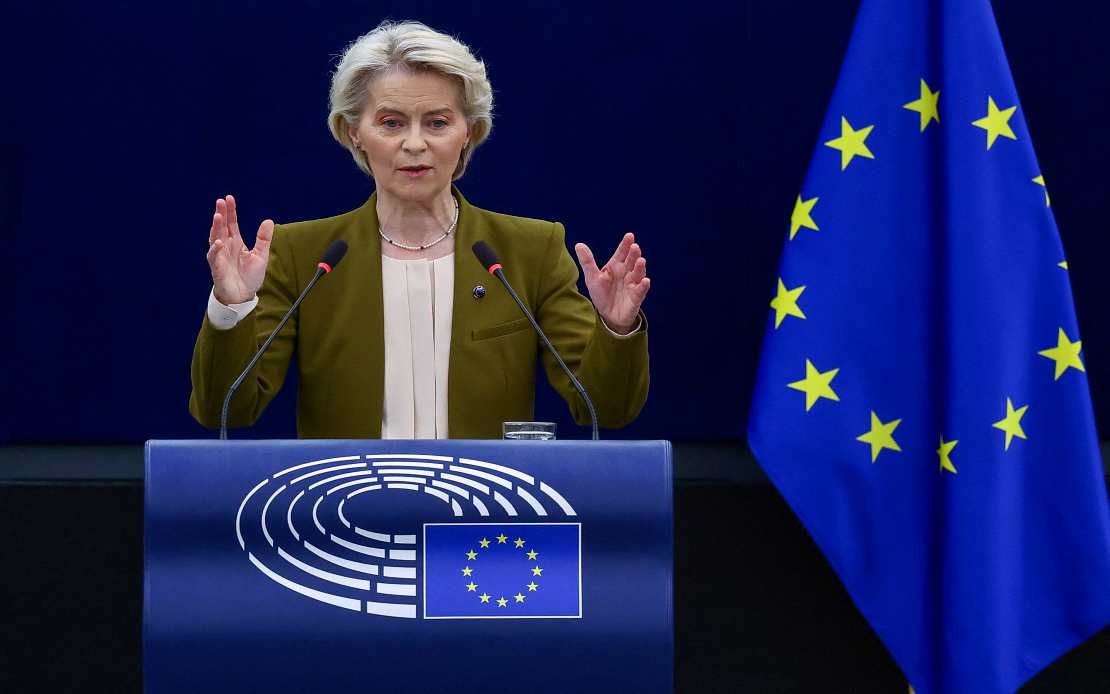
The European Union has pledged €2.1 million in humanitarian assistance to Colombia in response to a devastating 7.4 magnitude earthquake that struck the nation earlier this week, claiming at least 181 lives. European Commission President Ursula von der Leyen announced the aid package on Wednesday, signalling the bloc's commitment to supporting Colombia's relief and recovery efforts as search and rescue operations continue across affected regions.
The scale of EU intervention reflects the severity of the disaster and the importance of rapid international coordination in earthquake response. The earthquake struck with considerable force, causing widespread destruction across multiple provinces and displacing thousands of families from their homes. The initial death toll of 181 represents a significant humanitarian crisis that requires sustained international engagement beyond the immediate aftermath. By mobilizing funds quickly, the EU aims to prevent secondary crises such as disease outbreaks, malnutrition, and further loss of life among vulnerable populations in the coming weeks.
The financial package targets specific humanitarian needs identified by Colombian authorities and international relief agencies operating on the ground. The EU Commission has designated these funds for delivering essential health services, clean water supplies, sanitation and hygiene materials, emergency shelter, food provisions, protection services for vulnerable groups, and direct cash assistance to affected communities. This multi-sectoral approach acknowledges that earthquake survivors face interconnected challenges—medical care for the injured, prevention of waterborne disease, adequate nutrition, and basic protection—that must be addressed simultaneously for effective recovery.
The European Union demonstrated its commitment to immediate action by providing €100,000 to the German Red Cross just one day after the earthquake struck on Tuesday. This initial allocation specifically targets the hardest-hit regions of Chocó and Valle del Cauca, two provinces where infrastructure damage appears most severe. The German Red Cross will use these funds to address the urgent needs of approximately 2,500 families, providing essential supplies and services during the critical first weeks following the disaster when mortality risk peaks from lack of medical attention and contaminated water sources.
Beyond direct financial assistance, the EU has leveraged its technological capabilities to support Colombia's emergency response infrastructure. The European Commission has made its advanced satellite mapping services available to rescue and relief operations, providing real-time geospatial intelligence that helps identify collapsed buildings, blocked roads, and accessible areas for aid distribution. This technological support proves invaluable in mountainous and remote regions where ground-based assessment becomes difficult and communications infrastructure may be damaged. Satellite imagery accelerates the identification of priorities for rescue teams and helps optimize routing for humanitarian convoys delivering supplies to isolated communities.
The coordination mechanism established between EU institutions and Colombian authorities ensures that assistance adapts to evolving conditions and emerging needs. Rather than implementing a rigid, predetermined aid package, the European Commission maintains active dialogue with Colombian officials to understand how situations develop on the ground. This flexibility permits rapid reallocation of resources if certain regions require more assistance than initially anticipated, or if new priorities emerge as rescue operations progress and transition toward longer-term reconstruction phases. Such coordination prevents the duplication of efforts and ensures that EU assistance complements rather than competes with contributions from other international donors and domestic Colombian resources.
For Malaysia and Southeast Asian observers, the Colombian earthquake response illustrates the international architecture for disaster response that increasingly involves regional organisations and developed nations working in coordinated frameworks. The EU's rapid mobilization demonstrates how established economic and political partnerships facilitate swift humanitarian intervention when member states or close partners face major crises. This model contrasts with some challenges Southeast Asian nations have faced in securing international assistance following disasters, highlighting both the advantages of strong institutional relationships and the value of pre-positioned humanitarian coordination mechanisms.
The €2.1 million commitment, equivalent to approximately US$2.4 million, represents a substantial allocation but also reflects the scale of Colombia's challenge. Major earthquakes typically require reconstruction spending in the hundreds of millions or billions of dollars, meaning this EU contribution functions as emergency stabilization rather than comprehensive reconstruction funding. However, such early humanitarian assistance prevents human suffering from compounding the initial disaster and creates foundations upon which longer-term reconstruction efforts can build. International experience shows that effective emergency response in the first weeks significantly reduces ultimate recovery costs and human suffering.
Columbia's experience also underscores the geological vulnerability affecting much of the Americas and reminder for Pacific Ring of Fire nations including those in Southeast Asia. Colombia sits within a seismically active region where tectonic plate movements regularly generate significant earthquakes. The nation's construction standards, early warning systems, and disaster preparedness mechanisms face ongoing challenges in a region where the frequency and magnitude of seismic events demand continuous investment in resilience infrastructure. International assistance supports not only immediate relief but also helps rebuild with improved standards that reduce vulnerability to future earthquakes.
The European Union's response framework demonstrates institutional capacity to mobilize resources quickly when humanitarian needs arise beyond member states' borders. The Commission's press office coordinated announcements, financial mechanisms deployed €100,000 within days, and diplomatic channels engaged Colombian authorities—all reflecting institutional processes refined through decades of disaster response experience. For developing nations, understanding how developed-nation blocs structure their humanitarian assistance proves valuable when negotiating support and planning complementary national and regional responses to major disasters.
As rescue operations continue and damage assessments become more comprehensive, additional international assistance will likely materialize from bilateral donors, multilateral development banks, and humanitarian organisations worldwide. The EU's early commitment sets a tone for other potential contributors while providing immediate resources for life-saving interventions. Colombia's recovery trajectory over coming months will depend significantly on sustained international engagement beyond the initial relief phase, as reconstruction typically extends over years and requires enormous investment in rebuilding infrastructure, homes, and livelihoods disrupted by the earthquake.

