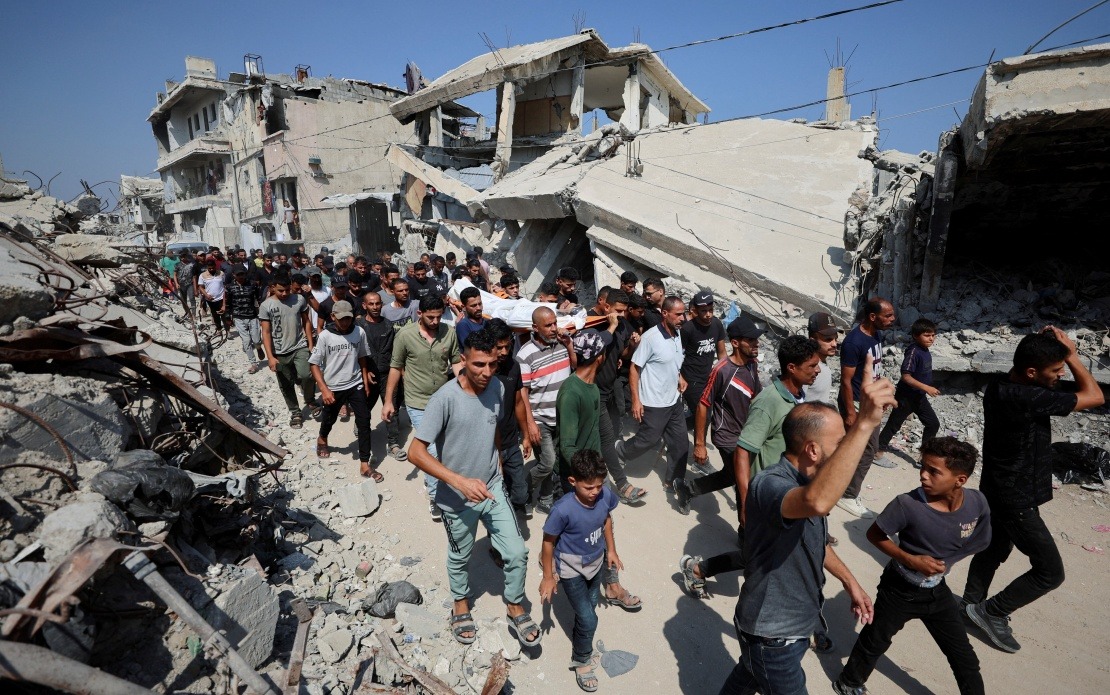
Brussels has formally registered strong objections to Israel's latest moves to bolster settlements across the occupied West Bank, with European officials cautioning that such expansion strategies erode the foundations of a sustainable two-state arrangement. The European External Action Service released a formal statement on Friday expressing deep concern over Israel's decision to allocate significant financial resources toward settlement development, contending that the measures will deepen entrenchment of Israeli communities in strategically sensitive areas while simultaneously fragmenting and isolating Palestinian territorial holdings.
At the heart of the EU's rebuke lies a fundamental strategic concern about the territorial and demographic consequences of settlement policy. The bloc argues that continued expansion progressively dismantles the contiguous Palestinian geography essential for establishing a functioning independent state. This fragmentation creates isolated Palestinian enclaves disconnected from one another, complicating governance structures, economic integration, and social cohesion among Palestinian communities. The EU specifically warned that this isolation exposes Palestinians to heightened vulnerability regarding human rights protection, a concern grounded in documented patterns of restricted movement, resource access limitations, and administrative controls that characterise life in fragmented territories.
The European position also encompasses rejection of Israel's recent elevation of Givat Ze'ev to municipal status within the West Bank administrative framework. This specific grievance reflects broader EU objections to any administrative or legal measures that effectively consolidate Israeli control over occupied territories. By granting municipal status, Israel effectively normalises and institutionalises settlement presence through administrative structures that typically require significant financial investment and imply long-term permanence. The EU has consistently maintained that such administrative changes constitute unilateral actions that predetermine final-status questions that should be determined through negotiated settlement.
Europe's stance on Israeli territorial claims remains anchored in international law frameworks established through United Nations Security Council resolutions dating to the 1967 Six-Day War. The EU reaffirmed its longstanding non-recognition of Israeli sovereignty claims over territories occupied since June 1967, positioning its opposition as consistent with established international legal architecture rather than as politically motivated criticism. This framing attempts to situate the EU response within the realm of legal principle rather than selective judgment, emphasising adherence to multilateral agreements rather than bilateral preference.
The European statement encompasses a comprehensive enumeration of activities the bloc opposes, extending beyond settlement expansion to include legalisation of unauthorised outposts, confiscation of Palestinian land, destruction of Palestinian structures, forced displacement of Palestinians, and other unilateral measures undertaken without Palestinian consent or international negotiation. This comprehensive listing demonstrates that EU objections target a systematic pattern of territorial consolidation rather than isolated incidents. Each category of measure represents a mechanism through which Israeli control expands incrementally, collectively constituting what Brussels characterises as fundamental obstacles to peace prospects.
For Malaysia and other Southeast Asian nations maintaining independent foreign policies on Middle Eastern affairs, the EU's intervention carries significance as it reinforces international legal perspectives that diverge from selective Western alignments with Israeli security frameworks. The Malaysian government has historically supported Palestinian self-determination claims and maintained diplomatic distance from security arrangements favouring Israeli interests. The EU's formal criticism provides reinforcement for principled positions adopted by non-aligned nations, offering substantial international backing for arguments that settlement expansion violates international law principles rather than representing legitimate security measures.
The economic dimensions of settlement expansion carry implications extending across supply chains and investment frameworks relevant to regional economies. Settlement consolidation ultimately affects Palestinian economic viability by constraining agricultural access, restricting commercial movement, and limiting natural resource utilisation. These economic consequences ripple through regional trade networks and development initiatives, affecting not only Palestinian communities but also neighbouring economies dependent on stable Palestinian institutional development. When settlement expansion undermines Palestinian institutional capacity, it simultaneously reduces prospects for stable regional economic partnerships.
The EU's formal criticism also reflects growing frustration with the apparent absence of diplomatic progress on final-status issues that have remained unresolved for decades. Each settlement expansion announcement signals that Israeli policymakers proceed without expectation of near-term negotiations addressing territorial boundaries or Palestinian sovereignty. This approach effectively forecloses diplomatic pathways by creating fait accompli territorial situations that become progressively difficult to reverse. Brussels appears to interpret such actions as deliberately eliminating negotiating space rather than as interim security measures pending eventual resolution.
Regional peace architecture depends partly upon international actors maintaining consistent messaging about violations of agreed legal frameworks. The EU's willingness to formally criticise settlements, despite diplomatic costs associated with challenging a Western-aligned state, reinforces the principle that international law applies universally rather than selectively based on geopolitical convenience. For Southeast Asian nations concerned about establishing rule-based international order applicable to all states regardless of size or alignment, such consistency matters significantly in legitimating international legal frameworks.
The statement notably abstained from proposing specific enforcement mechanisms or consequences for continued expansion, reflecting practical limitations on EU leverage over Israeli policy decisions. This gap between rhetorical criticism and tangible consequences characterises much international response to settlement expansion, suggesting that diplomatic disapproval, while important for maintaining legal principles and signalling solidarity with Palestinian rights, operates within constraints that limit its immediate policy impact. The EU's willingness to articulate concerns consistently nonetheless contributes to the international legal record and provides diplomatic ammunition for non-aligned states pursuing similar positions.

