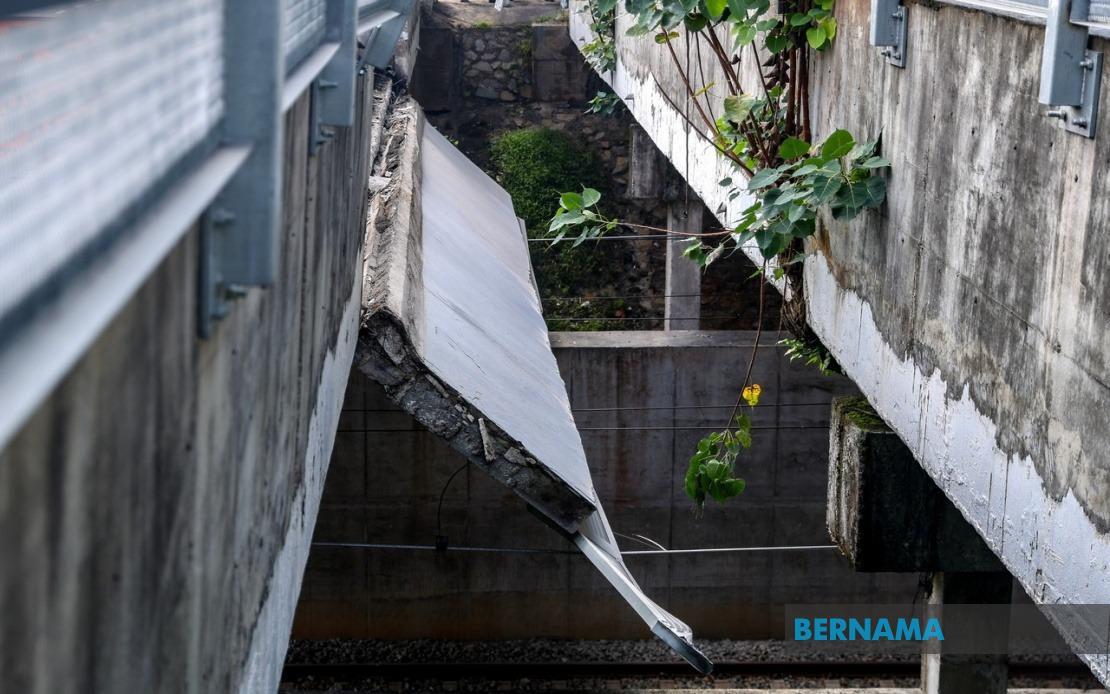
A lorry crash on the Kulai-Kempas Baru rail track in Johor has prompted Keretapi Tanah Melayu Berhad to implement emergency shuttle bus arrangements to keep passenger traffic flowing on critical routes linking Peninsular Malaysia's major cities. Affected travellers heading to or from JB Sentral are being transported via shuttle buses to Kulai Station, where they can resume their journeys by train. The incident has disrupted one of the country's busiest rail corridors, affecting morning services on August 6.
The collision involved a 120-tonne lorry operated by Transmare-Chemie (M) Sdn Bhd, which struck a section of track infrastructure and damaged the overhead line system that powers the Electric Train Service. According to KTMB's statement, a fallen concrete structure, or parapet, made contact with the overhead line on both tracks, requiring immediate remedial action. The company informed KTMB at 3 am that securing the 120-tonne crane needed for removal works had proven challenging, though lifting and removal operations were expected to commence around 10 am once equipment became available.
Three major ETS services departing from JB Sentral experienced disruption this morning: ETS 9442 heading to Padang Besar, ETS 9524 bound for KL Sentral, and ETS 9326 travelling to Butterworth. These routes typically carry hundreds of commuters and intercity passengers daily, making the disruption a significant inconvenience for travellers in Johor and those transiting through the state. The shuttle bus operation represents KTMB's effort to minimise passenger inconvenience while restoration work proceeds on the damaged infrastructure.
KTMB has established shuttle bus services departing from both JB Sentral Station and Kempas Baru Station, with all buses heading to Kulai Station to allow passengers to resume their ETS journeys. This arrangement applies to those who wish to continue their travel. For passengers unwilling to proceed under these conditions, KTMB has committed to providing full refunds, with additional assistance available from station staff. The company emphasises that affected passengers have the flexibility to abandon their journeys without financial penalty.
The Shuttle Selatan service, which provides frequent local connections in the Johor region, has been partially suspended as a consequence of the track damage. The Pasir Gudang-JB Sentral-Pasir Gudang and Kempas Baru-JB Sentral-Kempas Baru routes continue normal operations, indicating that alternative routes have capacity to absorb some displaced demand. However, the Kulai-Kempas Baru-Kulai Shuttle Selatan service remains entirely suspended pending completion of restoration works.
The restoration timeline remains uncertain because multiple conditions must be satisfied before trains can resume normal service. KTMB stated that reopening the affected rail line depends on progress in removing the fallen concrete structure, completion of technical inspections on the overhead line system, and receipt of safety certification. This multi-stage approval process reflects the critical importance of rail infrastructure integrity; any oversight could endanger passenger safety. The company has pledged to coordinate closely with relevant agencies overseeing the recovery operation, ensuring that restoration work maintains the highest safety standards.
This incident follows a previous disruption on the same route on August 5, when a lorry carrying flammable liquid skidded near the rail line, causing power supply failures that delayed both Shuttle Selatan and ETS services. That earlier event suggests potential ongoing issues with vehicle traffic control or driver awareness in the vicinity of the rail corridor, raising questions about whether additional safety measures might be warranted on this section of track. The proximity of the road and rail infrastructure creates vulnerability to similar incidents unless proper barriers and warning systems are in place.
For Malaysian rail passengers, particularly those commuting between Johor and Kuala Lumpur or other northern destinations, disruptions on this corridor have cascading effects throughout the network. The Kulai-Kempas Baru section forms part of the main artery connecting Johor to the rest of Peninsular Malaysia by rail, meaning restoration work directly impacts intercity connectivity. Business travellers, students, and daily commuters dependent on the ETS system face significant disruption until services fully resume, underscoring the importance of maintaining this critical transport infrastructure.
The involvement of Transmare-Chemie as the responsible company raises broader questions about vehicle movement protocols near sensitive infrastructure. Logistics companies operating heavy vehicles in areas adjacent to rail lines bear responsibility for ensuring their drivers maintain safe distances and speeds, particularly at locations where overhead infrastructure or track systems could be damaged. Enhanced coordination between transport operators and rail authorities might help prevent similar incidents in future.
KTMB's decision to provide shuttle buses demonstrates a customer-focused approach to service continuity during emergencies, though the fundamental issue remains the need to restore the damaged infrastructure. Passengers should monitor KTMB announcements for updates on restoration progress and the expected reopening of full train service on the Kulai-Kempas Baru route. The company has indicated it will only resume normal operations once all technical and safety requirements are satisfied, a cautious approach that prioritises passenger protection over service restoration speed.

