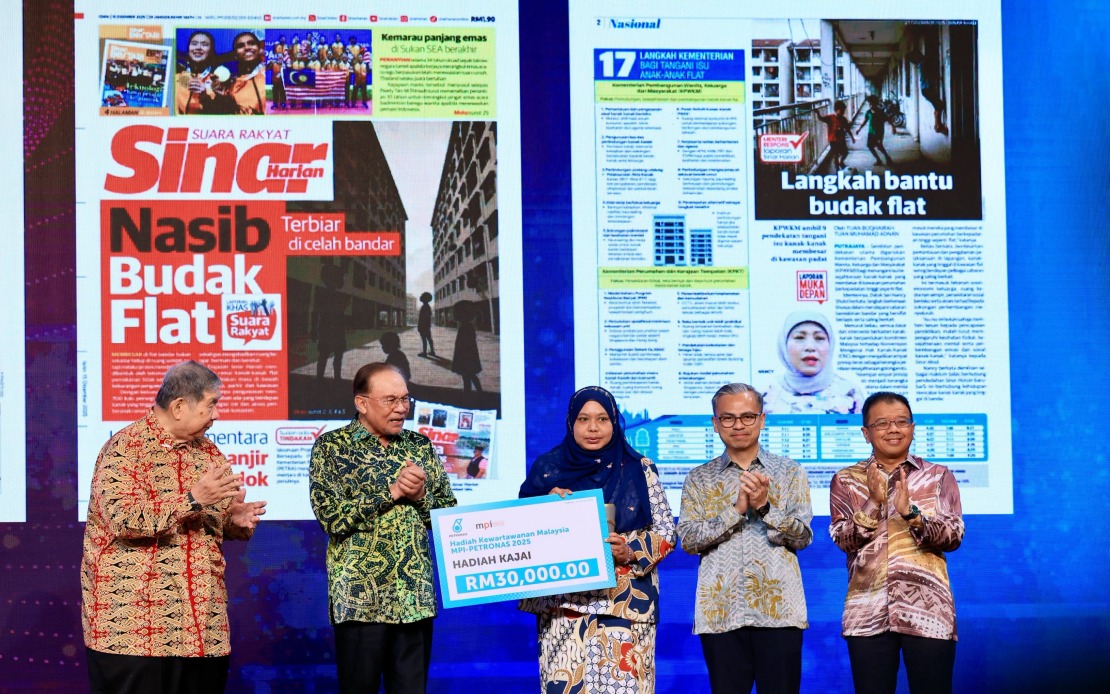
Communications Minister Datuk Seri Fahmi Fadzil has emphasised that ethical, independent and responsible media institutions form the backbone of a functioning democracy while simultaneously helping to build a well-informed citizenry capable of making sound decisions. Speaking at a major gathering of Malaysia's journalism fraternity, Fahmi outlined the critical importance of upholding these principles in an era where the information landscape has become increasingly complex and contested.
The minister's remarks come at a time when Malaysia, like many nations across Southeast Asia, grapples with the twin challenges of information overload and the insidious spread of misinformation and deliberately fabricated news stories. As digital platforms have democratised content creation and distribution, the ability to distinguish reliable reporting from falsehoods has become a fundamental skill for the general public. Fahmi's call for unwavering commitment to journalistic integrity reflects growing concern among policymakers about the destabilising effects of false narratives on public discourse and social cohesion.
Fahmi accompanied Prime Minister Datuk Seri Anwar Ibrahim to the Malaysian Journalists' Night (MWM) 2026, a prestigious annual gathering that brought together approximately 1,000 participants from across the media industry. The event served as a celebration of journalistic excellence and provided a platform for meaningful dialogue between media practitioners, government officials, corporate sector representatives and other stakeholders invested in the health of Malaysia's information ecosystem.
The evening's highlight was the presentation of the MPI-PETRONAS Malaysian Journalism Awards 2025, which recognises outstanding contributions and professional excellence within the journalism sector. These awards represent an important institutional mechanism for elevating standards within the profession and incentivising reporters and editors to pursue stories of genuine public interest with rigour and accuracy. By honouring achievement in this manner, the Malaysian Press Institute sends a powerful signal about what the profession values and aspires to become.
In his remarks, Fahmi commended all media practitioners for their sustained commitment and dedication to their craft. He called upon journalists to maintain the highest standards of integrity and continue prioritising truthful reporting that serves the broader interests of both the Malaysian people and the nation. This appeal operates on two levels: it acknowledges the vital work already being done by responsible journalists while simultaneously placing the onus on the profession to resist pressures that might compromise editorial standards.
The gathering itself reflected the multifaceted nature of Malaysia's information ecosystem. Editors and journalists mingled with representatives from government ministries and agencies, corporate organisations and higher education institutions. This cross-sector participation underscores the reality that media integrity is not merely the concern of journalists themselves but a shared responsibility spanning government, business and academic communities. Each sector has a role in supporting, defending and occasionally challenging media institutions to uphold their democratic functions.
The Malaysian Press Institute, which organises the Journalists' Night annually, has positioned this event as a cornerstone platform for recognising journalistic achievements while simultaneously strengthening strategic relationships between the media industry, government and corporate sector. This tripartite connection reflects the interdependency of these institutions within Malaysia's broader democratic and economic structures. A healthy media landscape requires constructive engagement between these players, even when their interests occasionally diverge.
Fahmi's emphasis on responsible and ethical media carries particular weight in the Malaysian context, where concerns about misinformation have periodically threatened social stability and public trust in institutions. The circulation of false health claims, doctored images, misleading political narratives and fabricated crime stories has been documented as a persistent challenge requiring coordinated responses from multiple stakeholders. By elevating media ethics to the level of ministerial discourse, Fahmi signals that government recognises its role in creating an enabling environment for quality journalism to flourish.
The timing of these remarks reflects broader regional trends across Southeast Asia, where democratic institutions are increasingly under scrutiny and the quality of public discourse has emerged as a critical concern for governance experts and civil society observers. In this context, Malaysia's annual celebration of journalistic excellence serves as a practical investment in democratic resilience. When journalists are recognised, supported and encouraged to maintain high professional standards, the entire information ecosystem benefits from increased accountability and credibility.
Looking ahead, the challenge for Malaysia will be translating rhetorical commitments to media independence into sustainable institutional practices and resource allocation. This includes supporting journalism training programmes, protecting press freedom in practice, ensuring adequate remuneration for quality reporting and resisting regulatory frameworks that might inadvertently constrain legitimate investigative work. The government's role, as Fahmi's remarks suggest, is to create conditions where ethical journalism can thrive rather than to dictate specific editorial outcomes.
The presence of Prime Minister Anwar Ibrahim alongside Fahmi at the journalists' gathering also carries symbolic significance. It demonstrates high-level political endorsement for the value of responsible media institutions and suggests that government leadership recognises journalism's essential role in accountability and transparency. This visible support matters for journalists working in challenging environments where commercial pressures and political interests sometimes pull editorial decisions away from public interest considerations.
Ultimately, Fahmi's message articulates a vision of media institutions as custodians of democratic values and truth-telling as a public good worthy of protection and cultivation. As Malaysia continues navigating complex social, political and economic transitions, the quality of information available to citizens will significantly influence their ability to understand shared challenges and participate meaningfully in democratic processes. By championing ethical journalism at the ministerial level, the government tacitly acknowledges that media independence and integrity are not threats to stability but prerequisites for building the informed, engaged society that contemporary democracies require.

