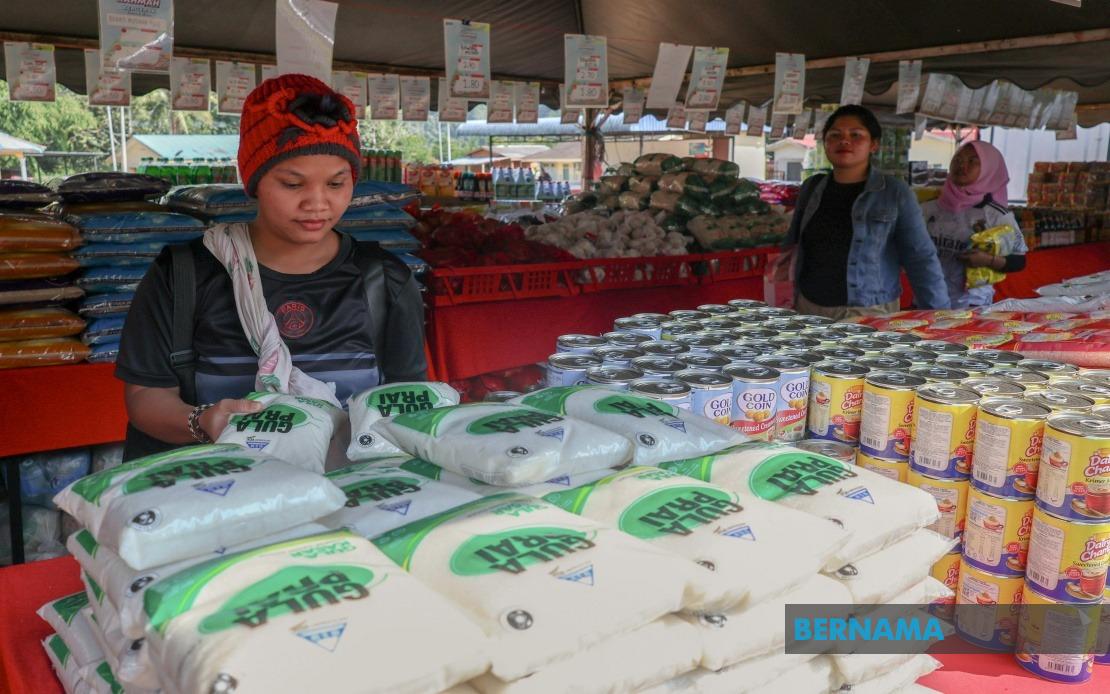
The Domestic Trade and Cost of Living Ministry (KPDN) has declared success in its Essential Goods Distribution Programme, stating that the initiative is effectively standardising prices for essential commodities across Malaysia's rural and remote communities. The programme targets seven key categories—sugar, wheat flour, packet cooking oil, white rice, liquefied petroleum gas, RON95 petrol, and diesel—bringing them to uniform controlled prices nationwide and eliminating the price premiums that isolated communities previously endured.
Historically, residents in rural areas faced substantial cost burdens simply due to geographical remoteness and supply chain inefficiencies. Distributors and retailers had justified premium markups by citing higher transportation expenses and logistical challenges in reaching sparsely populated zones. This invisible tax on rural living meant that families in villages and island communities bore disproportionate expenses compared to their urban counterparts purchasing identical products in major cities. The disparity was most acute for essential goods that residents could neither avoid nor source locally, creating a genuine equity issue in cost of living across the nation.
Concrete results from the Pulau Libaran zone in Sabah illustrate the programme's tangible impact. Liquefied petroleum gas cylinders, which once retailed at RM39 per unit before the programme's rollout, now sell at the controlled price of RM26.60—a reduction of nearly 32 percent. Packet cooking oil experienced a similarly dramatic correction, falling from RM3.50 per packet to the standardised price of RM2.50, representing a 29 percent saving for households that depend on this staple for daily meal preparation. These are not nominal adjustments but substantial financial relief for families managing tight household budgets in areas where income opportunities are typically limited.
The financial commitment backing the programme is substantial. KPDN has allocated RM250 million for the current year, directing resources to 1.03 million residents across six geographically and economically significant states: Sabah, Sarawak, Terengganu, Kelantan, Pahang, and Kedah. This distribution network encompasses 212 zones, 828 distinct distribution areas, and 1,532 points-of-sale where residents can access controlled-price goods. The scale of the operation reflects the administrative complexity of serving dispersed communities across an archipelago and peninsula characterised by difficult terrain and considerable distances between population centres.
Sabah, given its vast landmass and scattered settlement patterns, receives the largest share of the allocation at RM107.3 million. This sum supports 78 zones, 228 distribution areas, and 587 sales points, reaching 492,566 residents across the state. The Libaran constituency alone, which prompted the parliamentary question that elicited this detailed response, operates under a dedicated RM1.76 million allocation, establishing eight distribution areas and nine points-of-sale to serve 17,061 residents. The allocation suggests a conscious recognition of Sabah's particular challenges in logistics and the premium costs associated with delivering goods to island and deeply rural locations.
Implementing such a geographically dispersed programme requires robust institutional frameworks to prevent waste and ensure that price controls translate into actual consumer benefits rather than being captured by intermediaries. KPDN has established standard operating procedures for deliveries and created Programme Monitoring and Coordination Committees at both the national ministry level and within each participating state. These oversight mechanisms aim to track goods from point of subsidy through to final retail sale, reducing the risk that vendors will exploit price ceilings by reducing quality or that supplies will be diverted to black markets where uncontrolled prices would apply.
Evidence of the programme's effectiveness extends beyond pricing data. An independent Programme Outcome Evaluation Committee conducted assessments among target beneficiaries and reported that the overwhelming majority of survey respondents believed the initiative had materially improved their cost of living circumstances. Perhaps more significantly, respondents expressed a strong desire for the programme's continuation, suggesting that the psychological and financial security provided by knowing essential goods will remain affordable at standardised prices carries genuine value beyond the simple mathematics of price reductions.
The programme operates against a backdrop of persistent cost-of-living pressures that affect Malaysian households across income levels. For rural and remote communities with typically lower household incomes and fewer competitive retailers, the impact of unregulated prices for essentials can be severe. By guaranteeing access to sugar, cooking oil, and fuel at fixed prices, the government removes a significant source of uncertainty and expense from household budgeting. For families in Sabah, Sarawak, and the rural peninsular states, predictable prices for cooking oil and gas represent not merely convenience but economic necessity.
The geographical scope of the programme reveals important realities about Malaysia's economic geography. Sabah and Sarawak together account for substantial population shares in the programme, reflecting the challenges of serving these large states where distribution infrastructure remains less developed than in Peninsular Malaysia. The inclusion of Terengganu, Kelantan, and Pahang reflects recognition that even on the peninsula, communities in less urbanised areas face similar accessibility and cost pressures. Kedah's inclusion suggests that distance from major urban consumption centres, rather than insularity alone, drives the need for price standardisation support.
From a policy perspective, the programme represents a pragmatic intervention in what economists would recognise as a market failure. In competitive, efficient markets with low transportation costs, retailers would have no ability to sustain large price differentials for identical goods across regions. However, when geography creates natural monopolies or near-monopolies for suppliers to remote areas, intervention becomes justified to protect vulnerable populations from exploitation. The programme acknowledges this reality by creating a parallel supply chain that bypasses conventional wholesale and retail networks, directly supplying controlled-price goods to points-of-sale in underserved communities.
Sustainability questions linger regarding the programme's long-term viability and cost. The annual RM250 million outlay is substantial, and maintaining it indefinitely depends on sustained political commitment and government revenues. Should economic circumstances change or budget pressures mount, the programme could face scaling back or withdrawal. Communities that have come to depend on these price guarantees would face potentially abrupt adjustments to higher costs, creating political complications. Nevertheless, the evident success in narrowing rural-urban price gaps and the demonstrated beneficiary satisfaction suggest that the investment, while significant, delivers measurable welfare improvements for some of Malaysia's most geographically isolated populations.

