EPMB has posted dramatically improved financial results in the second quarter, with net profit climbing nearly 19-fold as the Malaysian automotive supplier capitalises on deepening partnerships with leading Chinese vehicle manufacturers. The company's revenue reached RM212.7 million in the quarter, marking its strongest quarterly performance in at least a decade and representing a substantial 66.6 per cent jump from RM127.7 million recorded in the same period last year. This remarkable turnaround has also benefited shareholders, with earnings per share rising sharply to 1.80 sen from just 0.10 sen year-on-year, signalling a fundamental shift in the company's operational capacity and market positioning.
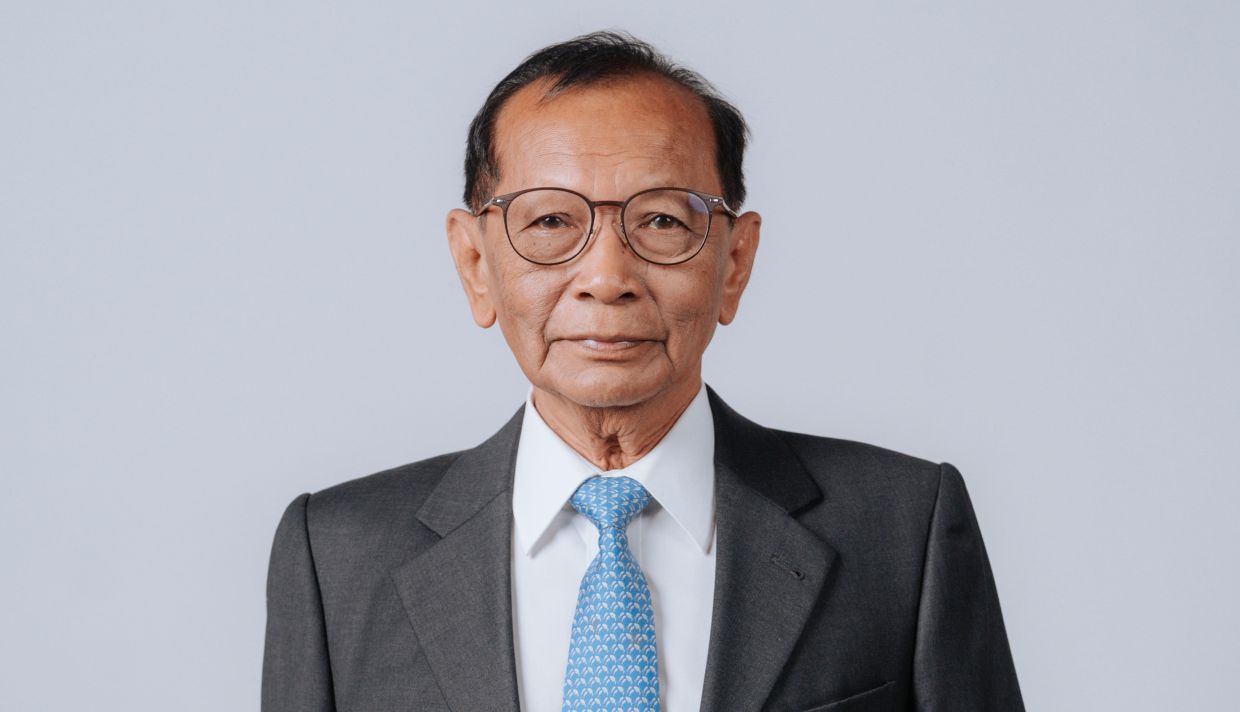
The dramatic performance improvement stems directly from EPMB's strategic decision to establish automotive localisation collaborations with three major Chinese carmakers: Great Wall Motor (GWM), SAIC-MG, and XPENG. These partnerships have moved beyond theoretical planning into tangible production, with the three brands now collectively producing over 1,000 vehicles monthly under EPMB's manufacturing arrangements. This milestone represents a crucial inflection point for the company, demonstrating that the partnerships have achieved meaningful scale rather than remaining pilot projects or limited trials. Executive chairman Hamidon Abdullah emphasised that these results underscore both the company's operational proficiency and its successful execution of broader strategic initiatives aimed at transforming EPMB into a major regional player.
Looking at the broader six-month picture, EPMB's performance gains have been sustained and consistent rather than a single quarter anomaly. For the first half of 2026, net profit surged to RM6.7 million from RM1.05 million in the equivalent period of 2025, while revenue jumped 47.2 per cent to RM372.9 million from RM253.2 million. This consistency across successive quarters suggests that the company has moved beyond capturing initial demand and is instead establishing sustainable operating patterns with its Chinese manufacturing partners. The revenue growth outpacing profit growth indicates that while EPMB is securing substantial volume increases, the company continues to operate within competitive pricing dynamics typical of automotive supply and production contracts.
Beyond the immediate numbers, EPMB is undertaking significant infrastructure investments that signal confidence in sustained future demand. The company commenced construction of a dedicated vehicle painting facility in Pegoh, Melaka during June, a capital-intensive project that represents a clear commitment to building vertically integrated manufacturing capabilities. This facility expansion moves EPMB closer to providing comprehensive end-to-end automotive manufacturing services rather than remaining a component supplier or assembly partner. Such vertical integration typically allows manufacturing firms to capture greater margins, reduce dependency on external service providers, and offer clients more streamlined quality control across multiple production stages.
Hamidon characterised this painting facility as a transformative step in the company's broader transition towards becoming a fully integrated automotive manufacturing partner capable of serving global vehicle producers. The distinction matters significantly within the automotive industry, where integrated partners command higher valuations and enjoy stronger negotiating positions with clients than specialised component suppliers. By developing painting capabilities in-house, EPMB can offer Chinese, European, Japanese, and other global automakers a more comprehensive proposition, potentially attracting additional production mandates or expanding existing collaborations.
The company has simultaneously strengthened its position within Malaysia's domestic automotive sector, securing new component supply programmes for upcoming Proton and Perodua models. These domestic wins are strategically important because they diversify EPMB's revenue streams beyond its Chinese carmaker partnerships while supporting local manufacturers as they develop new vehicle lineups. Combined with EPMB's established seat manufacturing business, these domestic supply contracts create multiple revenue pillars that reduce the company's exposure to any single customer relationship or market segment.
EPMB's emerging strategy reflects a deliberate positioning as a comprehensive automotive manufacturing solution provider capable of serving multiple customer bases simultaneously. The company appears to be constructing what executives describe as a one-stop automotive manufacturing hub, targeting both global automotive brands seeking production capacity in Southeast Asia and supporting Malaysia's national industrial objectives as a regional production and export hub. This positioning aligns with Malaysia's broader economic strategy of attracting higher-value manufacturing operations and establishing the country as a credible alternative to China, India, and other traditional Asian manufacturing centres.
The timing of EPMB's expansion into Chinese electric vehicle manufacturing is particularly noteworthy for Malaysia's automotive trajectory. Chinese automakers including XPENG and MG have become increasingly significant players in Southeast Asian markets, with their affordable electric vehicles challenging traditional Japanese and Korean dominance. By securing manufacturing contracts with these manufacturers, EPMB gains exposure to one of the region's fastest-growing vehicle segments while simultaneously positioning Malaysia as a production location for export-oriented EV manufacturing. This development potentially helps Malaysia participate more directly in the global electric vehicle transition rather than remaining primarily dependent on imported vehicles.
The expansion also carries implications for regional automotive competition and supply chain dynamics. As Chinese manufacturers establish production footprints in Malaysia through partners like EPMB, they reduce their logistical costs while building local political relationships and supply chain resilience. For ASEAN as a whole, this represents a shift in automotive manufacturing geography, with Chinese firms increasingly complementing or competing against established Japanese, Korean, and European manufacturers who have long dominated the region's production facilities. EPMB's rapid growth reflects this broader structural change within Asian automotive manufacturing.
Looking forward, EPMB management has clearly outlined expectations for continued expansion. The company anticipates that new vehicle models from its Chinese partners will enter production sequentially, providing successive growth opportunities throughout 2026 and beyond. Export volumes across ASEAN and broader international markets are expected to ramp up as these new models reach maturity and achieve higher production stability. This suggests that EPMB's executives view the recent financial performance not as a peak but rather as an early-stage acceleration of a multi-year growth trajectory.
Investor attention on EPMB will likely intensify given these results and forward guidance, particularly as the company completes its Melaka painting facility and demonstrates its ability to simultaneously manage Chinese partnership production, domestic supply contracts, and new infrastructure investments. The dramatic earnings improvement and revenue growth have effectively shifted EPMB from a relatively modest Malaysian automotive supplier into a company actively shaping regional manufacturing patterns and benefiting directly from the automotive industry's ongoing restructuring across Asia.

