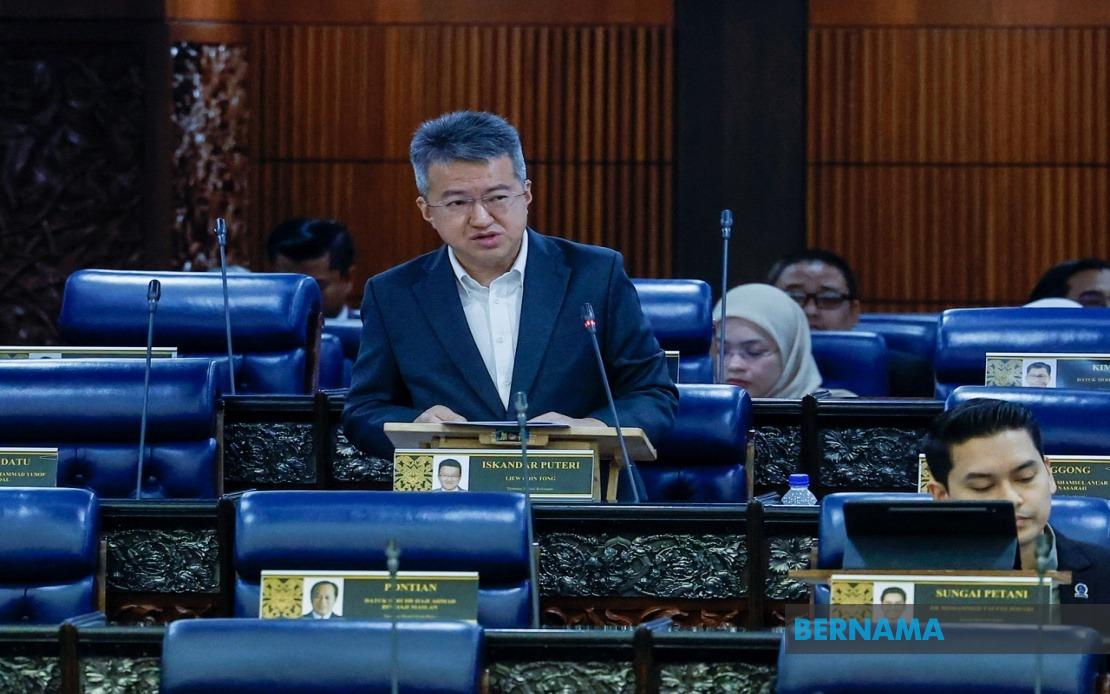
Malaysia's Employees Provident Fund (EPF) has achieved a significant milestone with its i-Legasi initiative, which enables older members to share surplus retirement savings with eligible family members. Deputy Finance Minister Liew Chin Tong announced in Parliament that 63 applications have been approved since the scheme's introduction on February 1, resulting in RM46.3 million being transferred to 86 beneficiaries across the nation. The programme represents a meaningful expansion of intergenerational wealth transfer within Malaysia's retirement system, addressing both inheritance planning and family financial security during the transition to an aged society.
The i-Legasi framework targets EPF members aged 55 and above whose retirement accounts exceed the Adequate Savings benchmark of RM650,000. Members meeting these criteria can voluntarily transfer a portion of their surplus funds directly into the EPF accounts of immediate family members, whether spouses, children, or parents. This mechanism acknowledges the reality that many Malaysian workers accumulate more than they require for their own retirement, while younger family members struggle with inadequate savings. By formalising and facilitating such transfers within the regulated EPF environment, the government has created a structured pathway for wealth distribution that simultaneously strengthens the financial foundation of multiple household members.
The uptake of i-Legasi, while still in early stages, demonstrates growing awareness among eligible members of their options beyond passive retirement planning. The scheme aligns with broader policy objectives to enhance retirement adequacy across the population, particularly as Malaysia confronts demographic challenges. With the nation projected to become an aged society by 2030, characterised by rising proportions of retirees relative to working-age citizens, initiatives that enable more effective utilisation of accumulated wealth become increasingly vital to household and macroeconomic stability. The RM46.3 million distributed represents genuine capital flowing into family accounts at a time when many Malaysians face heightened financial pressures from inflation and cost-of-living increases.
Liew's parliamentary statement also highlighted progress on a broader front: 3.04 million active EPF members aged 18 to 60 have achieved the Basic Savings target for their respective age cohorts as of May 31. This figure represents 38.3 per cent of the 7.94 million members in that age bracket and marks improvement from the 35 per cent recorded in the previous comparison period. The Basic Savings target is calibrated by age, with members expected to accumulate RM390,000 by age 60, adjusted proportionally for younger cohorts. This gradual but consistent progress suggests that enhanced contribution incentives and awareness campaigns are resonating with Malaysia's workforce, though significant work remains to ensure universal retirement adequacy.
The achievement rate of 38.3 per cent indicates that nearly four in ten eligible workers are on track to meet minimum retirement standards, a statistic with substantial implications for national welfare spending and pensioner vulnerability. Given Malaysia's limited social safety net outside the EPF system, the proportion of workers failing to achieve basic savings targets represents a growing policy concern. Many Malaysians who retire without adequate EPF balances lack alternative income sources and may depend on family support or become financial burdens on younger relatives. The government's emphasis on strengthening collaboration between itself and the EPF to enhance incentives and social protection mechanisms reflects recognition that voluntary individual effort alone may prove insufficient without systemic support.
The i-Legasi initiative must be understood within the context of Malaysia's evolving approach to retirement security. Traditional models emphasised individual accumulation and personal responsibility, but contemporary policymaking increasingly acknowledges that structural inequalities in income, employment stability, and early-career savings capacity create persistent disparities by retirement age. By permitting cross-generational wealth transfer within the EPF ecosystem, the government provides a middle path between passive individual responsibility and comprehensive state provision. Members with surplus savings gain flexibility to strengthen family financial security, while beneficiaries receive capital boosts to accelerate their own retirement preparation or address immediate needs.
The approval of 63 applications representing 86 beneficiaries suggests that family structures often involve multiple recipients per applicant, whether children at different life stages or elderly parents requiring support. This pattern reflects Asian family dynamics and multi-generational household arrangements common throughout Malaysia and Southeast Asia. The scheme thus formalises and facilitates existing cultural practices of intergenerational wealth sharing while maintaining regulatory oversight and ensuring that transfers do not jeopardise donors' own retirement security. The RM650,000 adequacy threshold serves as a safety valve, preventing members from transferring funds needed for their own longevity or health care.
Looking forward, the success of i-Legasi depends on sustained communication and accessibility. Many eligible members remain unaware of the scheme or uncertain about its mechanics, administrative requirements, or tax implications. The EPF must continue educational outreach, simplify application processes, and provide clear guidance on beneficiary eligibility and transfer limits. Regional disparities may also emerge, with urban, digitally-connected members potentially more likely to utilise the scheme than those in rural areas or among older cohorts less familiar with online platforms. Ensuring equitable access across demographic boundaries will require tailored communication and perhaps offline application channels.
The intersection of i-Legasi with Malaysia's demographic transition creates both opportunity and urgency. As the workforce ages and the ratio of working-age to retired citizens declines, enhancing existing capital utilisation becomes more critical than introducing entirely new schemes. The RM46.3 million transferred through i-Legasi, while modest in aggregate terms, represents capital that would otherwise sit idle or transfer outside formal channels upon members' death. By channelling these funds strategically during members' lifetimes, Malaysia increases their economic impact and reaches family members who might not otherwise inherit due to intestacy, competing claims, or administrative delays.
The government's commitment to strengthening collaboration with the EPF on contribution incentives and social protection mechanisms signals an emerging consensus that retirement adequacy requires multi-faceted intervention. Enhanced tax incentives for voluntary contributions, employer matching schemes, public education campaigns, and initiatives like i-Legasi form an integrated ecosystem designed to lift retirement savings across income levels. However, the persistent gap—with 61.7 per cent of workers still failing to achieve basic savings targets—underscores the scale of the challenge and the limitations of voluntary, incentive-based approaches for lower-income workers with constrained discretionary income.
For Malaysian workers and policymakers, the i-Legasi initiative represents a pragmatic tool within a broader retirement reform agenda. Its modest early results should not obscure its significance as a policy innovation that recognises demographic realities and family structures. As Malaysia navigates the transition to an aged society, schemes that unlock value from existing assets, strengthen intergenerational financial ties, and complement formal retirement systems will become increasingly important. The challenge ahead involves scaling uptake, ensuring equitable access across regions and demographics, and integrating such initiatives into a holistic framework that adequately prepares the nation's workforce for retirement security in an environment of rising costs and declining worker-to-retiree ratios.

