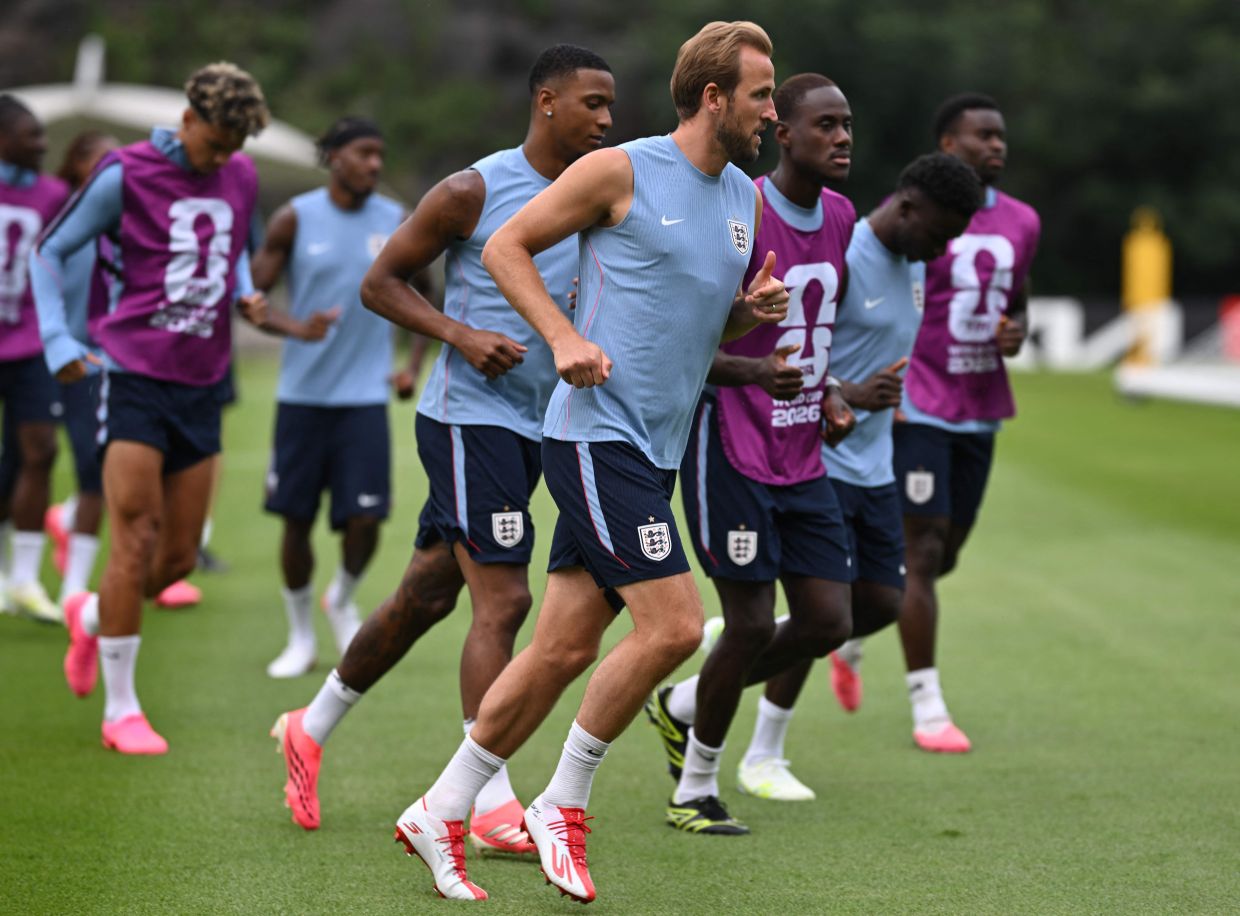
The World Cup's knockout phase enters a critical juncture with England preparing for a charged encounter against Mexico at the Estadio Azteca on Sunday, a venue laden with historical significance and tactical complications. The match represents a collision between contrasting tournament narratives: England's underwhelming group-stage performance and unconvincing victory over the Democratic Republic of Congo against Mexico's scintillating home record that has seen El Tri win all four matches without conceding a goal.
Thomas Tuchel's England squad arrives in Mexico City carrying the weight of 60 years without a major tournament victory, yet the manager has overseen a team that has struggled to justify pre-tournament expectations. The journey to the round-of-16 required a last-minute intervention from captain Harry Kane, whose two goals against DR Congo salvaged a 2-1 victory that ultimately proved decisive. This narrow margin of progression underscores the defensive vulnerabilities that have plagued the English throughout the tournament, particularly along the right flank where pace-focused attackers have repeatedly exploited gaps in concentration.
The Azteca itself presents a formidable physical challenge beyond the competitive dimensions of football. Situated 2,240 metres above sea level, the stadium's atmospheric conditions impose physiological demands that cannot be adequately countered in the four-day preparation window available to Tuchel's coaching staff. The England manager has explicitly acknowledged this reality, describing the altitude adaptation as physically impossible within such a compressed timeframe. Yet upon visiting the ground, Tuchel's perspective shifted toward embracing the occasion's magnitude, recognizing the venue's status as an iconic World Cup stage where proper football emerges from the intensity of atmosphere and history.
Mexico's domestic dominance extends beyond mere statistics into the psychological realm. Javier Aguirre's squad has demonstrated the capacity to perform consistently without surrendering defensive composure, evidenced by the clean-sheet streak that culminated in a 2-0 elimination of Ecuador. The prospect of eliminating England in front of an expectant home crowd represents a historical opportunity; Mexico's last knockout-stage World Cup victory occurred four decades prior, making this fixture a potential watershed moment in the nation's tournament narrative. Aguirre, the 67-year-old strategist, has tempered expectations by emphasizing the requirement for a near-perfect performance, acknowledging England's fourth-place FIFA ranking and the quality of personnel at Tuchel's disposal.
The technical dimension of this encounter centres on England's capacity to neutralise Mexico's set-piece proficiency and counter-attacking transitions while maintaining sufficient attacking pressure to penetrate a defence that has proven remarkably organized. Mexico's tenth-ranked positioning conceals a team that has executed a tournament-within-a-tournament strategy, leveraging home advantage with clinical efficiency. Aguirre's assertion that the match will ultimately reduce to "11 versus 11" represents a deliberate attempt to diminish altitude discussions, yet meteorological forecasts suggest that thunderstorms could materialise around the scheduled 6pm local start time, potentially introducing additional variables into match dynamics.
Simultaneously, the Brazil-Norway fixture at the MetLife Stadium in New Jersey presents the tournament's most asymmetrical challenge. Erling Haaland's extraordinary goal tally of five strikes across three appearances has positioned the Manchester City forward as a genuine threat to Brazil's five-time championship credentials. Yet the Norwegian striker faces familiar opponents in the Brazilian defensive pairing: Gabriel Magalhaes from Arsenal and Marquinhos from Paris Saint-Germain have encountered Haaland repeatedly in club competition, providing Carlo Ancelotti's defensive structure with extensive footage and tactical knowledge. Ancelotti's relaxed demeanour suggests confidence that his defenders possess sufficient experience to manage Haaland's threat through conventional defensive discipline rather than tactical innovation.
Norway's challenge extends beyond individual player management to the psychological dimensions of confronting a five-time world champion. Coach Stale Solbakken has consciously steered his squad toward process-orientated thinking, cautioning against allowing the occasion's magnitude to distort tactical execution. His observation that Brazil no longer represents the "big favourite" status of previous years acknowledges a subtle shift in tournament power dynamics, yet this assertion requires contextualisation within the framework of established champions' continued technical superiority. The severe weather warnings issued for New Jersey introduce environmental uncertainty that could benefit the underdog through levelling effects on possession-based football.
Temperature differentials between the two fixtures underline the diverse conditions confronting competing nations. Where England faces Mexican altitude and potential thunderstorms, Brazil encounters the threat of severe storms and flooding warnings. France's Saturday victory over Paraguay occurred under near-record World Cup temperatures of 38°C in Philadelphia, creating physical demands that contrast sharply with the cooler 21°C forecast for Mexico City. These environmental variables, rarely discussed in pre-tournament analysis, assume material significance during knockout competition when marginal gains determine advancement.
The geopolitical and sporting implications of these fixtures extend throughout Southeast Asia, where Malaysian audiences maintain considerable interest in the tournament's trajectory. England's progression would represent validation of established football hierarchies, while a Mexican triumph would signal the ascendancy of emerging tournament competitors. Similarly, Norway's ability to challenge Brazil would reshape perceptions regarding Nordic football's capacity to compete at the elite level. These outcomes will reverberate through global football's power structures and influence investment flows toward youth development and infrastructure improvements throughout different continents.
For Malaysian football observers, these matches offer instructive case studies in competitive organisation, tactical adaptation, and psychological resilience under extreme pressure. The contrast between England's struggling progression and Mexico's clinical dominance demonstrates that tournament success depends not solely on individual player quality but on organisational coherence, tactical discipline, and the capacity to execute fundamental principles consistently. Similarly, Haaland's clinical finishing against established defensive structures illustrates how technical excellence can transcend experience, potentially offering encouragement to Southeast Asian academies developing young attacking talent.
The broader narrative emerging from these round-of-16 encounters concerns the tournament's capacity to produce unexpected progressions while maintaining historical power dynamics. Mexico's domestic invincibility and Norway's attacking potency represent genuine threats to established hierarchies, yet England's recovery against DR Congo and Brazil's continued championship pedigree suggest that experience and quality ultimately prevail. The matches scheduled for Sunday and their preceding meteorological challenges will determine which narrative dominates the World Cup's remaining phases.

