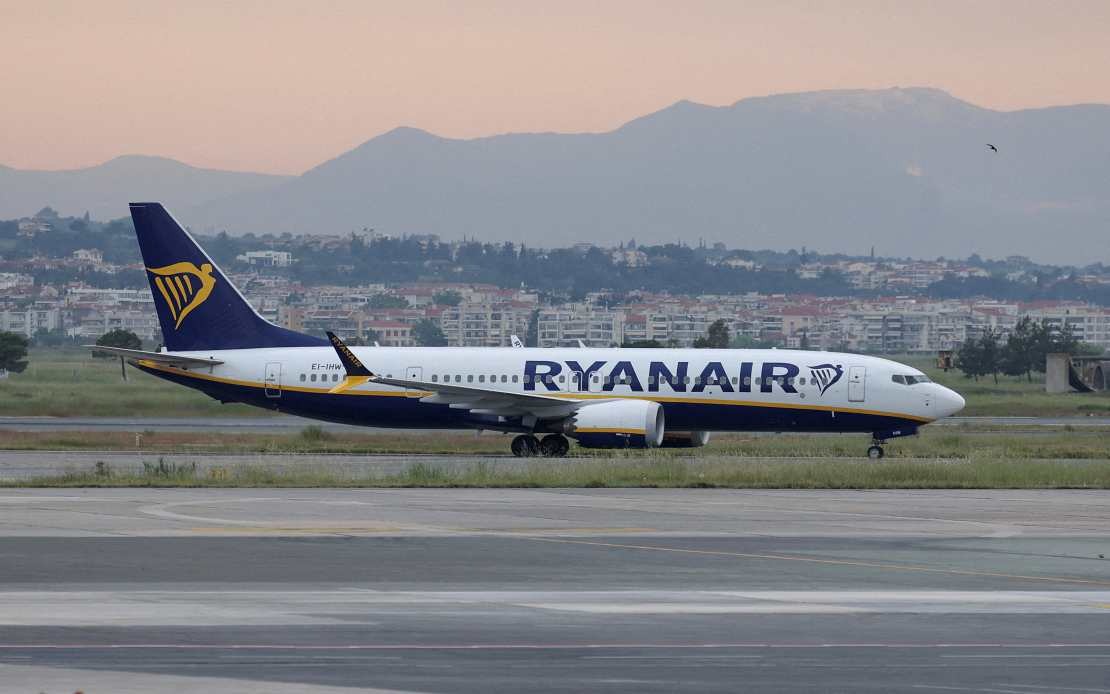
An investigation by US safety authorities has uncovered alarming details of an incident aboard a Ryanair service operating from Thessaloniki to Munich in July, where structural failure in the aircraft's right engine led to a passenger being partially ejected from the fuselage. The National Transportation Safety Board released its findings on Thursday, revealing how a cascade of mechanical failure and rapid decompression endangered all 184 people aboard the Malta Air flight.
The crisis began moments after the aircraft lifted off from Thessaloniki International Airport in Greece, when a fan blade in the right engine separated without warning. This type of failure, while rare in modern aviation, creates an immediate and cascading chain of destructive events within the engine itself. The detached blade, rotating at enormous speed, fragmented into multiple pieces that punched through the engine casing with tremendous force.
These metal fragments did not remain contained within the engine housing. Instead, they penetrated the pressurised cabin structure in two distinct locations, creating pathways for explosive decompression. One breach occurred directly through a passenger window at row 11, completely shattering the reinforced pane and destroying its frame entirely. A second perforation opened in the lower fuselage skin positioned behind the right wing junction, further compromising the structural integrity of the pressurised section.
The passenger seated in row 11, window seat F, experienced the full force of this structural failure. With the window completely absent and the cabin undergoing rapid pressure loss, the individual was drawn partially through the opening as air rushed from the higher-pressure cabin toward the lower external atmosphere. This is precisely the phenomenon that aviation engineers design against, yet the scale of the damage here overwhelmed passive safety measures.
What prevented a tragedy was the immediate response of fellow passengers. Other travellers in the cabin recognised the emergency unfolding and physically restrained and pulled the endangered passenger back into the aircraft, successfully preventing complete ejection. The coordinated human intervention proved crucial in preserving life during those critical seconds before the crew could respond to the decompression emergency.
The investigation also uncovered evidence that bird remains, including feathers, were present within various sections of the engine when it was examined post-incident. This discovery points to a bird strike as the likely trigger for the fan blade failure. Birds can cause significant damage to jet engines, particularly during the take-off phase when the aircraft is climbing through lower altitudes where wildlife is more prevalent. However, modern engines are specifically designed to withstand certain bird ingestion events; this failure suggests either an unusually large bird or a strike of particular violence.
The right horizontal stabiliser, a critical control surface positioned at the rear of the fuselage, also sustained damage from engine debris. This raised immediate concerns about aircraft controllability, as damage to the tail surfaces can significantly impair an aircraft's ability to maintain stable flight and respond to control inputs. However, the pilots successfully managed the emergency and maintained sufficient control authority to return to the airport.
Despite the severity of the structural damage and the partial ejection of a passenger, the flight crew executed an emergency return to Thessaloniki International Airport without further incident. The aircraft landed safely, allowing the injured passenger to receive immediate medical attention. The swift professional response by both the flight crew and the passengers who intervened prevented what could have been a far more catastrophic outcome.
For Malaysian and Southeast Asian aviation stakeholders, this incident underscores the critical importance of rigorous maintenance protocols and the unpredictable nature of bird strikes, particularly relevant given the region's tropical climate and high bird populations. While commercial aviation remains extraordinarily safe, these rare chain-reaction failures demonstrate why regulatory oversight, engineering redundancy, and crew training remain essential. The incident also highlights how passenger awareness and quick thinking can sometimes make the difference between a controlled emergency and a disaster, reminding travellers of the importance of heeding safety briefings and remaining alert throughout flights.

