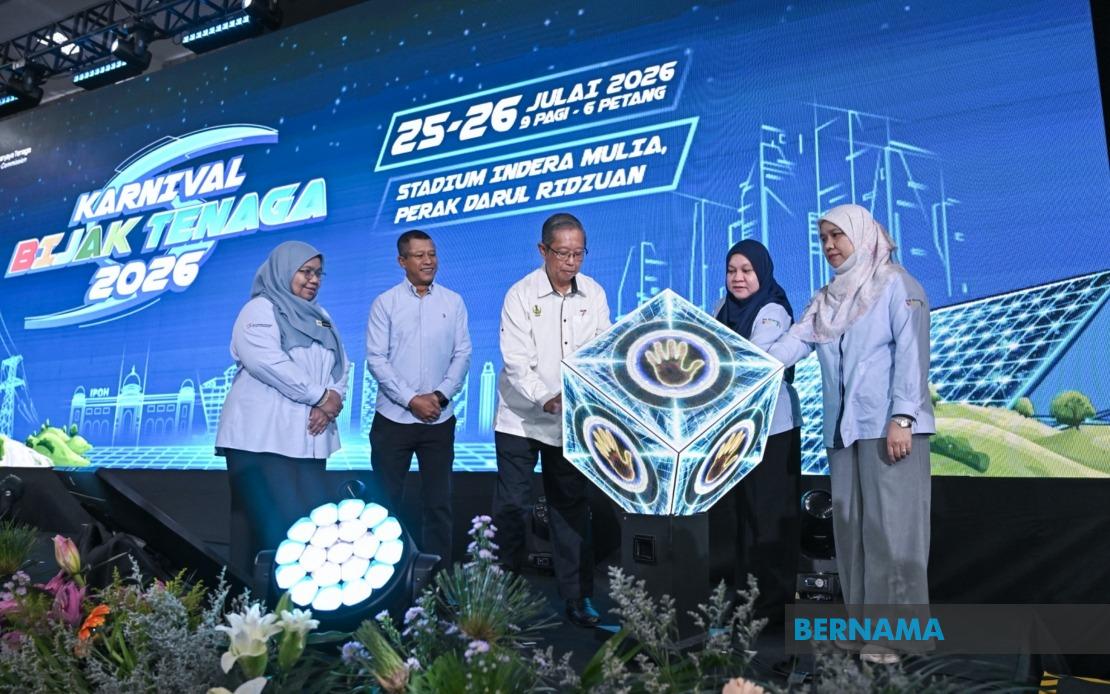
The Energy Commission has launched an ambitious public engagement initiative through the Energy Smart Carnival 2026, a major two-day gathering held at Stadium Indera Mulia in Ipoh that underscores the regulatory body's commitment to fostering community understanding of Malaysia's energy sector. The event represents a strategic pivot towards direct stakeholder engagement, reflecting broader efforts by Malaysian authorities to embed sustainability principles into household and industrial practices amid accelerating global energy transitions.
Energy Commission chairman Datuk Seri Asri Hamidon framed the carnival as a cornerstone initiative to demystify the Commission's regulatory role while building public literacy around energy systems. As the statutory body overseeing electricity and piped gas sectors nationwide, the Commission faces persistent challenges in translating technical standards and policy objectives into accessible messaging for diverse audiences. The carnival addresses this gap by creating an immersive, family-oriented environment where visitors encounter tangible demonstrations of energy efficiency concepts rather than abstract policy documents.
The inaugural edition substantially exceeded organisers' expectations, attracting more than 10,000 attendees against an initial projection of 5,000. This threefold surge signals latent public interest in energy topics, particularly among households grappling with rising electricity costs and growing environmental consciousness. Notably, the visitor demographic extended well beyond Perak's borders, with participants travelling from Kuala Lumpur, Johor Bahru, and surrounding regions, suggesting appetite for such initiatives across Malaysia's urban and semi-urban centres.
The carnival's programming reflects a deliberate educational architecture spanning efficiency, safety, and sectoral transformation. Exhibition booths provided practical guidance on reducing household consumption patterns, while demonstrations highlighted the significance of appliance labelling standards. The prominence given to 4 or 5-Star Energy Efficiency Labels and ST-SIRIM Safety Labels acknowledges persistent consumer confusion around product selection, a systemic problem that prolongs inefficient purchasing decisions at the household level. By contextualising these standards within an entertaining format, the Commission aims to shift consumer behaviour incrementally.
The event's timing coincides with the Energy Commission's Silver Jubilee celebration, embedding the carnival within a broader narrative of institutional maturation and renewed purpose. Twenty-five years of regulatory operation have positioned Malaysia within a competitive regional energy landscape increasingly defined by renewable energy targets and grid modernisation requirements. The carnival thus functions simultaneously as a public relations exercise and genuine capacity-building endeavour, acknowledging that Malaysia's energy transition success depends substantially on informed consumer participation.
CEO Siti Safinah Salleh's presence at the opening ceremony signalled organisational commitment to the initiative, elevating it beyond routine outreach. Strategic Communications Section head Veliana Ruslan announced ambitious expansion plans targeting other states from 2027 onwards, indicating that Ipoh's successful reception validates a replicable template. This scalability matters considerably for Malaysia's geographically dispersed population, where centralised messaging often fails to penetrate peripheral communities lacking convenient access to metropolitan information flows.
Perak Infrastructure, Energy, Water and Public Transport Committee chairman Datuk Seri Mohammad Nizar Jamaluddin's participation reflected state-level alignment with federal energy transition agendas. Such inter-governmental coordination remains essential in Malaysia's federalised system, where state governments exercise considerable influence over energy infrastructure planning. The carnival thus subtly reinforced collaborative governance frameworks while demonstrating practical policy implementation at ground level.
The Commission's framing of the event as promoting "energy efficiency, safety and energy transition through an approach that is enjoyable and easy to understand" reveals sophisticated recognition that behavioural change rarely emerges from regulatory mandates alone. Malaysian households and businesses require cultural scaffolding to embrace conservation practices, particularly when immediate cost-benefit calculations appear marginal. The carnival's experiential design—combining interactive exhibits, competitive elements, and educational talks—leverages psychological principles around engagement and retention, transforming dry energy metrics into memorable experiences.
For Malaysian policymakers, the carnival's success carries implications beyond Ipoh's immediate context. As the nation pursues ambitious renewable energy targets under the National Energy Policy, public understanding and voluntary participation constitute critical success factors. Centralised generation and transmission alone cannot achieve efficiency gains; distributed changes across millions of households amplify impact exponentially. The carnival demonstrates that regulatory bodies can transcend traditional hierarchical communication models to become trusted community partners.
The event's emphasis on career opportunities within the energy sector addresses Malaysia's persistent skills gap in clean energy technologies. By exposing younger visitors to emerging professional pathways, the Commission cultivates talent pipelines essential for implementing sophisticated renewable and grid technologies. This forward-looking dimension transforms the carnival from mere awareness exercise into workforce development infrastructure.
International observers monitoring Malaysia's energy transition progress should note this bottom-up engagement strategy. Unlike neighbouring economies that rely heavily on top-down industrial policy, Malaysia increasingly emphasises consumer empowerment and informed choice. This approach aligns with broader democratisation trends within Asia-Pacific energy governance, where publics demand transparency and participation in decisions affecting household budgets and environmental outcomes.
Looking ahead, the Commission's plans to replicate the carnival across states present both opportunities and challenges. Rural areas and smaller towns may require modified programming reflecting different consumption patterns and information access levels. Success in these contexts demands sustained investment in localised stakeholder engagement rather than simple template replication. Nevertheless, the Ipoh event establishes proof of concept for integrating energy literacy into Malaysia's public discourse systematically.

