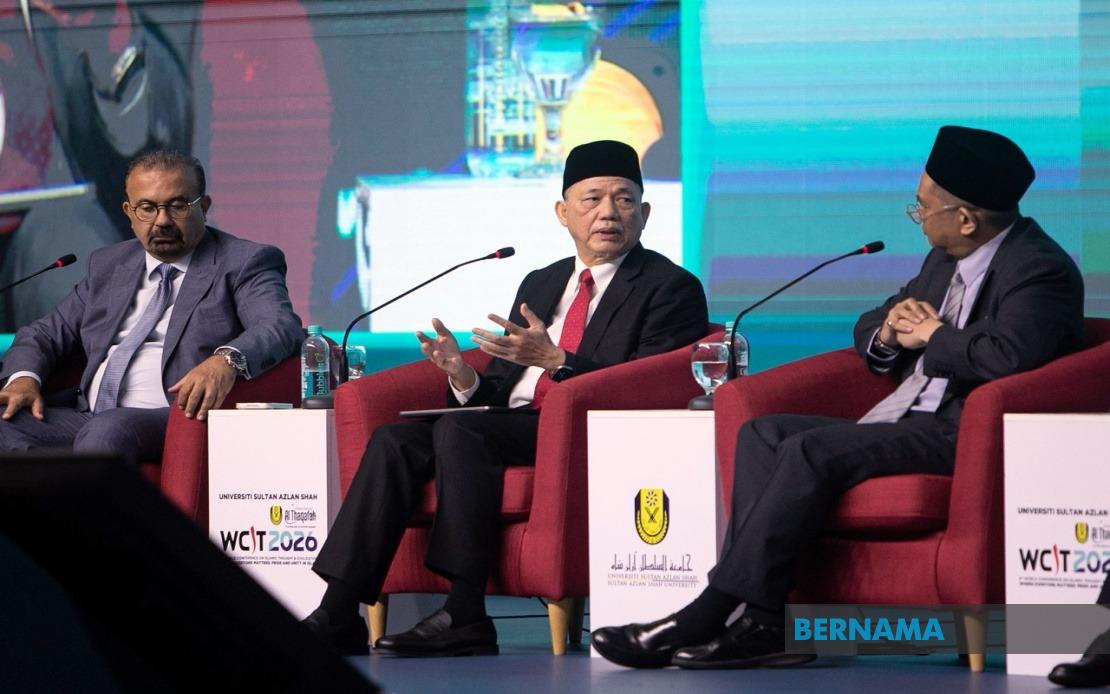
Deputy Prime Minister Datuk Seri Fadillah Yusof has underscored a critical reality facing policymakers in the modern era: the lines separating energy security from maritime security have become dangerously blurred. Speaking as a panellist at the 8th World Conference on Islamic Thought and Civilisation in Ipoh, Fadillah highlighted how the escalating tensions between the United States and Iran exemplify the cascading consequences of regional conflicts on global economic stability. What unfolds in one part of the world, he suggested, now reverberates across continents with immediate and tangible effects on citizens far removed from the epicentre of these disputes.
The interconnection between these two domains extends well beyond the traditional understanding of geopolitical risk. Fadillah, who holds the additional portfolio of Energy Transition and Water Transformation Minister, elaborated that developments occurring thousands of kilometres away possess the capacity to reshape electricity rates, disrupt fuel availability, alter international commerce patterns, and ultimately reshape the material conditions of everyday life. This observation carries particular weight for a trading nation like Malaysia, where economic prosperity depends substantially on the seamless flow of goods and energy across global networks. The deputy prime minister's remarks suggest that policymakers must now adopt a more holistic approach to security that refuses to treat energy and maritime concerns as discrete policy silos.
The Strait of Hormuz has emerged as a focal point in this discussion, serving as a concrete illustration of how regional volatility transmits economic shocks across the world. Situated between Iran and Oman, this waterway channels roughly one-third of global maritime petroleum trade, making it one of the world's most strategically vital passages. Any disruption to shipping through this corridor consequently impacts not merely energy markets but the entire interconnected web of global supply chains. Malaysia, with its substantial dependence on oil and liquefied natural gas imports, remains particularly vulnerable to any sustained interruption in the free passage of vessels through these waters.
The ramifications extend beyond price fluctuations alone. When maritime security deteriorates, insurance premiums for vessels traversing contested waters inevitably climb, effectively raising the cost of doing business for shippers and traders. These increased insurance expenses flow directly into supply chain costs, which businesses then transmit to consumers through higher prices for imported goods. Simultaneously, energy prices respond to heightened geopolitical tension, creating a dual squeeze on household budgets and industrial competitiveness. Fadillah articulated this cascading effect with clarity, suggesting that policymakers face a complex challenge of managing multiple simultaneous pressures that stem from a single geopolitical flashpoint.
Fadillah's positioning of Malaysia's response as measured, accountable, and fundamentally diplomatic rather than confrontational reflects a deliberate strategic choice. Malaysia has historically championed an internationalist posture that privileges dialogue over antagonism, a stance grounded in the nation's century-long reliance on an open, rules-based international trading order. This commitment to multilateralism and peaceful conflict resolution provides the philosophical foundation for how Malaysia approaches these volatile global developments. Rather than viewing energy and maritime security challenges through a zero-sum lens of great power competition, Malaysia advocates for solutions rooted in negotiation and the maintenance of established international norms.
The geographic position of Malaysia within the Strait of Melaka adds another dimension to this analysis. This narrow waterway connecting the Indian Ocean to the South China Sea ranks among the world's most critical maritime passages, facilitating roughly one-quarter of global maritime trade and serving as a vital energy corridor for East Asian economies. Malaysia's location at this strategic crossroads means that the country possesses both exposure to external shocks and a vested interest in maintaining the stability and security of the passage. Any escalation of tensions in nearby waters or the Strait of Hormuz therefore carries implications that reverberate through Malaysian ports, refineries, and trading enterprises.
Fadillah's intervention at the WCIT conference, where he participated in a distinguished session with Sultan Nazrin Shah, the Sultan of Perak, suggests that Malaysian leadership views these challenges through a lens that transcends conventional security studies. The emphasis on Islamic thought and civilisation as a framework for addressing global challenges implies that Malaysia seeks solutions grounded in shared values and mutual respect rather than strategic rivalry. This approach stands in contrast to more confrontational postures that characterise some international actors' responses to regional tensions.
The practical implications of this interconnection demand urgent attention from Malaysian policymakers and business leaders. Companies operating in energy-intensive sectors must develop resilience strategies that account for the possibility of supply chain disruptions stemming from geopolitical crises in distant regions. Insurance and shipping companies must reassess their risk models to reflect the increasingly volatile environment. Government agencies responsible for energy security and economic management must coordinate more closely to develop contingency plans that anticipate various scenarios arising from escalating tensions in critical maritime zones.
For Southeast Asian economies more broadly, Fadillah's analysis underscores the limitations of pursuing energy and maritime security strategies in isolation from one another. Regional cooperation mechanisms must evolve to address these interconnected challenges through frameworks that promote stability in shipping lanes, fair access to energy resources, and dialogue-based conflict resolution. Malaysia's emphasis on diplomacy and rules-based order aligns with the interests of smaller nations that benefit from a stable international system rather than one characterised by great power rivalries and spheres of influence.
The deputy prime minister's remarks ultimately point toward a sobering reality: in an increasingly integrated global economy, the old distinctions between energy policy, maritime affairs, and foreign relations have become largely irrelevant. Policymakers must now think systematically about how developments in one domain cascade through others, affecting everything from household electricity bills to insurance costs to employment in trading and logistics sectors. Malaysia's commitment to navigating these challenges through reasoned diplomacy rather than escalatory posturing reflects a strategic clarity about the country's interests in a rules-based international order.

