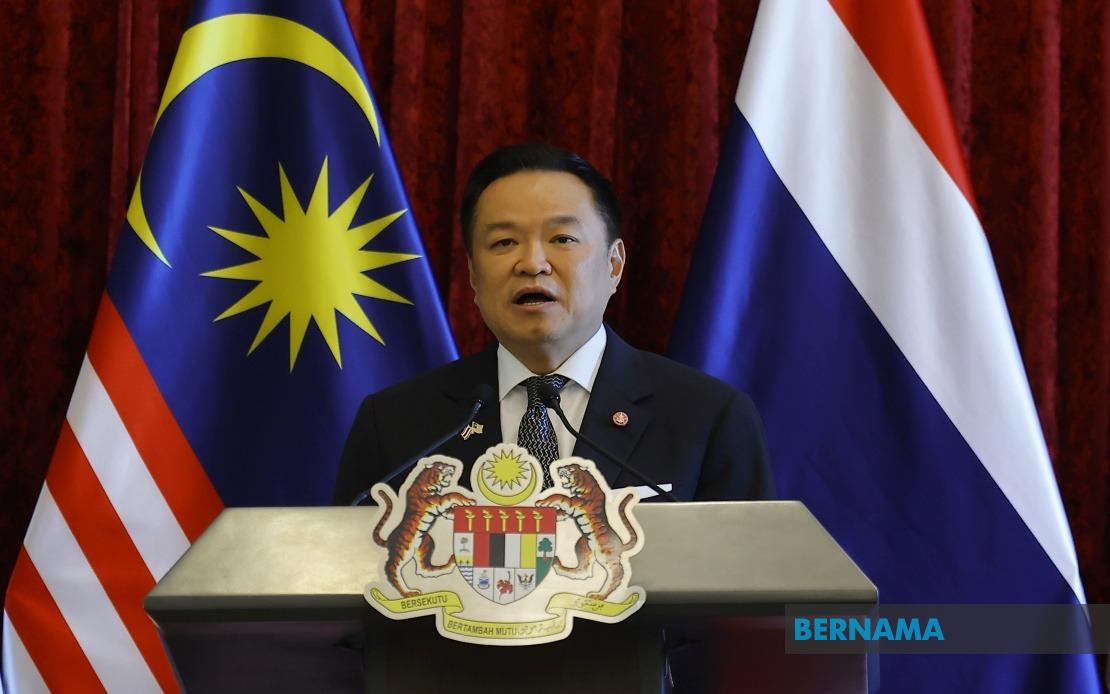
Thai Prime Minister Anutin Charnvirakul has underscored his government's unwavering commitment to tackling the persistent violence plaguing Thailand's southern border provinces, declaring the effort a cornerstone of his administration's policy agenda. Speaking during a bilateral meeting with Malaysian Prime Minister Datuk Seri Anwar Ibrahim in Putrajaya on Thursday, Anutin outlined an integrated approach that recognises the symbiotic relationship between security gains and economic advancement in conflict-affected regions.
The Thai leader articulated a vision in which peace serves as the foundation upon which development initiatives can be constructed and sustained. He elaborated that without stability, even the most ambitious development projects struggle to take root, while conversely, tangible improvements in living standards and economic opportunity create the psychological and material conditions necessary for communities to embrace peace. This framing reflects a growing international consensus that addressing the root causes of conflict—including poverty, marginalisation, and limited opportunity—is essential to achieving lasting security outcomes.
Anutin placed particular emphasis on the bilateral partnership between Thailand and Malaysia, describing it as critical to advancing both security and development agendas in the contested border areas. The two nations share strategic interests in the region, given the cross-border dimensions of many security challenges and the integrated nature of local economies. Thailand's reliance on Malaysian cooperation stems from Malaysia's geographic positioning, its influence with certain stakeholder groups, and its established diplomatic channels with various parties involved in the southern Thailand conflict.
A significant element of the Thai leader's remarks concerned Malaysia's facilitative role in the Southern Thailand Peace Dialogue process. Anutin expressed his gratitude for Kuala Lumpur's willingness to serve as an honest broker in negotiations, a responsibility that requires considerable diplomatic skill given the complexity of the stakeholder landscape. Malaysia's neutrality and credibility with multiple parties, including the Thai government and armed groups, have made it an invaluable intermediary in a conflict that has resisted easy resolution for nearly two decades.
Anwar provided reassurances that Malaysia remains steadfastly opposed to political violence and will continue collaborating with Thailand to ensure that those responsible for attacks and other criminal acts face justice through proper legal channels. This commitment extends beyond rhetorical support to concrete operational cooperation, including intelligence sharing, coordinated investigations, and joint operations where circumstances permit. Such assurances matter significantly in the regional context, where concerns about sanctuary for militants and cross-border safe havens have historically complicated security efforts.
The peace facilitation framework involves engagement with multiple parties, including the Barisan Revolusi Nasional (BRN), one of the main separatist organisations operating in the southern provinces. The dialogue process attempts to create space for negotiated settlements, though progress has been incremental and complicated by factional divisions within armed groups, disagreements over the scope of autonomy arrangements, and competing visions for the future of the region.
Leadership of Malaysia's mediation team rests with Datuk Mohd Rabin Basir, appointed to the role on July 1, 2024. Basir's background as former director-general of Malaysia's National Security Council brings institutional experience and credibility to his role, though the position also carries substantial risks given the volatile nature of the conflict and the multiple groups with stakes in the outcome. Thailand's chief negotiator is Thanat Suwannanont, who heads the country's National Intelligence Agency, reflecting Bangkok's assessment that security and intelligence considerations must sit at the heart of any peace process.
The appointment of intelligence officials to lead negotiating teams on both sides suggests that both governments view the peace process through a security lens, prioritising threat assessment and intelligence gathering alongside diplomatic objectives. This approach reflects the reality that distinguishing between negotiating partners who genuinely seek political settlement and those pursuing tactical advantage while maintaining military options remains exceedingly difficult in practice.
For Malaysia and Southeast Asia more broadly, the southern Thailand conflict holds significant implications. The region remains susceptible to extremist recruitment and radicalisation, with militant groups exploiting grievances linked to ethno-religious identity and perceived marginalisation. A continuing cycle of violence risks creating ungoverned spaces that transnational terrorist organisations and criminal networks might exploit, potentially threatening stability across the broader region.
The emphasis on development alongside security represents a recognition that military approaches alone have failed to resolve the conflict decisively. Thailand has deployed substantial security force resources to the southern provinces for years, yet violence persists and communities remain impoverished relative to other Thai regions. The Thai government's articulation of a development-inclusive approach suggests a possible evolution toward strategies that address underlying grievances, though implementation remains challenging given the contested political status of the provinces and disagreements over resource allocation and governance arrangements.
For Malaysian policymakers, the southern Thailand peace process represents both an opportunity and an ongoing challenge. Success in Thailand's border provinces could contribute to broader regional stability and reduce migration pressures linked to conflict-driven displacement. Conversely, failure or deterioration could spillover effects that complicate Malaysia's own security situation, particularly in border areas where smuggling networks and criminal activities intersect with insurgent operations.
The bilateral commitment articulated by both leaders reflects growing recognition that regional problems require regional solutions, and that Malaysia's geographic position and diplomatic relationships make it indispensable to any viable peace process. The durability of this commitment, however, will depend on whether tangible progress emerges from negotiations and whether development initiatives actually reach affected communities. Without visible improvements in daily life and genuine political engagement with grievances, even well-intentioned diplomatic efforts may struggle to shift community perceptions or reduce recruitment pools for armed organisations.
The path forward requires sustained political will, adequate resources, and flexibility from all parties to negotiate settlements that address core concerns while respecting Thailand's territorial integrity and the aspirations of southern communities. The joint statements from Thai and Malaysian leaders represent necessary but insufficient conditions for progress; implementation of agreed frameworks and delivery of promised development benefits will ultimately determine whether this iteration of the peace process succeeds where previous efforts have stalled.

