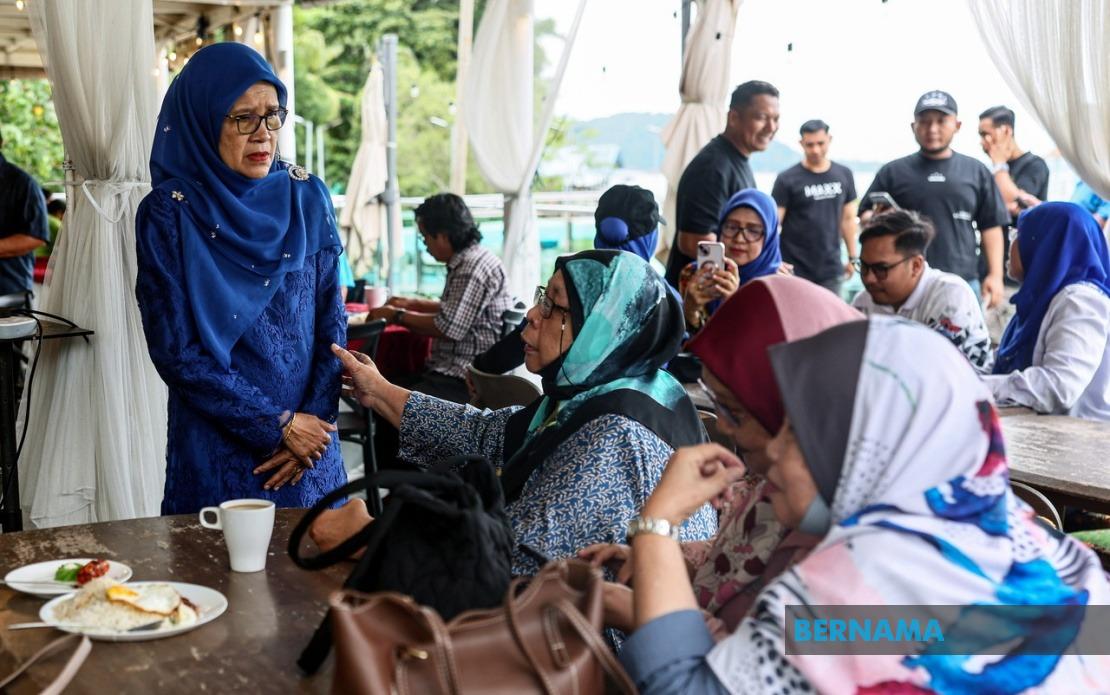
The northern Johor state seat of Endau is shaping up as a compelling contest between two fundamentally different visions for the constituency's future, with Barisan Nasional incumbent Alwiyah Talib relying on her established service record whilst Pakatan Harapan challenger Saiful Nizam pitches a restructured economic model designed to modernise local industries and retain younger residents. The race has intensified further with Perikatan Nasional's Hasnul Hakimi Hussien and ASLI candidate Jati Awang also in contention, ensuring the July 11 polling day will deliver a meaningful choice across the political spectrum for Endau's 28,767 registered voters.
Alwiyah, commonly referred to as Kak Awi, has anchored her re-election campaign firmly on the foundation of her two terms representing the constituency, emphasising consistency and commitment to ongoing projects rather than promises of wholesale change. Her strategic focus centres on expanding Endau's tourism economy beyond its current dependence on island-based attractions, recognising significant untapped potential in inland tourism offerings. She highlights developments such as KampungStay@Teluk Buih, Penyabong, and Tanjung Resang, which already draw regular tourist traffic and maintain high occupancy rates, particularly during weekends, as proof that substantial market demand exists for alternative vacation experiences in the region.
Crucially, Alwiyah's vision extends to rebranding Mersing itself, traditionally perceived merely as a transit point for island-bound visitors. She proposes repositioning coastal destinations including Pulau Mawar, Pantai Air Papan, and Teluk Gorek as premium sustainable homestay destinations, thereby creating genuine economic multiplier effects across multiple accommodation types and price points. This approach suggests recognition that tourism development requires sustained momentum rather than sporadic investment; her insistence that development "must continue to ensure the tourism sector remains competitive" carries implicit warning that discontinuity risks stagnation.
Beyond tourism, Alwiyah has identified education as a second major plank, particularly the chronic undersupply of secondary schooling infrastructure. Currently, students in Pekan Endau depend exclusively on Sekolah Menengah Kebangsaan Ungku Husin, creating capacity constraints and commuting burdens that limit educational outcomes. Her commitment to constructing an additional secondary school addresses this tangible gap whilst signalling broader concern that development benefits reach all community segments from primary through tertiary levels. This multi-tiered educational focus reflects understanding that human capital development underpins long-term economic resilience in rural constituencies.
Alwiyah's personal narrative emphasises resilience through political transition; she originally won Endau in 2022 under the Perikatan Nasional banner before rejoining Barisan Nasional, a repositioning that required navigating internal party dynamics whilst maintaining electoral support. Her acknowledgment that she operates in no "comfort zone" and characterisation of elections as demanding "sincerity without hypocrisy" suggests awareness that constituents scrutinise authenticity particularly closely during transitions.
Saiful Nizam presents a starkly contrasting profile as a first-time Pakatan Harapan candidate whose intellectual credentials rest on active pursuit of a Doctor of Philosophy in Economics, positioning him as a policy-oriented thinker rather than an established administrator. At 42 years old, he occupies a demographic middle ground, distinct from both Alwiyah's established seniority and grassroots politics. His campaign architecture rests on comprehensive systemic reform across five interconnected domains, most notably his signature "Fishermen's Economy 2.0" agenda, which conceptualises fisheries modernisation as a structural intervention capable of generating ripple effects throughout the local economic ecosystem.
Saiful's fisheries strategy specifically targets the sustainability challenge plaguing traditional fishing communities throughout Malaysia's east coast. By framing fisheries renewal as foundational to broader economic health, he positions sectoral transformation as addressing youth unemployment and outmigration simultaneously. The parallel emphasis on supporting local Small and Medium Enterprises through digital marketing programmes and capacity building reflects sophisticated understanding that rural economic resilience depends on diversified opportunities rather than single-sector dependency. This approach implicitly critiques the adequacy of tourism-centric development, suggesting that reliance on seasonal island tourism alone cannot absorb local labour capacity or provide year-round income stability.
Educational initiatives under Saiful's platform extend beyond infrastructure provision to skills development, with particular emphasis on Technical and Vocational Education and Training and STEM competencies. Proposed programmes in English language training and digital skills target workforce competitiveness in emerging sectors, recognising that contemporary economic opportunity requires capabilities beyond traditional fishing or tourism service roles. The proposed Endau Children's Education Fund specifically targets financial barriers to educational access, addressing structural disadvantage through targeted redistribution rather than general provision.
Saiful's infrastructure agenda encompasses internet connectivity, deliberately highlighting digital access as an economic prerequisite rather than luxury amenity. This recognition that rural constituencies face systematic disadvantage in broadband provision reflects understanding that economic modernisation without digital infrastructure remains incomplete. His commitment to channelling fisheries welfare and residents' connectivity concerns through relevant government agencies signals intention to function as constituent advocate within existing bureaucratic structures, positioning the electoral mandate as empowerment to leverage state resources more effectively on behalf of local interests.
The Endau contest occurs within the broader context of Malaysia's electoral trajectory, particularly the fluidity of voter allegiances demonstrated through Alwiyah's own party transition. The emergence of Perikatan Nasional as a serious challenger and ASLI's continued electoral presence in indigenous-majority areas suggests Johor's political landscape remains genuinely competitive rather than predetermined. With 172 candidates contesting 56 state seats across Johor and early voting scheduled for July 7, the Endau race will reflect broader patterns of voter calculation regarding incumbent performance versus reform alternatives.
For Endau voters specifically, the choice encapsulates a fundamental tension in Malaysian electoral politics: whether established implementation capacity and continuity outweigh reformist promises of systemic restructuring. Alwiyah's track record in tourism and education development represents tangible deliverables, yet potential consolidation of incumbency advantage risks assuming satisfaction with existing development trajectory. Conversely, Saiful's comprehensive economic restructuring framework offers coherent alternative vision but rests on untested execution capacity and reliance on voters accepting PhD-level policy abstraction as governing framework. The presence of Hasnul Hakimi and Jati Awang introduces variables that could fragment opposition consolidation or capture protest votes, potentially determining whether competitive margins prove decisive or comfortable.

