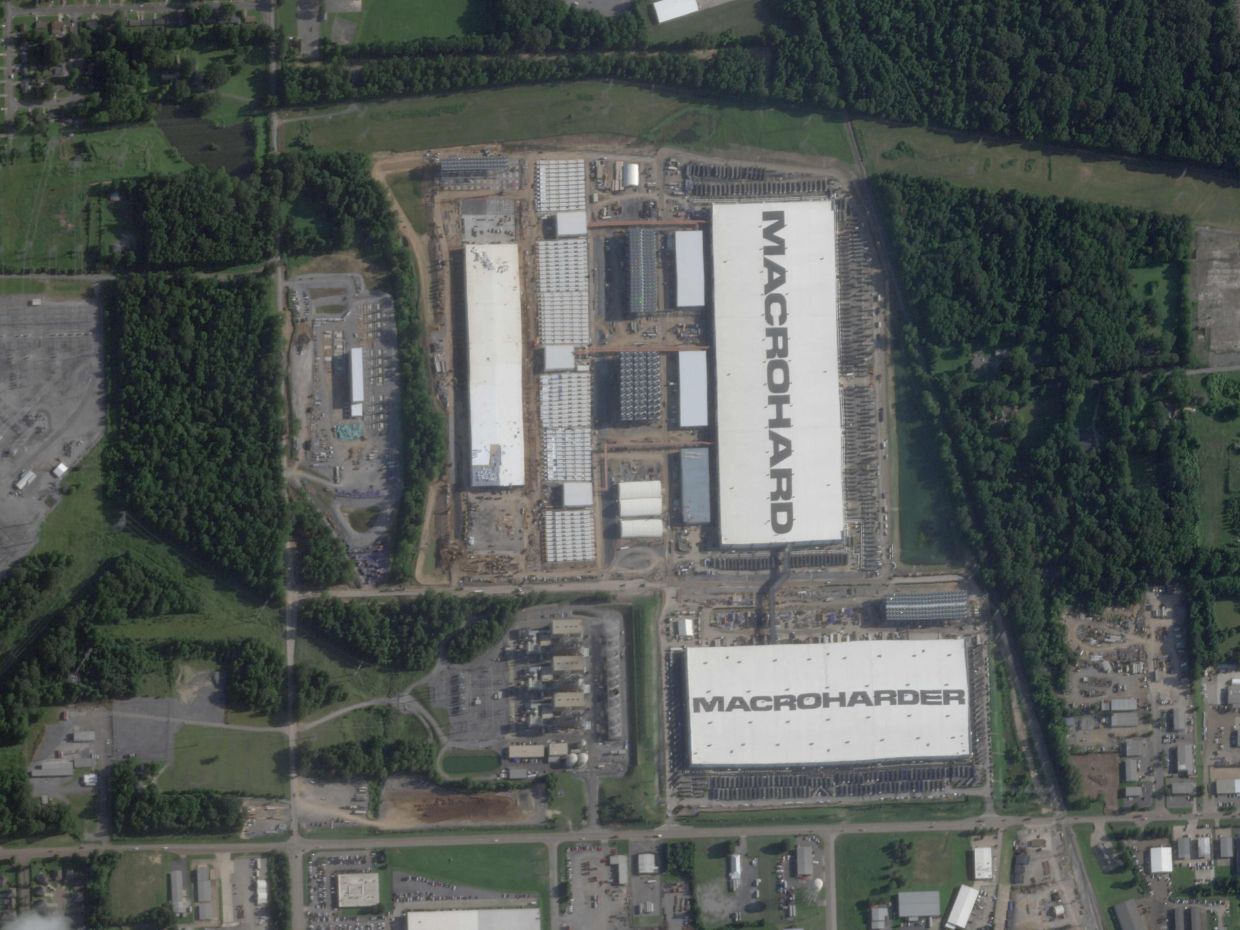
The global scramble for artificial intelligence computing infrastructure has landed forcefully on Boxtown, a historically Black neighbourhood in South Memphis, where residents are now confronting the environmental fallout from a massive data centre erected with minimal community input. Colossus I, the sprawling facility operated initially by SpaceXAI before being leased entirely to AI research firm Anthropic for over US$1 billion monthly, exemplifies the tensions between technological ambition and environmental justice that increasingly define America's industrial landscape. The facility's rapid construction—completed in just four months—has exposed how corporate appetite for AI expansion can override regulatory safeguards and community welfare, presenting troubling implications for similar developments across North America and beyond.
Boxtown's vulnerability to industrial encroachment runs deep. Founded by freed slaves following the Emancipation Proclamation of 1863, the neighbourhood has endured generations of factory pollution and environmental neglect. Today, residents face cancer risks four times the national average, reflecting decades of cumulative exposure to industrial toxins. This historical pattern of environmental racism provides crucial context for understanding current resistance to the data centre. Seventeen-year-old Jasmine Bernard, who has spent two years fighting against the facility's operations, articulates what many residents understand intuitively: the siting of polluting infrastructure in Black neighbourhoods reflects not coincidence but structural inequality rooted in the region's racial history.
The turbine controversy sits at the centre of legal and regulatory disputes. SpaceXAI circumvented normal permitting procedures by deploying gas turbines as "temporary" installations while simultaneously pursuing full permits, thereby avoiding a "power gap" during the approval process. This manoeuvre appears to violate the Clean Air Act, which mandates that companies obtain environmental permits before construction begins. Laura Thoms of Earthjustice, representing the NAACP in litigation against SpaceXAI, emphasizes that this approach betrays the statutory requirement to demonstrate protection of surrounding communities before infrastructure deployment. The firm's legal strategy essentially weaponized bureaucratic timelines, prioritizing operational continuity over democratic process and environmental safeguards.
Air quality concerns extend beyond turbine emissions. SpaceXAI claims that advanced emission control technologies and current EPA monitoring indicate local air quality meets or exceeds regulatory standards. However, such assurances carry limited weight in communities sceptical of corporate accountability, particularly where historical patterns suggest environmental regulations have been inadequately enforced. The opacity surrounding these claims—SpaceXAI did not respond to requests for detailed comment—underscores the asymmetry of information and power that characterizes industrial siting decisions in vulnerable neighbourhoods. Residents must navigate technical environmental claims while lacking independent verification mechanisms or meaningful voice in operational decisions.
Water depletion presents a separate crisis with long-term implications for Memphis's sustainability. Colossus I extracts 1.2 million gallons of groundwater daily from the aquifer supplying the city's drinking water. This enormous demand exists despite SpaceXAI's initial commitment to construct a water recycling facility—a project now suspended indefinitely. For a region already grappling with water scarcity challenges, this consumption pattern raises questions about whether short-term economic gains justify infrastructure that threatens long-term water security. The company's decision to abandon the promised reuse facility suggests that environmental commitments made during negotiations have limited binding force.
Noise pollution represents a less visible but deeply intrusive dimension of the facility's impact. Residents near Colossus II in nearby Southaven, Mississippi, report that the relentless drone from 69 operational turbines produces physical symptoms including nausea and disorientation. Krystal Polk, whose family has inhabited her property for generations, describes the sound as reminiscent of a jet perpetually frozen in takeoff—a 24/7 assault that renders outdoor spaces inhospitable. This acoustic dimension of industrial pollution demonstrates how technological infrastructure intrudes into intimate domestic spaces, eroding quality of life in ways that regulatory metrics often fail to capture. The psychological and physiological toll compounds the visible environmental harms.
The economic calculus presented by municipal authorities reveals how development incentives can override environmental concerns. Colossus I generated US$12 million in tax revenue, prompting Memphis Mayor Paul Young to redirect US$3.35 million toward affected communities. While such community investment represents acknowledgement of harm, it fundamentally accepts environmental degradation as a cost of economic development rather than questioning whether such infrastructure should exist in these locations at all. The framework treats pollution as compensable rather than preventable, suggesting that sufficient financial redistribution can justify continued exposure to health hazards. For Southeast Asian cities contemplating similar data centre developments, this model offers a cautionary lesson about the inadequacy of mitigation strategies divorced from genuine alternatives.
Regulatory capture and national security claims have further tilted power dynamics toward corporate operators. In June, the Justice Department requested dismissal of the NAACP's complaint against SpaceXAI, invoking national security concerns. This extraordinary intervention suggests that AI infrastructure development enjoys elevated protection under national security frameworks, potentially insulating corporate operators from usual environmental and civil rights scrutiny. Such precedents could establish dangerous templates for how other critical infrastructure projects invoke security rationales to circumvent community protection mechanisms. The invocation of national security in defence of corporate pollution illustrates how technological competition intersects with geopolitical anxiety to subordinate domestic welfare concerns.
A negotiated settlement reached in late July requires SpaceXAI to dismantle the turbines and construct a compliant power plant, but with a deadline extending to July 2027. Critics charge that this agreement was negotiated in closed sessions with local officials, excluding community representatives from settlement discussions. The extended timeline essentially permits four additional years of operations that ought to be illegal under current environmental law. This delay reflects the temporal asymmetry that characterises environmental disputes: residents must endure pollution immediately while remediation dates recede into the future. Such settlements, common in environmental justice cases, typically lock communities into prolonged exposure while allowing corporate operations to continue pending theoretical future compliance.
The proliferation of additional data centre construction in the region compounds these concerns. A third facility operates near Colossus II, and a fourth remains under construction, yet residents report receiving no information regarding power sources or environmental safeguards for these emerging installations. This information vacuum suggests that the region may be evolving into a dedicated AI infrastructure corridor with minimal transparent governance mechanisms. Residents and advocacy groups like Memphis Community Against Pollution, whose co-founder KeShaun Pearson travels nationally raising awareness, have mobilized around parallels with the successful 2021 campaign blocking a pipeline project. That victory demonstrates community capacity to resist unwanted infrastructure, offering a potential template for contesting further data centre expansion.
For Malaysia and Southeast Asia broadly, the Memphis case illuminates risks accompanying rapid data centre recruitment. As regional governments compete to attract AI and cloud computing facilities, they must grapple seriously with whether communities already bearing disproportionate environmental burdens should absorb additional industrial infrastructure. The framework of environmental justice—recognizing that pollution burdens concentrate in communities with least political power—deserves central consideration in infrastructure planning. SpaceXAI's conduct suggests that without stringent pre-construction permitting requirements, transparent community engagement mechanisms, and enforceable environmental remediation timelines, corporate operators will prioritise speed and cost reduction over genuine environmental protection. Boxtown's experience offers Southeast Asian policymakers both a warning and a demonstration that grassroots resistance remains possible even against powerful technology corporations.

