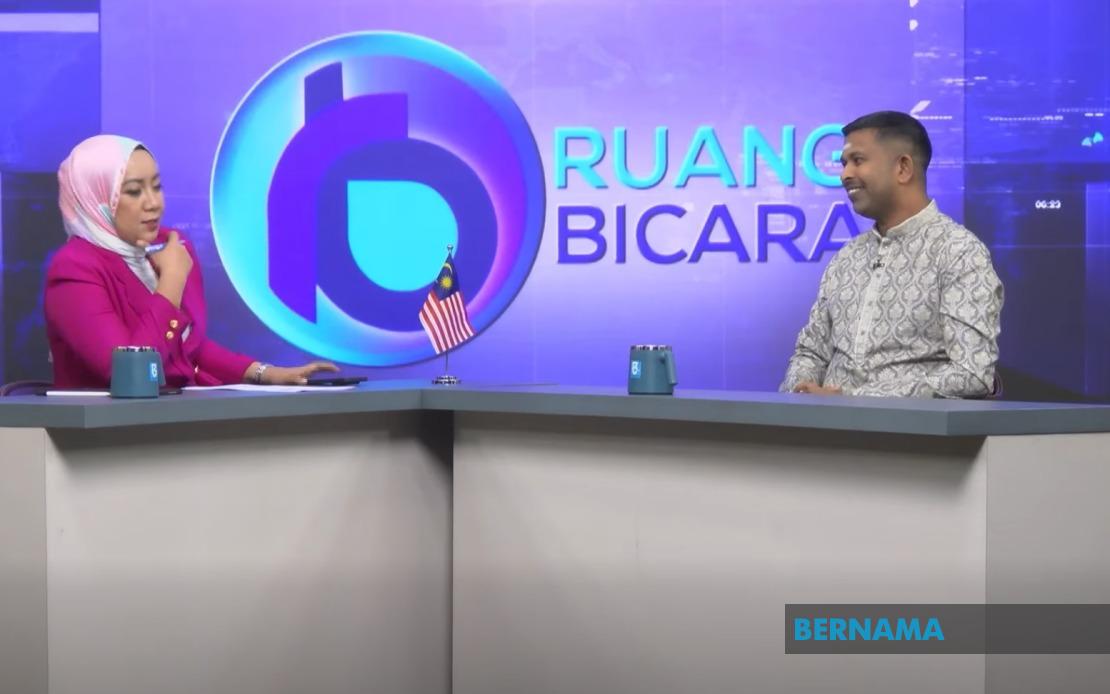
Strengthening the Malay language's position as Malaysia's national language demands a coordinated push involving government agencies, the business community, academic institutions and ordinary citizens, according to a legal expert who sits on the board of the country's premier language authority. Prof Dr Ramalinggam Rajamanickam, who leads the Faculty of Law at Multimedia University and serves as a Board of Governors member at Dewan Bahasa dan Pustaka (DBP), stressed that this constitutional cornerstone cannot be maintained through piecemeal initiatives alone.
The Federal Constitution explicitly grants the Malay language its national status through Article 152, a provision further reinforced by the National Language Act 1963/67, which mandates its use across government functions and official proceedings. Yet establishing this legal framework is merely the foundation. What Malaysia faces today is not a crisis of usage—the language remains widely spoken across the nation—but rather a quality and relevance crisis that threatens its utility in contemporary domains.
The most pressing challenge confronting the Malay language in the digital age stems from the prevalence of "bahasa rojak," a colloquial term describing the mixing and blending of languages that has become endemic on social media platforms and in informal digital communication. This linguistic phenomenon, combined with rampant abbreviations and shorthand expressions tailored for online interaction, reflects broader anxieties about linguistic standards. While such informal code-switching may pose no serious impediment in casual settings, the degradation of grammatical precision and structural integrity becomes deeply problematic when such patterns infiltrate official discourse and institutional communication.
Ramalinggam emphasised that universities bear particular responsibility for maintaining and advancing the language's standing as a vehicle for advanced knowledge and scholarship. Academic institutions must ensure that the Malay language functions as a credible medium for scientific and technical instruction without simultaneously abandoning the imperative for English proficiency—a balance that requires sophisticated pedagogical strategies. Simultaneously, government bodies tasked with language policy implementation must intensify their monitoring of compliance with existing legislation that governs the use of the national language in official capacities.
The emergence of artificial intelligence and rapid technological advancement presents both an existential threat and an unprecedented opportunity for the Malay language. Rather than passively waiting for global technology companies to develop Malay-language capabilities, Malaysia must take the initiative to empower the language itself, ensuring it possesses the linguistic tools, vocabulary and structural flexibility to engage with and shape technological development. This requires sustained investment in language engineering, computational linguistics research and the systematic expansion of Malay terminology across scientific, technological and economic domains.
Historically, the Malay language functioned as a regional lingua franca that facilitated trade, cultural exchange and intellectual discourse across Southeast Asia and beyond. That legacy offers crucial perspective as the nation contemplates its linguistic future. Currently, the language is studied seriously in countries including China, Japan and India, suggesting enduring international recognition of its significance. This foundation must be leveraged to position Malay not as an insular national asset but as a language of genuine regional and scholarly importance capable of participating meaningfully in global intellectual and economic conversations.
The necessary effort extends far beyond government decree or educational reform alone. Private sector participation proves essential, as businesses increasingly shape how language is deployed in marketing, digital platforms and workplace communication. Technology companies operating within Malaysia have particular incentive to develop solutions that accommodate the national language, while corporate institutions must model proper linguistic usage in their official communications. When major Malaysian firms treat English and other languages as inherently superior for serious business purposes while relegating Malay to ceremonial functions, they reinforce damaging hierarchies that undermine the language's perceived utility and prestige.
Critically, Ramalinggam rejected the zero-sum framing that sometimes characterises language debates in multilingual societies. Elevating the Malay language's status and functionality does not necessitate diminishing other languages or creating false hierarchies among linguistic communities. Malaysians benefit from multilingual competence—proficiency in Malay, English and community languages represents genuine advantage in an interconnected world. Yet the symbolism of the national language transcends practical communication functions; it embodies national identity and cohesion in ways that demand active cultivation and protection from degradation.
Realisng this vision demands coordination among multiple constituencies operating at different systemic levels. Language experts and researchers must develop comprehensive vocabularies and neologisms that allow Malay to express concepts arising in artificial intelligence, biotechnology, finance and other cutting-edge fields. Universities should establish dedicated centres focused on language engineering and modernisation. Government ministries must enforce existing regulations while establishing new standards for digital communication and technology development. The DBP itself requires adequate resources and institutional authority to function as more than a symbolic custodian of linguistic standards.
Perhaps most significantly, ordinary Malaysians must embrace a cultural shift that reclaims pride in sophisticated Malay usage rather than treating grammatical precision and formal registers as impediments to efficient communication. When public figures, media outlets and cultural institutions consistently model high linguistic standards, they normalise expectations that permeate through society. The language's future depends less on policies emanating from Putrajaya than on whether Malaysians themselves view the Malay language as integral to personal and national identity worth the effort required to preserve and advance it.
The timing of this conversation proves opportune as Malaysia positions itself as a technology hub and knowledge economy. Nations that successfully navigate linguistic modernisation without sacrificing cultural continuity gain significant advantage. The Malay language possesses historical depth, structural sophistication and regional resonance sufficient to achieve such modernisation—but only if Malaysia treats language elevation as a genuine national priority rather than ceremonial rhetoric. The intellectual and institutional foundations for success already exist; what remains is the collective will to activate them.

