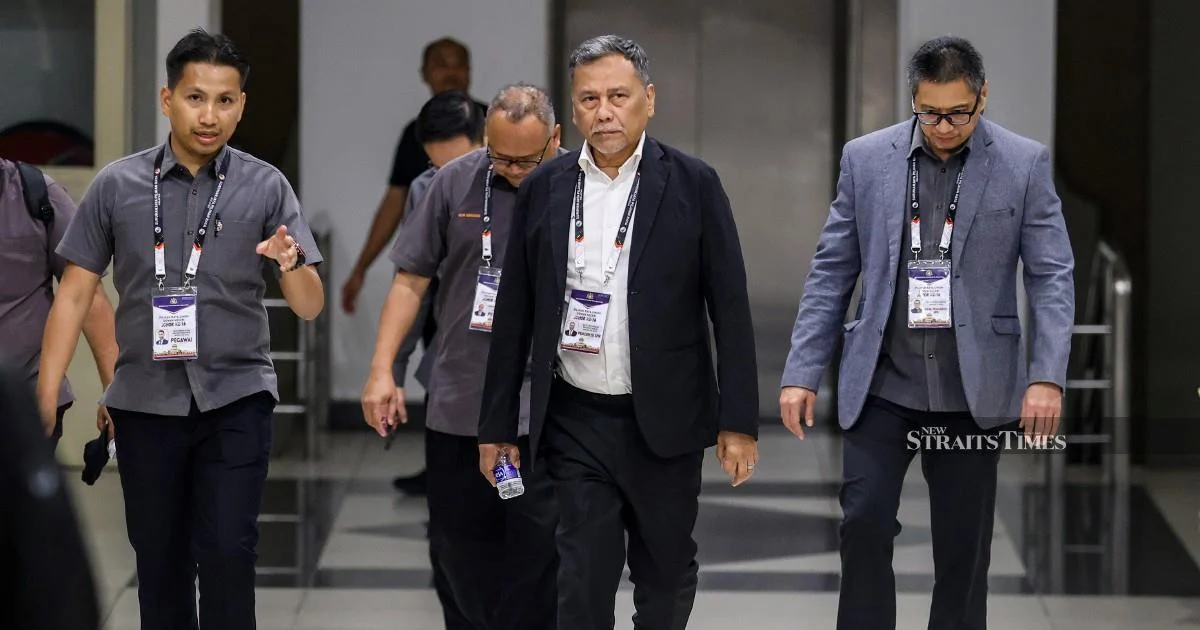
The Election Commission has signalled its intention to more carefully examine instances where voters share photographs of their completed ballot papers across social media platforms, marking a shift toward greater oversight of electoral conduct in the digital age. The announcement, made in Iskandar Puteri, reflects growing concerns about how digital technology is reshaping voting behaviour and the potential implications for electoral integrity in Malaysia.
This development highlights a persistent challenge facing election authorities across the region: the tension between protecting voters' freedom of expression and maintaining the confidentiality of the ballot box, a cornerstone principle of democratic elections since the 19th century. The practice of sharing marked ballot photos has become increasingly common as smartphone ownership and social media usage surge, particularly among younger voters who view documenting their civic participation as a natural extension of their digital lives.
The EC's decision to investigate such cases indicates recognition that Malaysia's electoral framework may require updating to address modern voting behaviours. Malaysian election law has traditionally emphasised ballot secrecy—the principle that no voter should be identifiable with their vote—but the framework was not designed with social media in mind. When voters voluntarily post images of their ballots, they are technically breaching this confidentiality, though enforcement mechanisms have remained unclear and largely unenforced.
Legally, Malaysia's election regulations do contain provisions addressing ballot secrecy, though their application to social media sharing has never been comprehensively tested. The EC's move toward systematic review suggests an attempt to establish clearer boundaries around acceptable conduct without outright prohibiting voters from discussing their electoral choices. This nuanced approach reflects the difficulty of policing behaviour that occurs after voters have left polling stations and are on personal, private devices.
From a governance perspective, the investigation raises important questions about enforcement capacity and the proportionality of penalties. Is posting a ballot photo genuinely equivalent to coercing someone else's vote or buying votes—serious offences carrying substantial penalties? The EC will need to distinguish between casual civic sharing and coordinated efforts that might constitute electoral fraud or attempts at voter intimidation, a distinction that requires careful legal analysis.
The issue carries particular significance for Southeast Asia, where several nations have grappled with election integrity challenges and digital misinformation during recent electoral cycles. How Malaysia addresses this question could establish a regional precedent for handling election law in the social media era. Singapore, Thailand, and Indonesia have all faced similar issues, and there is currently no regional consensus on how to balance digital expression with electoral integrity.
For Malaysian voters, understanding the EC's approach matters considerably. Many young citizens express themselves politically through social media, and uncertainty about what constitutes prohibited behaviour creates potential chilling effects on legitimate electoral participation and discussion. Clear guidance from the EC would help voters make informed decisions about what they can safely share without legal risk.
The practical difficulties of enforcement should not be underestimated. Identifying, verifying, and investigating each case of a voter posting a ballot photo would require substantial EC resources and potentially invasive monitoring of social media platforms. Moreover, the global nature of social media means that photos could be shared across platforms and borders, complicating enforcement further. The EC will need to establish protocols for determining which cases warrant investigation and which are better addressed through public education.
Context matters significantly here. Some voters photograph their ballots as evidence of participation, particularly first-time voters or members of communities with historical barriers to voting rights. Others may view it as a form of political expression or encouragement to peers. Still others might share images carelessly without considering the implications. The motivations behind the behaviour vary considerably, and a one-size-fits-all enforcement approach could inadvertently penalise innocent civic engagement.
Public education may ultimately prove more effective than investigation in addressing this issue. Many voters may simply be unaware that sharing ballot photos could be problematic or legally risky. The EC could launch targeted awareness campaigns, particularly on social media and targeting younger demographics, explaining why ballot secrecy matters and what the potential consequences of breaching it might be.
International electoral bodies have begun developing guidelines on digital voting behaviour, recognising that traditional election law increasingly intersects with technology policy and digital rights. The EC's review process could benefit from examining how other democracies, from Taiwan to the United States, have approached similar challenges while respecting both electoral integrity and democratic freedoms.
Ultimately, the EC's investigation signals an important moment in Malaysia's electoral evolution. The commission faces the challenge of protecting election integrity in an interconnected digital world whilst respecting voters' right to participate meaningfully in the democratic process. The outcome of this review could reshape how electoral law is interpreted and enforced in Malaysia for years to come, with implications extending throughout Southeast Asia's democratic systems.

